Forestry and Land Scotland Logo
  1. Visit
      1. Find a forest
      2. Explore forest parks
    1. Accessible forests
    2. Stay the night
      1. Waymarked trails
      2. Cycling
      3. Mountain biking
      4. Photography
      5. Orienteering
      6. Camping
      7. Treetop adventure
      8. Water sports
      9. Horse riding
      1. Things to see
      2. Trees
      3. Wildlife
      4. Heritage
      5. Things to see in Winter
    3. Plan a visit with a group
    4. Visiting safely
    5. Parking
    Forest map

    Search for a forest by map

    Forests & trails information and closures

    An overview of all closures and high risk warnings on trails.

    Stay the night

    Park overnight in selected forest car parks as part of our motorhome scheme.

  2. About us
      1. Who we are
      2. Our mission and vision
      3. Leadership team
      4. Our values
      1. Careers
      2. Current Vacancies
      3. What we offer
      4. Candidate information
      5. A day in the life
      6. Apprenticeships
    1. Key documents
    2. Our impact
    3. Our approach to Gaelic
    Current Vacancies

    Some text

  3. What we do
      1. Taking Climate Action
      2. The climate emergency
      3. Forest resilience
      4. Peatland restoration
      5. Carbon offsetting
      6. Biodiversity
      7. Renewable energy
      1. Managing the land
      2. Planning our land management
      3. Our sustainable forestry
      4. Our tree nursery
      1. Conservation
      2. Habitat conservation
      3. Wildlife conservation
      4. Historic environment conservation
    1. Supporting outdoor exploration
    2. Working with communities
    3. Our projects
  4. Living and Working
      1. For businesses
      2. Timber sales
      3. Procurements and tenders
      4. Business opportunities
      5. Farming opportunities
      6. Venison sales
      7. Firewood sales
      1. For communities
      2. Transfer land and buildings to your community
      3. Land management plan consultations
      1. Permissions and Permits
      1. Learning and Education
      2. Outdoor learning
      3. Activity sheets
    1. Buy Land or Buildings
    Land management plan consultations

    Text here

    Current job opportunities

    Text here

  5. Get involved
    1. Have your say on consultations
    2. Hold an event
    3. Apply for a community asset transfer (CAT)
    4. Arrange a visit
    5. Work with us
  6. News
  7. Contact
Suggested links
    1. Home
    2. News
    02 February 2025 3 minutes

    World Wetlands Day

    Wetlands are land areas that are saturated or flooded with water either permanently or seasonally. Here in Scotland, we have wetland habitat of international importance. Through a combination of best practice and innovative techniques we are enhancing this habitat across our forests and land.  
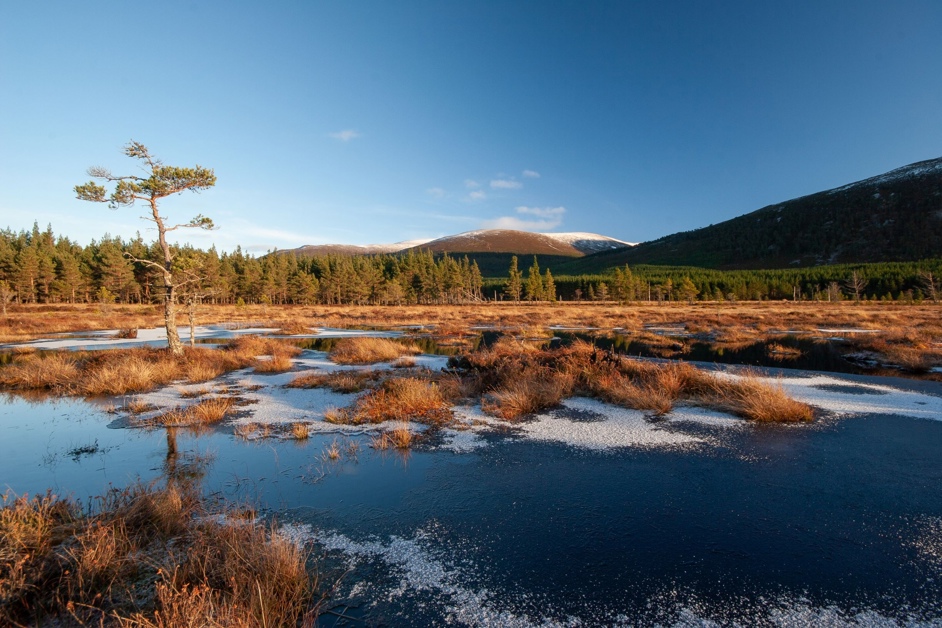
    Frosty peatland with stunted pine tree and trees and hills in the background.

    “World Wetlands Day is a great way to help maintain everyone’s focus on the importance of restoring these habitats.

    “Every wetland site we restore, protect and manage is an integral part of Scotland’s contribution to tackling the global climate and biodiversity emergencies. It is also sustainably adding to the scale of the contribution we make to our environment, water quality, to our future, and to the people of Scotland.

    “Our staff are rising to the challenges that come from looking after and enhancing wetland habitats in combination with sustainable commercial forestry – often in highly designated and sensitive landscapes," said Colin Edwards, our Head of Environment.

    In the past year, we hit the milestone of setting 10,000 hectares of peatland on the road to recovery through ‘re-wetting’ sites across Scotland. This included playing a key role in the restoration work in The Flow Country, which recently became the world’s first peatland World Heritage Site.
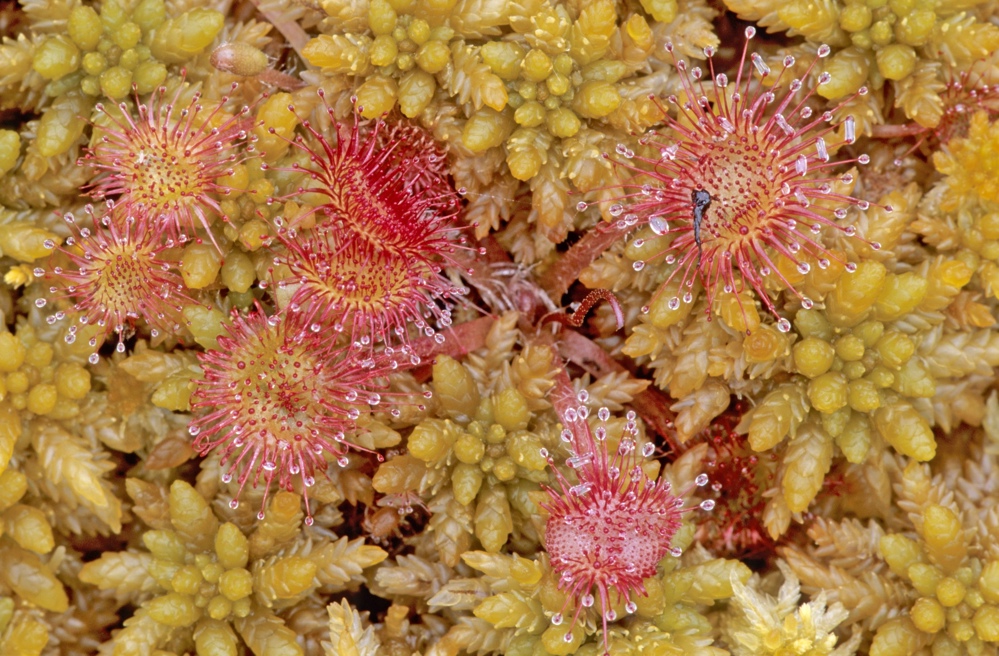
    Common sundew plant with water droplets and an insect on them.

    Image: Common sundew - a carnivorous plant that can be found in our peatlands.

    Our harvesting, civil engineering and peatland teams work in tandem to ensure that sites identified for harvesting are left in the best possible condition for successful restoration to a natural bog state. An example being the use of brash and lower density material to construct most of the extraction routes.

    The restoration process itself is benefiting from new techniques pioneered by our teams. These include ‘stump flipping and ground smoothing’, which being less invasive and offering better protection to existing peatland vegetation, leads to faster recovery. The technique has delivered impressive results at landscape scale in Scotland and has been adopted in Ireland. 

    During land management planning, we also identify all the watercourses that need conservation action. Across Scotland, we are restoring thousands of hectares of riparian woodland, establishing permanent buffers of native woodland and scrub to give every watercourse the breathing space it needs.

    Colin adds: 
     “FLS looks after 9% of Scotland's national forests and land. Wetlands, in a wide variety of forms and size ranging from hectares of bog to small ponds, make up a very important part of the habitat we manage. 

    “Sustainable management and restoration of these ecosystems is essential to delivering positive action for both the climate emergency and the biodiversity crisis.”

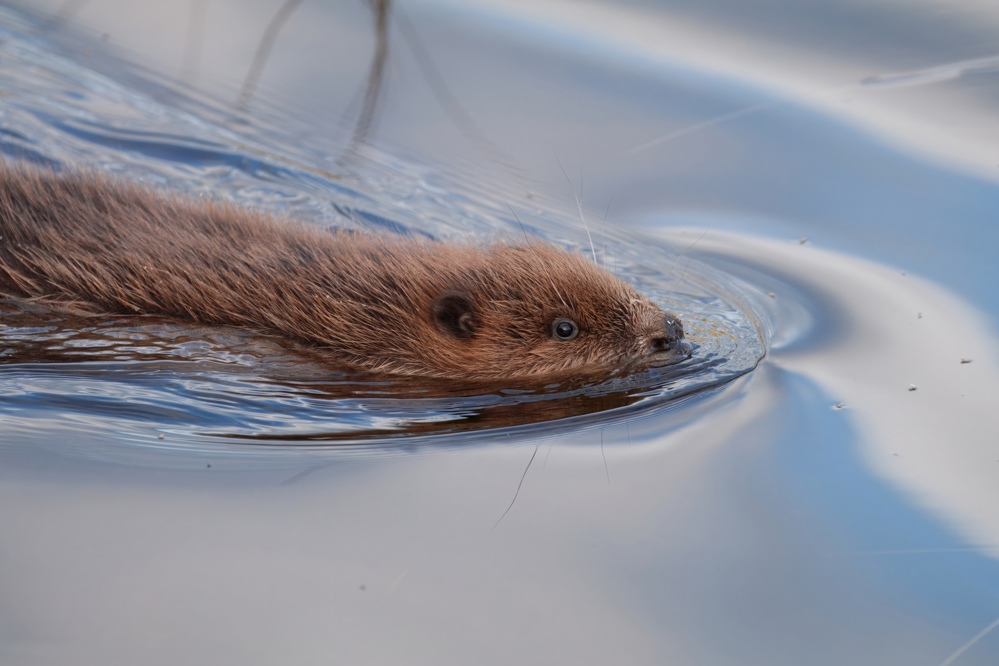
    Beaver swimming with head just above the water.

    The restoration of wetland habitat also supports our work in support of the Scottish Government strategy for the wider reintroduction of beavers and helps to save vulnerable species such as water voles. Recently, an additional two adult beavers and three kits were released at Loch Ard after our team created a network of ponds and planted new native woodland along riverbanks and streams. Other wetland areas in good condition are being naturally colonised by these water engineers as the population across Scotland grows.
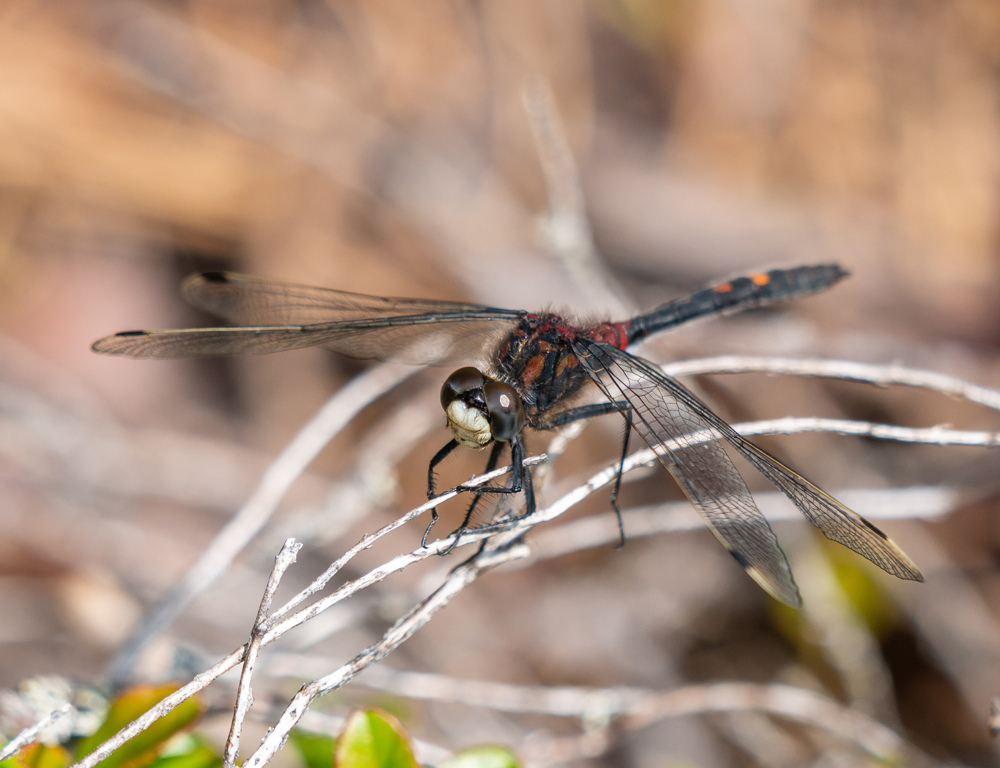
    Dragonfly on a twig.

    Image: White-faced darter.

    The ponds we create can support a wide range of aquatic species, such as water beetles and pond skater and are protecting and boosting the numbers of some of the rarest dragonflies in the British Isles. 

    Read more

    Latest from FLS

    1. 12 Jan 2026

      Lesley's article

    2. 03 Oct 2025

      Scotland's Climate Week 2025: Working together in the Angus Glens

    3. 29 Sep 2025

      Scotland's Climate Week 2025: Working with partners to support beaver populations

    4. 19 Sep 2025

      Martens on the Move at Kirroughtree

    5. 20 Aug 2025

      Protecting endangered apple trees through teamwork

    Share this article

    • Share on Facebook
    • Share on X
    • Share on LinkedIn

    Feedback

    There is a problem

    Feedback

    Thank you for your feedback

    User feedback form


    Your feedback helps us to improve this website. Do not give any personal information because we cannot reply to you directly.


    Your feedback helps us improve this website. Do not provide any personal information here. If you need to get in touch with a query, please contact us.


    Your feedback helps us improve this website. Do not provide any personal information here. If you need to get in touch with a query, please contact us.

    Forestry and Land Scotland Logo

    Follow us on

    • Forestry and Land Scotland on Facebook
    • Forestry and Land Scotland on Twitter
    • Forestry and Land Scotland on Instagram
    • Forestry and Land Scotland on LinkedIn

    Utilities

    1. Accessibility
    2. Cookies
    3. Privacy Notice
    4. Terms and Conditions
    5. Freedom of Information
    6. Modern Slavery Statement

    Quick links

    1. Media Centre
    Forest Stewardship Council, the mark of responsible forestry Programme for the Endorsement of Forest Certification, PEFC
    © Crown Copyright
    Forests and land that Scotland can be proud of Link to gov.scot gov.scot