Forestry and Land Scotland Logo
  1. Visit
      1. Find a forest
      2. Explore forest parks
    1. Accessible forests
    2. Stay the night
      1. Waymarked trails
      2. Cycling
      3. Mountain biking
      4. Photography
      5. Orienteering
      6. Camping
      7. Treetop adventure
      8. Water sports
      9. Horse riding
      1. Things to see
      2. Trees
      3. Wildlife
      4. Heritage
      5. Things to see in Winter
    3. Plan a visit with a group
    4. Visiting safely
    5. Parking
    Forest map

    Search for a forest by map

    Forests & trails information and closures

    An overview of all closures and high risk warnings on trails.

    Stay the night

    Park overnight in selected forest car parks as part of our motorhome scheme.

  2. About us
      1. Who we are
      2. Our mission and vision
      3. Leadership team
      4. Our values
      1. Careers
      2. Current Vacancies
      3. What we offer
      4. Candidate information
      5. A day in the life
      6. Apprenticeships
    1. Key documents
    2. Our impact
    3. Our approach to Gaelic
    Current Vacancies

    Some text

  3. What we do
      1. Taking Climate Action
      2. The climate emergency
      3. Forest resilience
      4. Peatland restoration
      5. Carbon offsetting
      6. Biodiversity
      7. Renewable energy
      1. Managing the land
      2. Planning our land management
      3. Our sustainable forestry
      4. Our tree nursery
      1. Conservation
      2. Habitat conservation
      3. Wildlife conservation
      4. Historic environment conservation
    1. Supporting outdoor exploration
    2. Working with communities
    3. Our projects
  4. Living and Working
      1. For businesses
      2. Timber sales
      3. Procurements and tenders
      4. Business opportunities
      5. Farming opportunities
      6. Venison sales
      7. Firewood sales
      1. For communities
      2. Transfer land and buildings to your community
      3. Land management plan consultations
      1. Permissions and Permits
      1. Learning and Education
      2. Outdoor learning
      3. Activity sheets
    1. Buy Land or Buildings
    Land management plan consultations

    Text here

    Current job opportunities

    Text here

  5. Get involved
    1. Have your say on consultations
    2. Hold an event
    3. Apply for a community asset transfer (CAT)
    4. Arrange a visit
    5. Work with us
  6. News
  7. Contact
Suggested links
    1. Home
    2. News
    15 July 2021 4 minutes

    What are we doing to protect and conserve nature?

    We don’t just grow and fell trees. We also lead in conserving landscapes. For World Nature Conservation Day, we’re highlighting several projects that protect and enhance nature in Scotland.
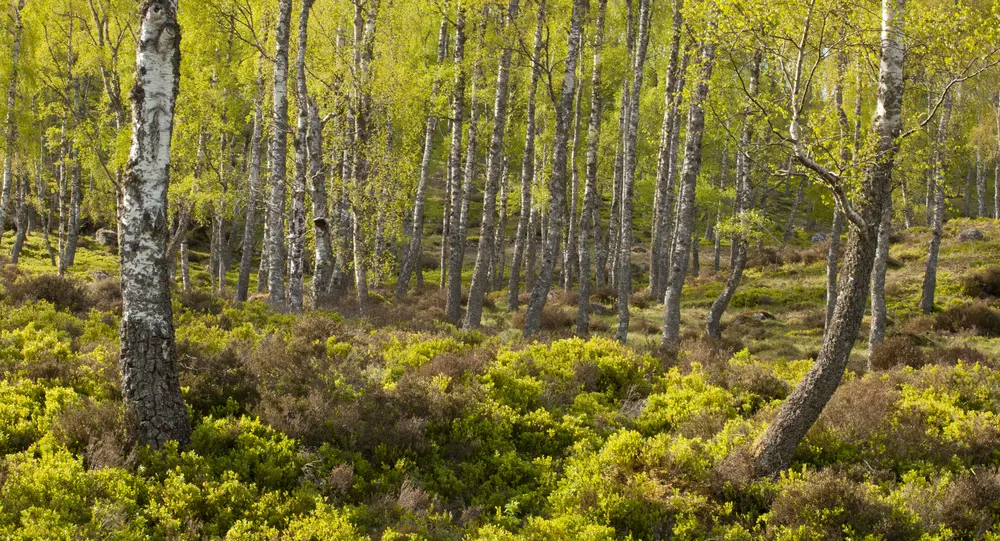
    Native wood of slender birch trees with lush green undergrowth

    Designated sites & species 

    These areas are known globally as important for science and nature. This includes Caledonian pine forests, Atlantic oak woods or even peat bogs. These sites are home to many unique and threatened animals. We work to conserve these areas to benefit nature. 

    The facts: 

    • We manage 428 designated sites
    • Home to diverse species like goshawks and wildcats
    • Include Sites of Scientific Interest
    • Include Special Areas of Conservation
    • 92.5% in favourable condition (compared to 80% average)* 

    *Site ratings by NatureScot. Figures correct as of 2017.

    What is a hectare? 
    Our land is often measured in hectares (ha). But what is a hectare?

    1ha equals 10,000 square metres. That’s a square with sides 100m long.

    To put that in perspective, the football pitch at Wembley is 7,140 square metres. So 10 pitches are around the same as 7ha.

    Ancient semi-natural woodland (ASNW) 

    This type of forest is extremely rich in life. It typically exists in pockets that have been largely undisturbed by humans over the last century. Forests like the Black Wood of Rannoch are prime examples where animals, birds, insects, flora and fauna are all thriving. A recent survey of ASNW on our land means we will soon begin restoring more of these unique areas. 

    The facts: 

    • Over 8,000 hectares of ASNW on our land
    • That’s around 11,000 football pitches
    • We will be restoring more of these areas over the next few years

    Plantation on ancient woodland sites (PAWS) 

    In the past some areas of native woodland were felled and re-planted with conifers for timber production. The goal of the PAWS project is to return these forests back to native woodland. Our focus now is on making long lasting woods suitable for many species to live in. 

    The facts: 

    • 18,500 hectares of PAWS on our land
    • That’s around 26,000 football fields

    Natural reserves 

    These woodland habitats are areas that are managed very lightly. Our goals are to conserve the woods and make a home for more species to live in. They form a safe haven for many animals, allowing them to grow in numbers. Sometimes an increase in population is enough for animals to naturally spread into other areas. 

    The facts: 

    • 36,865 hectares on our land
    • That’s over 51,500 football pitches

    Riparian woodland restoration 

    This project aims to connect patches of native woodland together. By doing so, species within these areas can spread further and find new areas to populate. This project includes broadleaf planting by rivers and burns which benefits aquatic life. By improving water quality and temperature, trees in these positions help under-threat species like salmon. 

    The facts: 

    • 2,207 hectares transformed to riparian woods
    • That’s over 3,000 football fields
    • Visit Cairngorms Connect to see how we are helping to join up the Caledonian pine forest
     

    Peatland restoration 

    Scotland is one of the richest countries in the world for peatlands. In addition to storing carbon emissions, they are home to a many threatened birds, insects and plants. Tree planting schemes from yester year meant some of these landscapes were badly damaged. We now work to restore these areas to fully functioning bogs which provide a home for animals like curlews and lapwings. This work also improves water quality in nearby areas. 

    The facts: 

    • Over 6,000 hectares of peatland has begun to be restored
    • That’s 8,400 football pitches
    • Our site at Gow Moss is showing signs of returning species just one year after restoration

    Sand dune restoration 

    In two sites in northern Scotland we have worked to restore damaged sand dunes. Invasive trees and scrub have threatened some of the native species. We have since cleared unwanted vegetation to allow the dunes to return to their natural state, and to encourage original species to return. 

    The facts: 

    • 12.6 hectares of dunes restored
    • That’s 17.5 football fields

    Partner to protect 

    We look after forests and land. That’s why, when it comes to wildlife, we partner with many groups throughout Scotland to protect and conserve. Currently we are partnering to help species like: 

    • Capercaillie
    • Golden eagles
    • White-tailed eagles
    • Goshawks
    • Common scoters
    • Beavers
    • Wildcats
    • Water voles
    • Red squirrels
    • Freshwater pearl mussels
    • Pine hoverfly

    Our Wildlife

    Our partners

    • NatureScot
    • RSPB Scotland
    • Scottish Raptor Study Group
    • Royal Zoological Society of Scotland
    • Scottish Wildlife Trust
    • Saving Scotland’s Red Squirrels
    • Cairngorm Connect

    Latest from FLS

    1. 12 Jan 2026

      Lesley's article

    2. 03 Oct 2025

      Scotland's Climate Week 2025: Working together in the Angus Glens

    3. 29 Sep 2025

      Scotland's Climate Week 2025: Working with partners to support beaver populations

    4. 19 Sep 2025

      Martens on the Move at Kirroughtree

    5. 20 Aug 2025

      Protecting endangered apple trees through teamwork

    Share this article

    • Share on Facebook
    • Share on X
    • Share on LinkedIn

    Feedback

    There is a problem

    Feedback

    Thank you for your feedback

    User feedback form


    Your feedback helps us to improve this website. Do not give any personal information because we cannot reply to you directly.


    Your feedback helps us improve this website. Do not provide any personal information here. If you need to get in touch with a query, please contact us.


    Your feedback helps us improve this website. Do not provide any personal information here. If you need to get in touch with a query, please contact us.

    Forestry and Land Scotland Logo

    Follow us on

    • Forestry and Land Scotland on Facebook
    • Forestry and Land Scotland on Twitter
    • Forestry and Land Scotland on Instagram
    • Forestry and Land Scotland on LinkedIn

    Utilities

    1. Accessibility
    2. Cookies
    3. Privacy Notice
    4. Terms and Conditions
    5. Freedom of Information
    6. Modern Slavery Statement

    Quick links

    1. Media Centre
    Forest Stewardship Council, the mark of responsible forestry Programme for the Endorsement of Forest Certification, PEFC
    © Crown Copyright
    Forests and land that Scotland can be proud of Link to gov.scot gov.scot