Forestry and Land Scotland Logo
  1. Visit
      1. Find a forest
      2. Explore forest parks
    1. Accessible forests
    2. Stay the night
      1. Waymarked trails
      2. Cycling
      3. Mountain biking
      4. Photography
      5. Orienteering
      6. Camping
      7. Treetop adventure
      8. Water sports
      9. Horse riding
      1. Things to see
      2. Trees
      3. Wildlife
      4. Heritage
      5. Things to see in Winter
    3. Plan a visit with a group
    4. Visiting safely
    5. Parking
    Forest map

    Search for a forest by map

    Forests & trails information and closures

    An overview of all closures and high risk warnings on trails.

    Stay the night

    Park overnight in selected forest car parks as part of our motorhome scheme.

  2. About us
      1. Who we are
      2. Our mission and vision
      3. Leadership team
      4. Our values
      1. Careers
      2. Current Vacancies
      3. What we offer
      4. Candidate information
      5. A day in the life
      6. Apprenticeships
    1. Key documents
    2. Our impact
    3. Our approach to Gaelic
    Current Vacancies

    Some text

  3. What we do
      1. Taking Climate Action
      2. The climate emergency
      3. Forest resilience
      4. Peatland restoration
      5. Carbon offsetting
      6. Biodiversity
      7. Renewable energy
      1. Managing the land
      2. Planning our land management
      3. Our sustainable forestry
      4. Our tree nursery
      1. Conservation
      2. Habitat conservation
      3. Wildlife conservation
      4. Historic environment conservation
    1. Supporting outdoor exploration
    2. Working with communities
    3. Our projects
  4. Living and Working
      1. For businesses
      2. Timber sales
      3. Procurements and tenders
      4. Business opportunities
      5. Farming opportunities
      6. Venison sales
      7. Firewood sales
      1. For communities
      2. Transfer land and buildings to your community
      3. Land management plan consultations
      1. Permissions and Permits
      1. Learning and Education
      2. Outdoor learning
      3. Activity sheets
    1. Buy Land or Buildings
    Land management plan consultations

    Text here

    Current job opportunities

    Text here

  5. Get involved
    1. Have your say on consultations
    2. Hold an event
    3. Apply for a community asset transfer (CAT)
    4. Arrange a visit
    5. Work with us
  6. News
  7. Contact
Suggested links
    1. Home
    2. News
    08 December 2020 4 minutes

    Winter Coats

    With the temperature dropping and snow upon the mountains, it’s time to dig out your winter coat. Many animals are no different. With the need to stay warm during the winter months, or wishing to stay hidden in a changing landscape, being able to alter your colouring is a useful trick adopted by several Scottish animals. Here we have a look at some classic examples. 

    Mountain Hare

    The mountain hare is Scotland’s only true arctic animal, living only above 300-400m. In summer, they sport a grey-brown colouring that blends with scrubland, rocks and heather, while in winter they put on a dazzlingly coat of white. This allows them to stay camouflaged in the snow and avoid predators, especially birds of prey.

    Whilst they can be found across the higher areas of Scotland, mountain hares thrive in heather moorland and often live in areas managed for grouse. When in need of shelter from the winter cold they seek out patches of woodland and even coniferous plantations, keeping hidden from aerial eyes and taking shelter from the elements. 
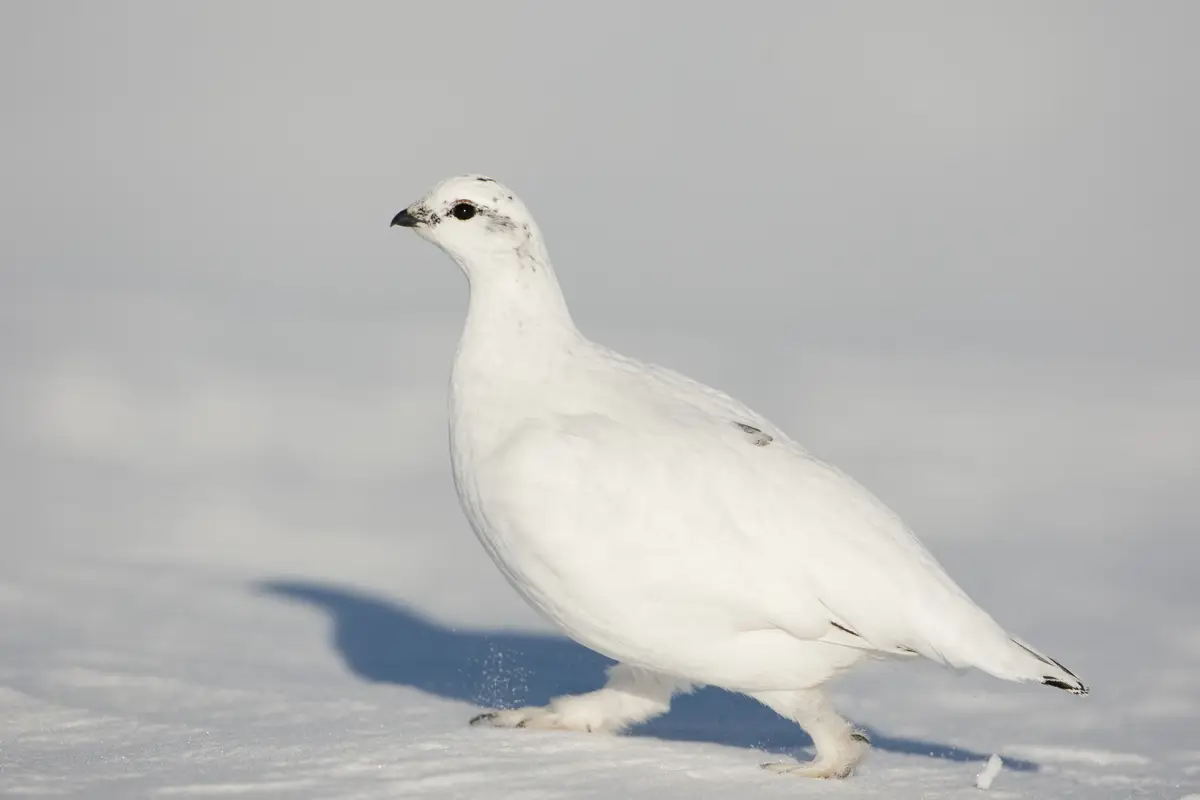
    White ptarmigan walking in snow

    Ptarmigan 

    If you’ve ever been walking in the Highlands, particularly in the Cairngorms, there’s a good chance you’ve come across ptarmigan. These little birds are full of character and stick to isolated areas high up in the hills to live and rear their young. 

    In summer, they wear a mix of brown and grey feathers with a white breast, but by winter you’ll see them change to a bright white plumage all over which helps blend in with the snow. These game birds are fairly plump with a long neck and distinctive walk. You’ll often find them standing together, or see them flying low over heather and rocks. 
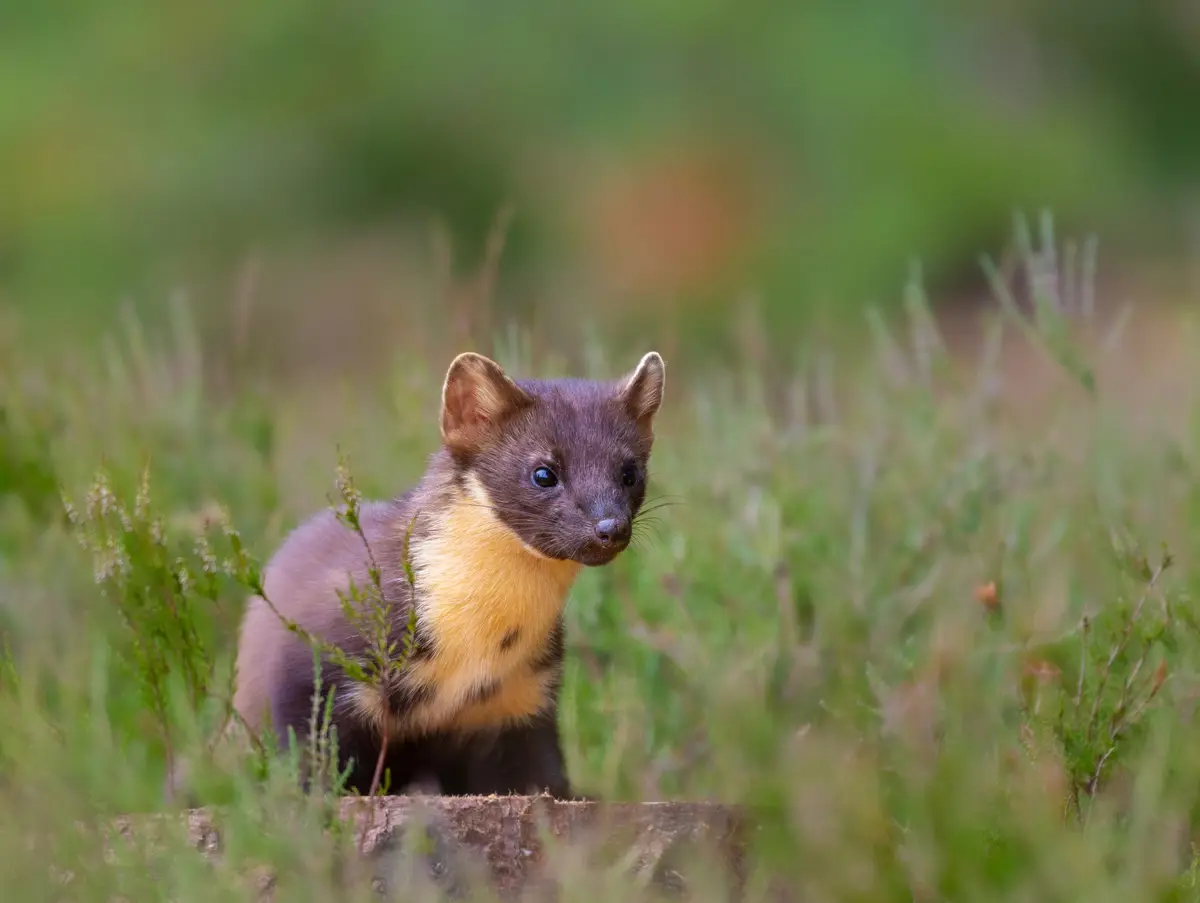
    Pine marten

    Pine Marten 

    Once numerous throughout the UK, pine martens were once widely hunted to their current low numbers and are now predominantly found north of the central belt in Scotland, preferring native and old-growth forests. This interesting animal sports a distinctive yellow ‘bib’ on its chest all year round alongside brown fur which grows thicker in winter, as well as becoming lighter in colour. This change helps them stay warm and blend in more with the changing forest as trees lose their leaves, letting in more light and snow. They are often called cat-like due to their skill in climbing trees and general agility, plus the mee-ow type call they make during mating season. 

    Whilst heavily persecuted in the past, numbers of these wonderful animals are stabilising, and some interesting research shows they could be highly beneficial to ecosystems throughout the UK. New findings show they may prey on grey squirrels, which are slower and spend more time on the forest floor than red squirrels, helping keep the grey population in check. 

    Stoats

    Stoats are smaller than their cousin, the pine marten, but are quite similar in other regards. Agile, elusive and great climbers, they are not afraid to take on larger animals with rabbits as their main prey. They typically sport a light brown coat, white belly and a black-tipped tail for most of the year. In winter, this can change but often depends where the stoat resides. 

    In northern Scotland, stoats regularly turn completely white around late November to blend in better with snow, though their black tail tips remain. This state is known as being in ermine. In southern Scotland, only around 30% of stoats change colour, and further south in England, few stoats change colour at all. 
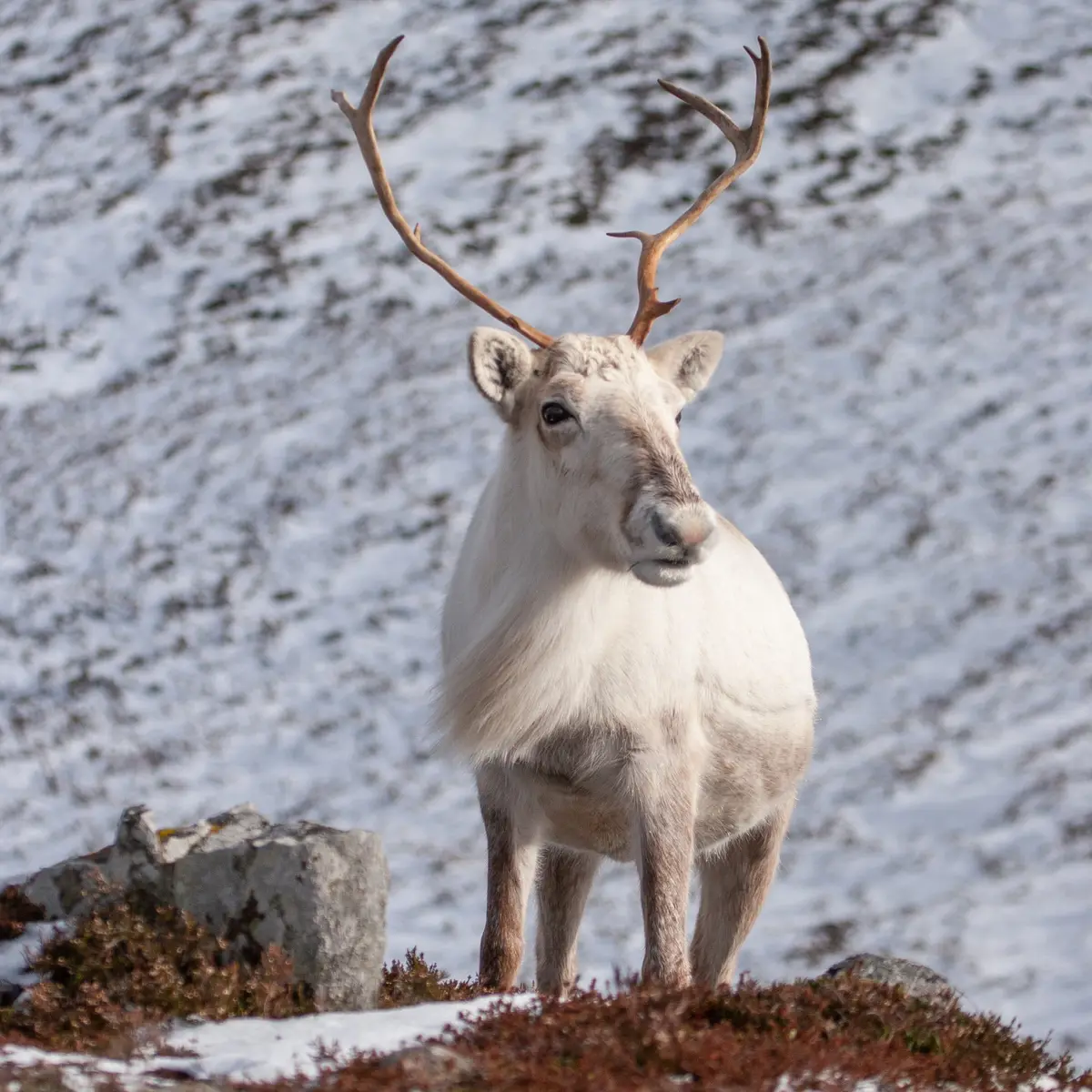
    Reindeer with pale winter fur

    Reindeer

    Reindeer are rare and localised in Scotland, there being a single semi-managed herd living in the Cairngorms that was introduced in the 1950s. Compared to red and roe deer, reindeer (or caribou) are quite distinct with long flat backs and moose-like faces. Both sexes, and reindeer of any age, grow a new set of antlers every year. 

    Towards winter, reindeer change their coats producing a light-coloured but heavy-weight coat to survive the cold and wind. Living in the Cairngorms, the only sub-arctic region of the UK, this is essential for surviving the harsh winds and cold temperatures. However, being semi-managed, they have it easier than their Scandinavian cousins with handlers providing food and shelter when required.

    Latest from FLS

    1. 12 Jan 2026

      Lesley's article

    2. 03 Oct 2025

      Scotland's Climate Week 2025: Working together in the Angus Glens

    3. 29 Sep 2025

      Scotland's Climate Week 2025: Working with partners to support beaver populations

    4. 19 Sep 2025

      Martens on the Move at Kirroughtree

    5. 20 Aug 2025

      Protecting endangered apple trees through teamwork

    Share this article

    • Share on Facebook
    • Share on X
    • Share on LinkedIn

    Feedback

    There is a problem

    Feedback

    Thank you for your feedback

    User feedback form


    Your feedback helps us to improve this website. Do not give any personal information because we cannot reply to you directly.


    Your feedback helps us improve this website. Do not provide any personal information here. If you need to get in touch with a query, please contact us.


    Your feedback helps us improve this website. Do not provide any personal information here. If you need to get in touch with a query, please contact us.

    Forestry and Land Scotland Logo

    Follow us on

    • Forestry and Land Scotland on Facebook
    • Forestry and Land Scotland on Twitter
    • Forestry and Land Scotland on Instagram
    • Forestry and Land Scotland on LinkedIn

    Utilities

    1. Accessibility
    2. Cookies
    3. Privacy Notice
    4. Terms and Conditions
    5. Freedom of Information
    6. Modern Slavery Statement

    Quick links

    1. Media Centre
    Forest Stewardship Council, the mark of responsible forestry Programme for the Endorsement of Forest Certification, PEFC
    © Crown Copyright
    Forests and land that Scotland can be proud of Link to gov.scot gov.scot