Forestry and Land Scotland Logo
  1. Visit
      1. Find a forest
      2. Explore forest parks
    1. Accessible forests
    2. Stay the night
      1. Waymarked trails
      2. Cycling
      3. Mountain biking
      4. Photography
      5. Orienteering
      6. Camping
      7. Treetop adventure
      8. Water sports
      9. Horse riding
      1. Things to see
      2. Trees
      3. Wildlife
      4. Heritage
      5. Things to see in Winter
    3. Plan a visit with a group
    4. Visiting safely
    5. Parking
    Forest map

    Search for a forest by map

    Forests & trails information and closures

    An overview of all closures and high risk warnings on trails.

    Stay the night

    Park overnight in selected forest car parks as part of our motorhome scheme.

  2. About us
      1. Who we are
      2. Our mission and vision
      3. Leadership team
      4. Our values
      1. Careers
      2. Current Vacancies
      3. What we offer
      4. Candidate information
      5. A day in the life
      6. Apprenticeships
    1. Key documents
    2. Our impact
    3. Our approach to Gaelic
    Current Vacancies

    Some text

  3. What we do
      1. Taking Climate Action
      2. The climate emergency
      3. Forest resilience
      4. Peatland restoration
      5. Carbon offsetting
      6. Biodiversity
      7. Renewable energy
      1. Managing the land
      2. Planning our land management
      3. Our sustainable forestry
      4. Our tree nursery
      1. Conservation
      2. Habitat conservation
      3. Wildlife conservation
      4. Historic environment conservation
    1. Supporting outdoor exploration
    2. Working with communities
    3. Our projects
  4. Living and Working
      1. For businesses
      2. Timber sales
      3. Procurements and tenders
      4. Business opportunities
      5. Farming opportunities
      6. Venison sales
      7. Firewood sales
      1. For communities
      2. Transfer land and buildings to your community
      3. Land management plan consultations
      1. Permissions and Permits
      1. Learning and Education
      2. Outdoor learning
      3. Activity sheets
    1. Buy Land or Buildings
    Land management plan consultations

    Text here

    Current job opportunities

    Text here

  5. Get involved
    1. Have your say on consultations
    2. Hold an event
    3. Apply for a community asset transfer (CAT)
    4. Arrange a visit
    5. Work with us
  6. News
  7. Contact
Suggested links
    1. Home
    2. News
    15 November 2023 3 minutes

    Field voles: the Cairngorms' most important mammal?
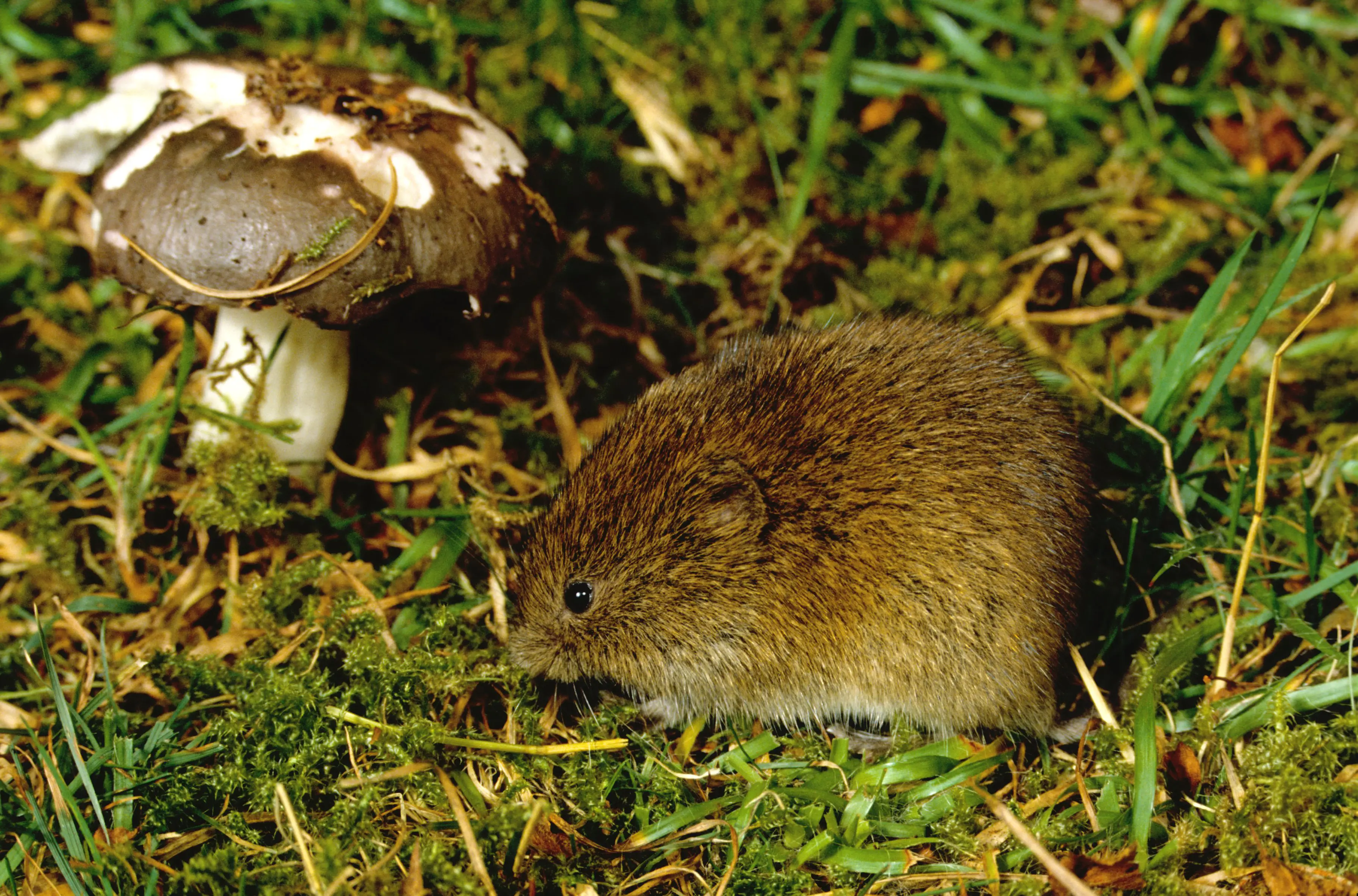
    A close-up vole sits on a grassy site. There is a mushroom just ahead of it. Is the humble field vole the Cairngorms' most important mammal? As unassuming as they might seem, field voles play a key part in the food chain and their numbers can have a huge impact on protected species like capercaillie.

    That's why, twice a year in autumn and spring, ecologists survey voles in the Cairngorms Connect project area. The project area covers over 60,000 hectares of the national park and aims to restore its habitats, species and ecological processes.

    We collaborate with Cairngorms Connect Predator Project partners to carry out these surveys to estimate the number of short-tailed field voles, bank voles and wood mice present in their Cairngorm forests.

    Kenny Kortland, our wildlife ecologist and lead on the Cairngorms Connect Predator Project, said:

    “We’re particularly interested in the abundance of field voles, which could be described as the most important species in the Cairngorms ecosystem.

    They have a huge influence on the system, as they are the main food of carnivores such as pine martens and foxes, which are the main predators of rare species like capercaillie.

    “We survey voles in spring and autumn because we want to know how abundant they are during the breeding season of other species, such as capercaillie.

    “Field vole populations go up and down in a regular cycle, over the course of a few years. When vole numbers are low, the predators will switch to other food sources.

    “Recent work in this area has shown that pine martens will switch to shrews and small birds, while foxes will switch to deer carrion and, believe it or not, dog poo. 

    "Both foxes and pine martens will also eat small numbers of protected species, such as capercaillie, and by understanding the vole cycle, as well as the ecology of the predators, we can manage and protect the rare species more effectively. 

    "When vole numbers are high, we probably don’t need to do much, but when vole numbers are low, we may have to act to reduce capercaillie predation. For example, by providing extra food to divert predators away from capercaillie."

    Cosy traps and tiny poos

    PhD student Jack Bamber from the Cairngorms Connect Predator Project worked on the autumn vole survey with us. He spent three weeks in the Cairngorms counting voles and mice:

    “Field voles are tiny, about 10cm long, and hard to spot in the long grasses that they prefer. We look for their droppings, both old and new, which are tiny and easily identifiable. We also look for chewed bits of grass. From the counts of these signs, we can calculate the abundance of the field voles. 

    “Bank voles are about the same size and there are a lot of them living in the Cairngorms’ forests. They’re eaten less often than field voles, probably because they live in the forests and spend quite a bit of time in the trees.

    “For bank voles and wood mice, which don’t leave obvious signs of their presence, we set very cosy traps that are filled with carrots and oats.

    Some of the voles get a bit trap happy and keep coming back, because they know there’s good food in there, so we have to account for that in our results.
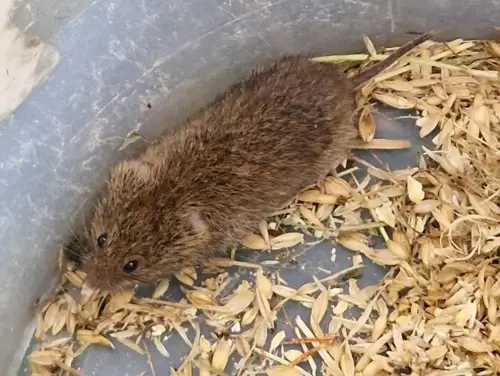
    A vole in a plastic container with grain across the bottom.

    More to read

    Latest from FLS

    1. 12 Jan 2026

      Lesley's article

    2. 03 Oct 2025

      Scotland's Climate Week 2025: Working together in the Angus Glens

    3. 29 Sep 2025

      Scotland's Climate Week 2025: Working with partners to support beaver populations

    4. 19 Sep 2025

      Martens on the Move at Kirroughtree

    5. 20 Aug 2025

      Protecting endangered apple trees through teamwork

    Share this article

    • Share on Facebook
    • Share on X
    • Share on LinkedIn

    Feedback

    There is a problem

    Feedback

    Thank you for your feedback

    User feedback form


    Your feedback helps us to improve this website. Do not give any personal information because we cannot reply to you directly.


    Your feedback helps us improve this website. Do not provide any personal information here. If you need to get in touch with a query, please contact us.


    Your feedback helps us improve this website. Do not provide any personal information here. If you need to get in touch with a query, please contact us.

    Forestry and Land Scotland Logo

    Follow us on

    • Forestry and Land Scotland on Facebook
    • Forestry and Land Scotland on Twitter
    • Forestry and Land Scotland on Instagram
    • Forestry and Land Scotland on LinkedIn

    Utilities

    1. Accessibility
    2. Cookies
    3. Privacy Notice
    4. Terms and Conditions
    5. Freedom of Information
    6. Modern Slavery Statement

    Quick links

    1. Media Centre
    Forest Stewardship Council, the mark of responsible forestry Programme for the Endorsement of Forest Certification, PEFC
    © Crown Copyright
    Forests and land that Scotland can be proud of Link to gov.scot gov.scot