Forestry and Land Scotland Logo
  1. Visit
      1. Find a forest
      2. Explore forest parks
    1. Accessible forests
    2. Stay the night
      1. Waymarked trails
      2. Cycling
      3. Mountain biking
      4. Photography
      5. Orienteering
      6. Camping
      7. Treetop adventure
      8. Water sports
      9. Horse riding
      1. Things to see
      2. Trees
      3. Wildlife
      4. Heritage
      5. Things to see in Winter
    3. Plan a visit with a group
    4. Visiting safely
    5. Parking
    Forest map

    Search for a forest by map

    Forests & trails information and closures

    An overview of all closures and high risk warnings on trails.

    Stay the night

    Park overnight in selected forest car parks as part of our motorhome scheme.

  2. About us
      1. Who we are
      2. Our mission and vision
      3. Leadership team
      4. Our values
      1. Careers
      2. Current Vacancies
      3. What we offer
      4. Candidate information
      5. A day in the life
      6. Apprenticeships
    1. Key documents
    2. Our impact
    3. Our approach to Gaelic
    Current Vacancies

    Some text

  3. What we do
      1. Taking Climate Action
      2. The climate emergency
      3. Forest resilience
      4. Peatland restoration
      5. Carbon offsetting
      6. Biodiversity
      7. Renewable energy
      1. Managing the land
      2. Planning our land management
      3. Our sustainable forestry
      4. Our tree nursery
      1. Conservation
      2. Habitat conservation
      3. Wildlife conservation
      4. Historic environment conservation
    1. Supporting outdoor exploration
    2. Working with communities
    3. Our projects
  4. Living and Working
      1. For businesses
      2. Timber sales
      3. Procurements and tenders
      4. Business opportunities
      5. Farming opportunities
      6. Venison sales
      7. Firewood sales
      1. For communities
      2. Transfer land and buildings to your community
      3. Land management plan consultations
      1. Permissions and Permits
      1. Learning and Education
      2. Outdoor learning
      3. Activity sheets
    1. Buy Land or Buildings
    Land management plan consultations

    Text here

    Current job opportunities

    Text here

  5. Get involved
    1. Have your say on consultations
    2. Hold an event
    3. Apply for a community asset transfer (CAT)
    4. Arrange a visit
    5. Work with us
  6. News
  7. Contact
Suggested links
    1. Home
    2. News
    04 January 2023 4 minutes

    Using remote cameras to boost capercaillie conservation efforts in the Highlands
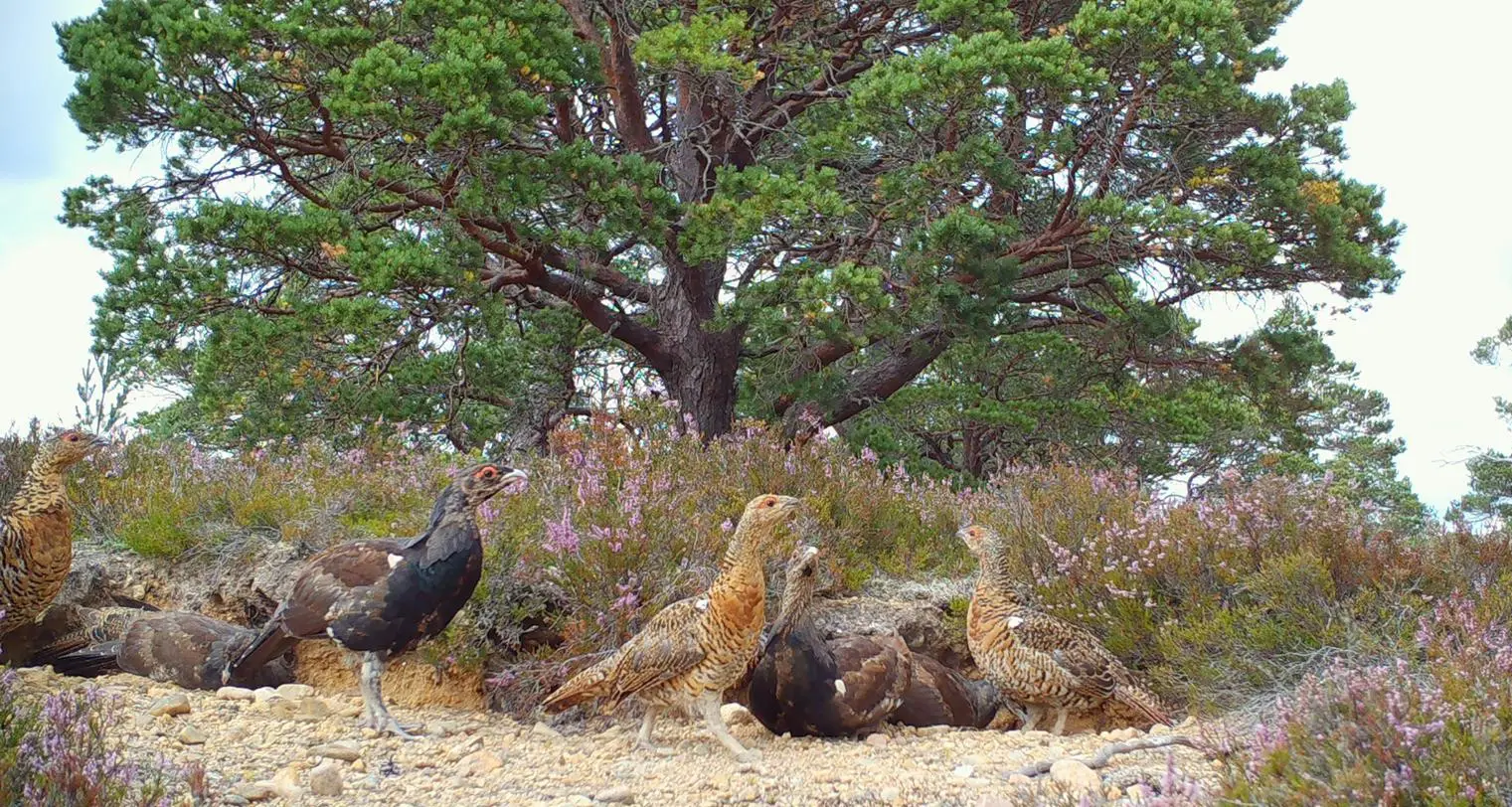
    a group of young capercaillie in a dust bath with a tree behind them

    Almost a hundred cameras were set up across the 60,000 hectares of land that makes up the Cairngorms Connect project area. The equipment captured over 3,000 images and videos of capercaillie, from April to October of 2022, giving us a more accurate assessment of their distribution and breeding success in the Highlands.

    Cairngorms Connect is a partnership working to enhance habitats, species and ecological processes within the UK’s largest national park. 

    The goal of the cameras is to help our ecologists determine whether efforts to improve capercaillie-breeding numbers have been successful, without disturbing the birds.

    The images are now being processed and will help the team assess how many chicks hatched and survived during last year’s breeding season, which ran from March to September. 

    The work is being done by Jack Bamber, a PhD student at the University of Aberdeen who’s been funded by ourselves, Wildland Limited and the Natural Environment Research Council (NERC) doctoral training programme. 

    Traditionally, people used to monitor capercaillie broods by flushing them out with highly-trained pointer dogs. 

    Now, with inexpensive camera technology, we can keep an eye on them without disturbing or distressing them,’ says Bamber.

    Bamber explains that capercaillie love to bathe in dust. Their dust baths tend to be in areas of exposed earth, like upturned root plates of trees that have fallen over. They use the dust to get rid of lice and other pathogens, it also helps remove excess oil from their feathers.

    Therefore, Bamber placed 90 cameras around areas identified as dust baths. Out of the 300,000 images taken by the cameras, just 1% were of the nearly extinct capercaillie. 

    an animated image of a capercaillie and her chicks in a dust bath

    Their numbers have plummeted due to a combination of circumstances such as changes to springtime temperatures and frequently wet summers, which reduces breeding and chick survival. Capercaillie also fly into deer fencing and are sensitive to disturbance, which means they tend to avoid even good habitat if it’s within 100m of tracks or paths.

    We work with other land managers and organisations to put special management procedures in place to try to protect them, like removing deer fencing in forests with capercaillie, or making fences much more visible. 

    Predators such as foxes and pine martens can also reduce capercaillie breeding success. As part of the Cairngorms Connect Predator Project, food for the capercaillies' predators is tactically placed to distract and satisfy the predators, in order to keep capercaillie nests and chicks safe. These feeding stations are left for a short period of time when capercaillies are incubating eggs and rearing small chicks, this reduces the likelihood of increasing the number of predators. 

    Our wildlife ecologist and Cairngorms Connect Predator Project lead, Kenny Kortland says “we’ve been leaving deer remains out on the forest floor for predators like pine marten and foxes. The idea is that, if predators have easily accessible, very tasty food, they’ll spend less time looking for nests or chicks.” 

    The deer we used is from this year’s deer cull, which happens across the Cairngorms Connect Partnership area. 

    Kortland explained that diverse ranges of bird and animal predators are being restored in the park and it’s unlikely that culling one species of predator, such as foxes, will benefit capercaillie, given the range of predator species present.  

    “Therefore, we are trying to distract all the predators with free and easy-to-access food. This approach has worked in a long-term study in Norway, so we are hoping to replicate this success in Scotland. This is a modern approach to capercaillie management from ourselves, Wildland Limited and RSPB Scotland,” continued Kortland.

    Kortland said that since the food is only out for a limited time that it is unlikely to have a large effect on the breeding success of the predators.
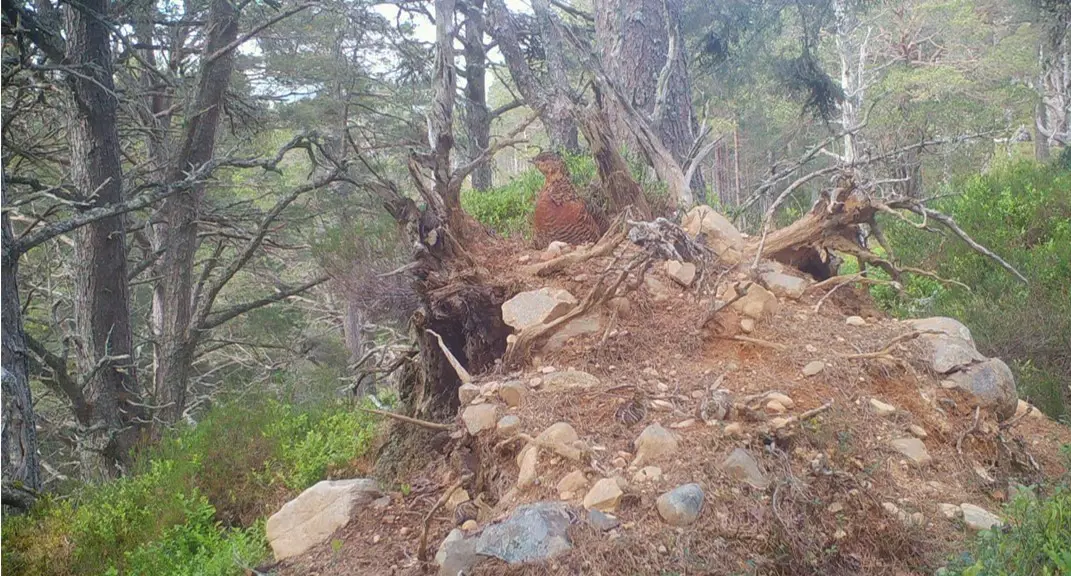
    A young capercaillie on top of a dust mound in a forest

    Chris Donald, Cairngorms Connect Board member and NatureScot head of operations said “Cairngorms Connect has a long-term, ambitious plan to double the forest in size, which will support a huge range of species, as well as locking up carbon and providing benefits for local communities and visitors. 

    “In the short-term, efficient unintrusive monitoring can help us better understand species at risk, such as capercaillie, and therefore better understand the measures required to save this species from the edge of extinction.”


    Latest from FLS

    1. 12 Jan 2026

      Lesley's article

    2. 03 Oct 2025

      Scotland's Climate Week 2025: Working together in the Angus Glens

    3. 29 Sep 2025

      Scotland's Climate Week 2025: Working with partners to support beaver populations

    4. 19 Sep 2025

      Martens on the Move at Kirroughtree

    5. 20 Aug 2025

      Protecting endangered apple trees through teamwork

    Share this article

    • Share on Facebook
    • Share on X
    • Share on LinkedIn

    Feedback

    There is a problem

    Feedback

    Thank you for your feedback

    User feedback form


    Your feedback helps us to improve this website. Do not give any personal information because we cannot reply to you directly.


    Your feedback helps us improve this website. Do not provide any personal information here. If you need to get in touch with a query, please contact us.


    Your feedback helps us improve this website. Do not provide any personal information here. If you need to get in touch with a query, please contact us.

    Forestry and Land Scotland Logo

    Follow us on

    • Forestry and Land Scotland on Facebook
    • Forestry and Land Scotland on Twitter
    • Forestry and Land Scotland on Instagram
    • Forestry and Land Scotland on LinkedIn

    Utilities

    1. Accessibility
    2. Cookies
    3. Privacy Notice
    4. Terms and Conditions
    5. Freedom of Information
    6. Modern Slavery Statement

    Quick links

    1. Media Centre
    Forest Stewardship Council, the mark of responsible forestry Programme for the Endorsement of Forest Certification, PEFC
    © Crown Copyright
    Forests and land that Scotland can be proud of Link to gov.scot gov.scot