Forestry and Land Scotland Logo
  1. Visit
      1. Find a forest
      2. Explore forest parks
    1. Accessible forests
    2. Stay the night
      1. Waymarked trails
      2. Cycling
      3. Mountain biking
      4. Photography
      5. Orienteering
      6. Camping
      7. Treetop adventure
      8. Water sports
      9. Horse riding
      1. Things to see
      2. Trees
      3. Wildlife
      4. Heritage
      5. Things to see in Winter
    3. Plan a visit with a group
    4. Visiting safely
    5. Parking
    Forest map

    Search for a forest by map

    Forests & trails information and closures

    An overview of all closures and high risk warnings on trails.

    Stay the night

    Park overnight in selected forest car parks as part of our motorhome scheme.

  2. About us
      1. Who we are
      2. Our mission and vision
      3. Leadership team
      4. Our values
      1. Careers
      2. Current Vacancies
      3. What we offer
      4. Candidate information
      5. A day in the life
      6. Apprenticeships
    1. Key documents
    2. Our impact
    3. Our approach to Gaelic
    Current Vacancies

    Some text

  3. What we do
      1. Taking Climate Action
      2. The climate emergency
      3. Forest resilience
      4. Peatland restoration
      5. Carbon offsetting
      6. Biodiversity
      7. Renewable energy
      1. Managing the land
      2. Planning our land management
      3. Our sustainable forestry
      4. Our tree nursery
      1. Conservation
      2. Habitat conservation
      3. Wildlife conservation
      4. Historic environment conservation
    1. Supporting outdoor exploration
    2. Working with communities
    3. Our projects
  4. Living and Working
      1. For businesses
      2. Timber sales
      3. Procurements and tenders
      4. Business opportunities
      5. Farming opportunities
      6. Venison sales
      7. Firewood sales
      1. For communities
      2. Transfer land and buildings to your community
      3. Land management plan consultations
      1. Permissions and Permits
      1. Learning and Education
      2. Outdoor learning
      3. Activity sheets
    1. Buy Land or Buildings
    Land management plan consultations

    Text here

    Current job opportunities

    Text here

  5. Get involved
    1. Have your say on consultations
    2. Hold an event
    3. Apply for a community asset transfer (CAT)
    4. Arrange a visit
    5. Work with us
  6. News
  7. Contact
Suggested links
    1. Home
    2. News
    18 November 2020 4 minutes

    Tree Trials: Testing trees for the future

    With more frequent occurrences of extreme weather, and increased spread in tree-based diseases, how do we prepare forests throughout Europe to meet the strain of climate change? Back in 2012 several trials were started throughout the UK to monitor how different tree species coped in the changing British climate with the aim of diversifying future planting to create more resilient forests. Here, Matt Parratt from Forest Research, the UK's principal forestry and tree related research organisation, discusses the initial findings from one trial based in the Scottish Borders.

    Forestry in Britain is reliant on a small number of tree species – approximately 96% of coniferous forest consists of just nine species, and one species in particular, Sitka spruce, makes up 52% of conifer forest cover. Broadleaf forests face similar issues with oak, birch and ash making up 46% of broadleaved woodland, but with diseases like Ash Dieback spreading across the UK and Europe, this reliance on certain species creates vulnerability in our forests. Viewed through the twin lenses of climate change and forest health, this ‘eggs in one basket’ approach is potentially problematic. One of the policy responses to this has been to promote more resilient forests by encouraging greater species and genetic diversity. But how do we decide which species will be suitable for future forestry?

    The answer is trials – long term tests that look at survival, growth and issues of pests and diseases. After a gap in large scale species trials of around 40 years, a new series of trials was established in 2012 comprising two sites in England, one in Wales, and two in Scotland, including a trial in Glentress forest. The Glentress trial contains 14 distinct species, with between 1 and 3 provenances (the location of the trees that produced the seed) of each present. For example, Scots pine (Pinus sylvestris) is represented by trees from Scotland, Spain and Poland. Other species present include Atlas cedar (Cedrus atlantica), red oak (Quercus rubra), Silver birch (Betula pendula), Oriental spruce (Picea orientalis) and Nordmann fir (Abies nordmanniana). Sitka spruce (Picea sitchensis) was included as a standard species for comparison. 
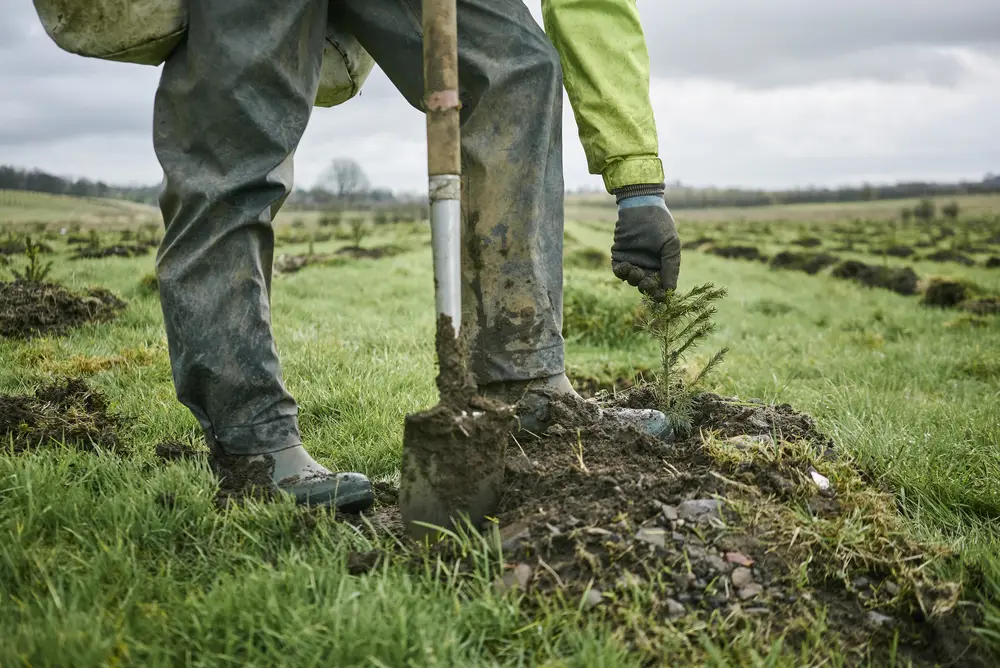
    Image of saplings being planted

    Each combination of species and provenance was planted in plots of 49 trees, giving a total of 32 plots. This was repeated twice more on the site to give 3 separate blocks. Replication like this allows us to apply statistical analyses to be more certain that the observed results are ‘true’ and not down to chance.  

    Survival and height have been assessed each year at the end of the growing season, as well as checks of each plot for signs of pests and disease. The Sitka spruce suffered with green spruce aphid (Elatobium abietinum) in 2019, with high levels of defoliation, and a number of silver birch were almost totally defoliated in the second year by sawfly larvae. Otherwise, all of the species have been healthy. 

    It’s early days yet, but there are hints of some interesting comparisons between species and provenances. After seven growing seasons, silver birch is the front-runner in terms of height (with an average of 562 cm), followed by European larch (378 cm), and Douglas fir from coastal Oregon (355 cm). 
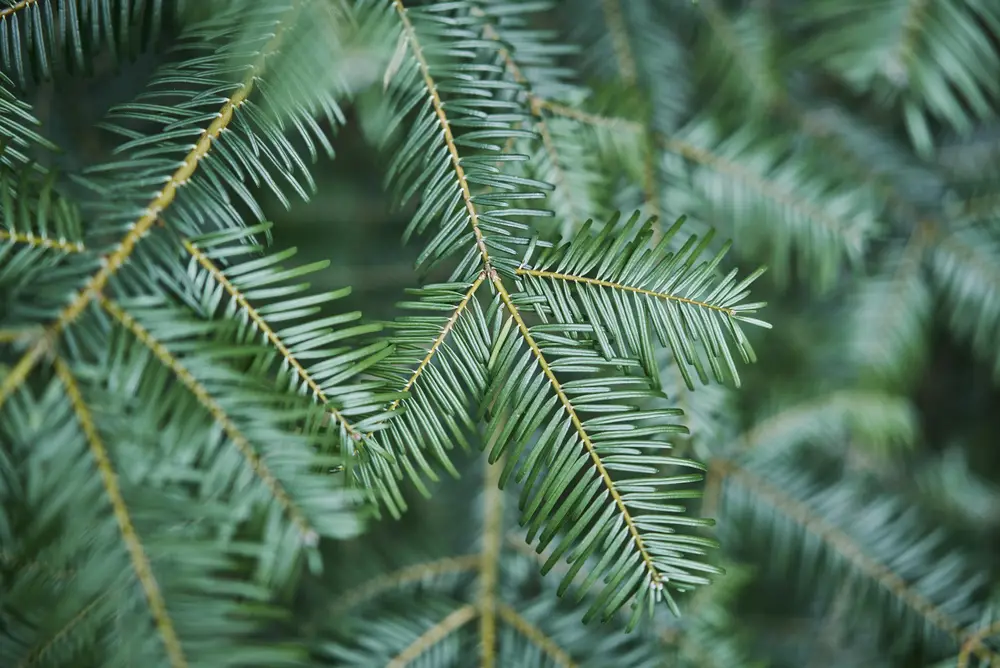
    Image of conifer needles

    Looking at one species in more detail, we can start to see differences based on provenance. Douglas fir from the Siskyou mountains in Oregon had an average height of 278 cm, and can be compared with 325 cm for trees from Washington state, and 355 cm from coastal Oregon. Survival-wise they were 69%, 74%, and 80% respectively. 

    Comparisons at this stage must be taken with caution, but as the trial goes on the data obtained from this trial and others will help to guide our selection of species and provenances for resilient and sustainable forestry into the next century. 

    Notes

    For more information on these trials, and our work on emerging species contact Chris Reynolds chris.reynolds@forestresearch.gov.uk or Matt Parratt matt.parratt@forestresearch.gov.uk 

    Visit Forest Research

    Visit Project Reinforce


    Latest from FLS

    1. 12 Jan 2026

      Lesley's article

    2. 03 Oct 2025

      Scotland's Climate Week 2025: Working together in the Angus Glens

    3. 29 Sep 2025

      Scotland's Climate Week 2025: Working with partners to support beaver populations

    4. 19 Sep 2025

      Martens on the Move at Kirroughtree

    5. 20 Aug 2025

      Protecting endangered apple trees through teamwork

    Share this article

    • Share on Facebook
    • Share on X
    • Share on LinkedIn

    Feedback

    There is a problem

    Feedback

    Thank you for your feedback

    User feedback form


    Your feedback helps us to improve this website. Do not give any personal information because we cannot reply to you directly.


    Your feedback helps us improve this website. Do not provide any personal information here. If you need to get in touch with a query, please contact us.


    Your feedback helps us improve this website. Do not provide any personal information here. If you need to get in touch with a query, please contact us.

    Forestry and Land Scotland Logo

    Follow us on

    • Forestry and Land Scotland on Facebook
    • Forestry and Land Scotland on Twitter
    • Forestry and Land Scotland on Instagram
    • Forestry and Land Scotland on LinkedIn

    Utilities

    1. Accessibility
    2. Cookies
    3. Privacy Notice
    4. Terms and Conditions
    5. Freedom of Information
    6. Modern Slavery Statement

    Quick links

    1. Media Centre
    Forest Stewardship Council, the mark of responsible forestry Programme for the Endorsement of Forest Certification, PEFC
    © Crown Copyright
    Forests and land that Scotland can be proud of Link to gov.scot gov.scot