
Tree Disease In Scotland
Given the long lives of trees, it can be surprising to learn that many trees in Scotland are at risk from pests and diseases. Whilst some trees can live for centuries, some infections can cause them to deteriorate and die within a few weeks. We look after a large proportion of Scotland’s forests. Therefore our work to prevent and slow the spread of infections is crucial in keeping our national forests and habitats in good health.
Right now, Scotland’s forests are facing threats from several diseases and pests. Below, you’ll find some answers to frequently asked questions about how we prepare for and respond to these threats. And what you can do to help keep our forests healthy.
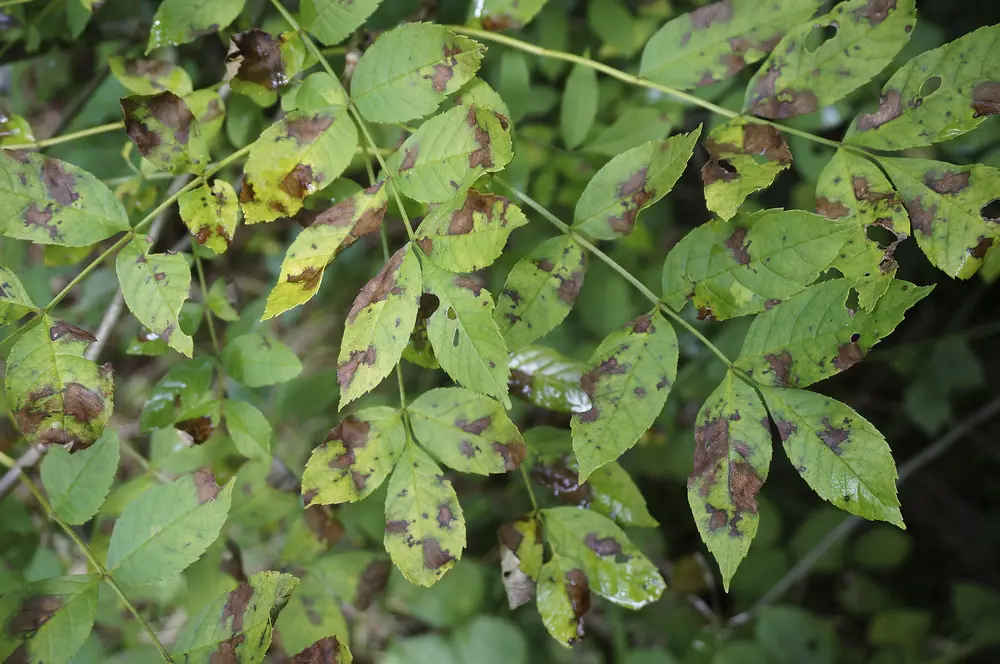
Why do you check for tree diseases?
It’s vital to monitor the health of our forests for diseases and invasive pests. Left unchecked, these threats can cause widespread tree deaths. This can lead to several serious issues:
- A loss of useful timber, and thus carbon storage
- Create large changes in habitats affecting all wildlife
- Cause unstable deadwood that can, in some cases, pose a risk to forest visitors and nearby infrastructure.
What are the current threats?
There are several diseases and pests that are being monitored by FLS:
Phytophthora Ramorum (P. Ramorum)
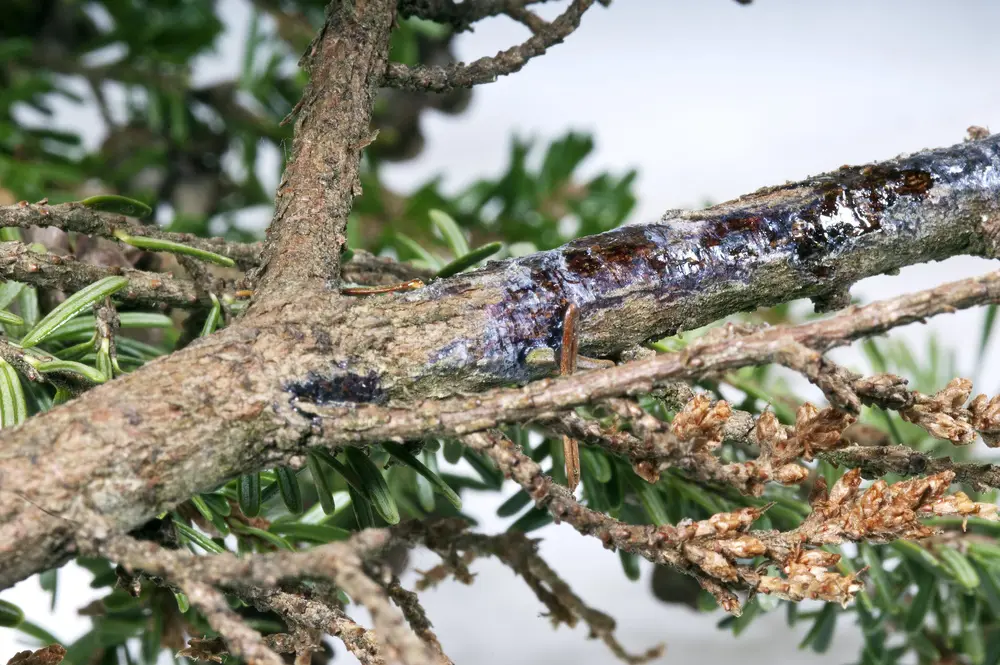
A tree infected with P Ramorum
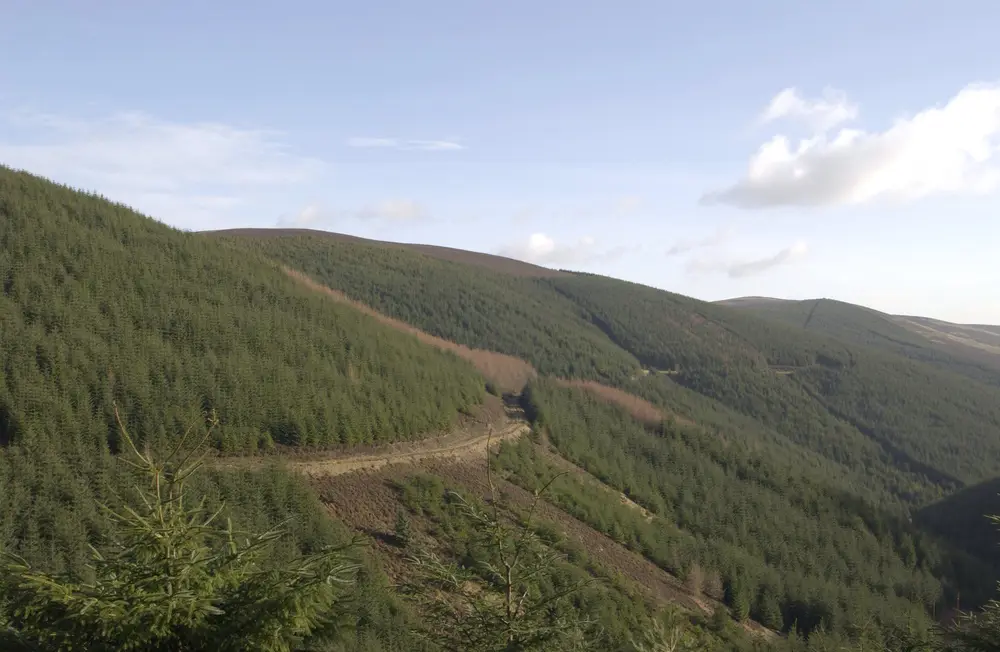
This is one of the biggest threats to trees in Scotland right now, mainly affecting larch trees. Symptoms of P. Ramorum on larch trees include orangey-brown needles in spring and summer when larch should be green. It can cause infected branches and then whole trees to die. In south and west Scotland, the disease is so prevalent that it cannot be eradicated.
Large scale felling operations are ongoing to remove the infected trees. Work is also underway throughout Scotland to reduce further spread northwards and eastwards. Removing infected trees stops sporulation and gives other trees a better chance of survival.
Ash Dieback
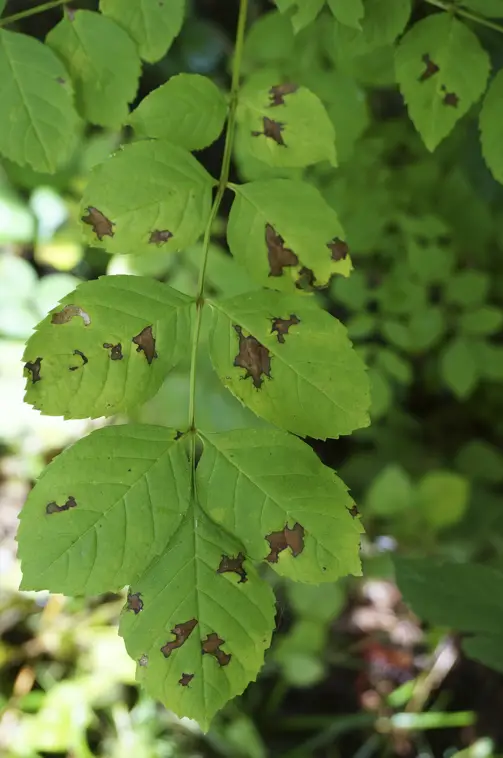
Leaves showing signs of infection
This disease was first recorded in the UK in 2012 and is now widespread throughout Scotland. Affecting ash trees, the fungus attacks the leaves and stem, eventually infiltrating the tree and blocking the movement of water through the trunk. This causes the tree to produce less foliage and ‘die back’. Trees affected by ash dieback can become brittle and eventually die.
Ash trees with this disease can sometimes die within only a few years, although others can survive for much longer. If trees become brittle, this can create a health and safety risk due to the possibility of branches or trees falling. In these cases, they need to be managed carefully and sometimes removed, especially from near paths, roads or buildings.
We are working with a number of partners across Scotland as part of the Ash Dieback Risk Group. By assessing the extent of the disease, we can help to spot it early and take action.
Great Spruce Bark Beetles (D. Micans)
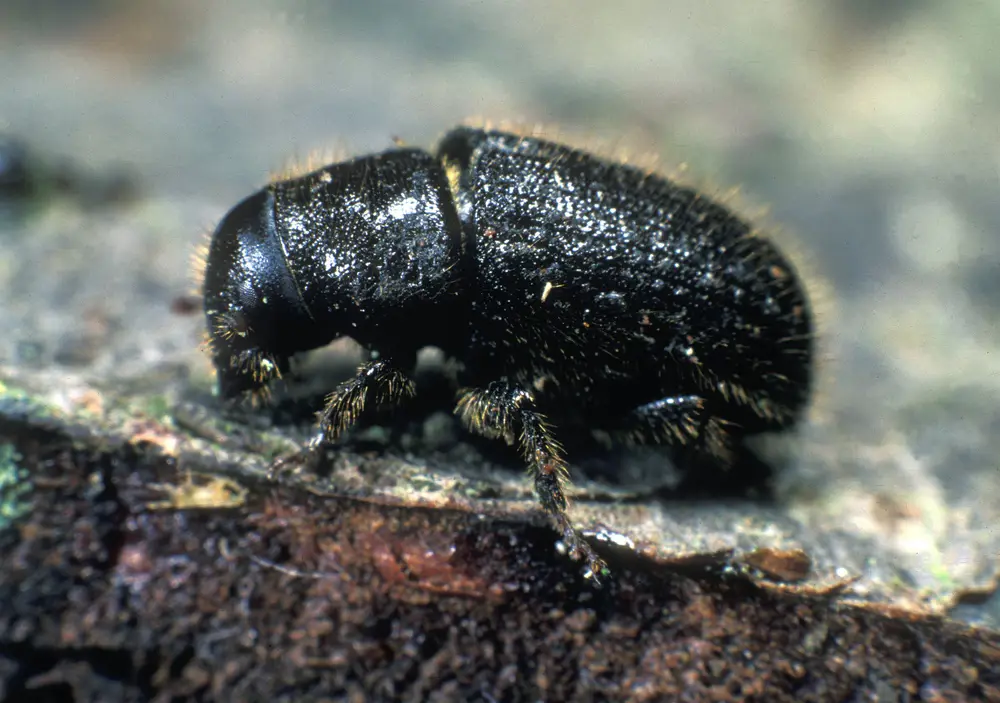
The Great Spruce Bark Beetle
This is a non-native pest that preys on pine and spruce trees. First, it tunnels into the bark of living trees to lay its eggs. The larvae then feed and develop, forming galleries that weaken, and in some cases kill, the host tree. It is now an established pest in southwest Scotland and is moving north.
As spruce is Scotland’s most important timber tree, managing this pest is a high priority. Once detected, the release of a specific predatory beetle can massively help in destroying the invading beetles. This biological control method is used where D. Micans is found in Scotland. Vigilance and an effort to stop the spread of the beetle via timber transportation are key to reducing this threat.
How do you check for these threats?
Late spring and summer is a key time for assessing forests for infected trees. As leaves bloom, those trees that are suffering are recognisable by their reduced canopies or discoloured leaves. Surveys for controlled pests and diseases such as P. Ramorum and D. Micans are carried out by the forestry regulator, Scottish Forestry. Through ground surveys and helicopter flights, much of our land is assessed ready for vital works to be carried out later in the year.
We look for signs of sick trees in our forests and report any suspected findings of pests and diseases to Scottish Forestry. By taking action quickly, we can slow or stop the spread of pests and diseases. Given the amount of land we manage, we have a vital role in keeping Scotland’s trees healthy.
Checking for diseases is often done from the air so as to cover as much ground as possible
What does this mean for the future of Scotland’s forests?
Left alone, many of the current threats could decimate forests and habitats all over Scotland. By monitoring these risks, we can protect some areas and work to restore others.
As the climate changes, we expect new diseases and pests to appear to threaten our forests and land. Warmer temperatures can give some pests and diseases a helping hand to move into areas that were previously too cold for them to survive. To prepare and combat these threats, we are adapting our work to create forests that are better able to stand-up to an uncertain future by:
- By planting forests with a greater mix of tree species, and managing diverse forests and woods, we can reduce the chance of a single disease or pest wiping out large areas.
- Growing our own saplings in Scotland or sourcing from within the UK to avoid importing pests when planting new woodlands.
- Actively removing invasive non-native species which threaten our forests.
- Running trials to find species of trees that might be resistant to certain diseases.
How can I help to protect Scotland’s forests and land?
There are no simple cures for many of the diseases and pests threatening our forests. Stopping the spread and taking action before they get out of hand is the best defence we have. That’s why we ask all visitors to our forests and land to Keep It Clean. Before going to a forest, make sure your boots and bikes are free of dirt and debris. This simple action can cut down the chances of diseases spreading from one forest to another.
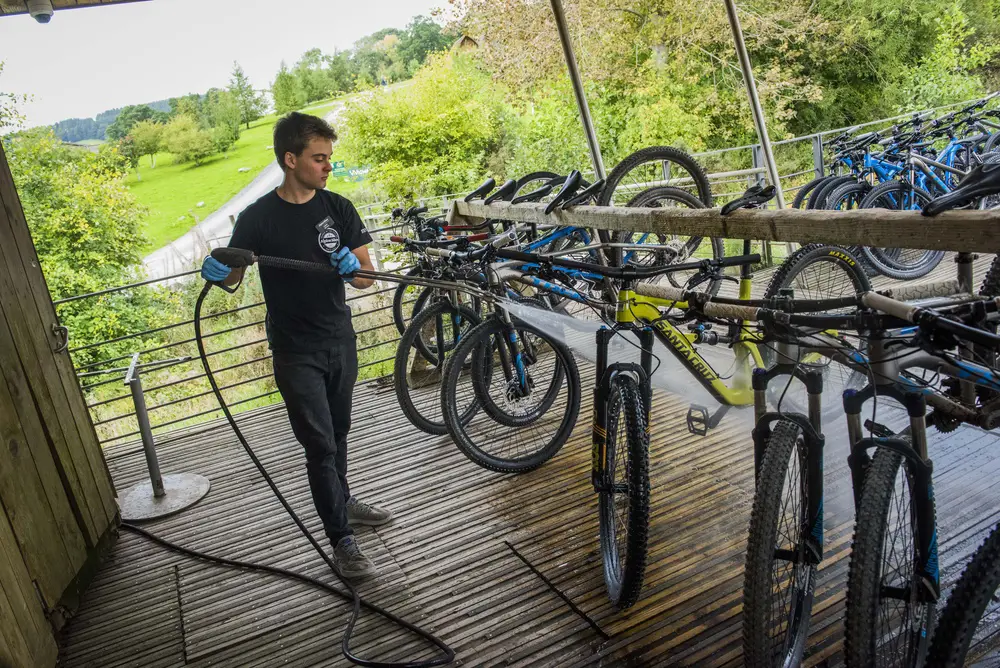
Cleaning bikes, footwear and camping equipment between trips helps prevent the spread of diseases and pests