
There's More To Conifers...
Harvesting trees has always been of high value to society. Whether clearing land for agriculture, as a source of fuel, or material for construction, there is much to be gained from a felled tree.
Planting trees has not had such a high value until the last century. Phases of planting following both World Wars did much to restore Britain’s forests, but plenty of barren years since then have taken their toll too. However, the last 20 years has seen a greater environmental awareness, and the climate emergency has made tree planting a priority.
Over 75% of trees planted by Forestry and Land Scotland last year were conifers, with Sitka spruce being the main species. Some think this isn’t so great for ecology but the truth is quite different. There’s more to conifers than meets the eye…
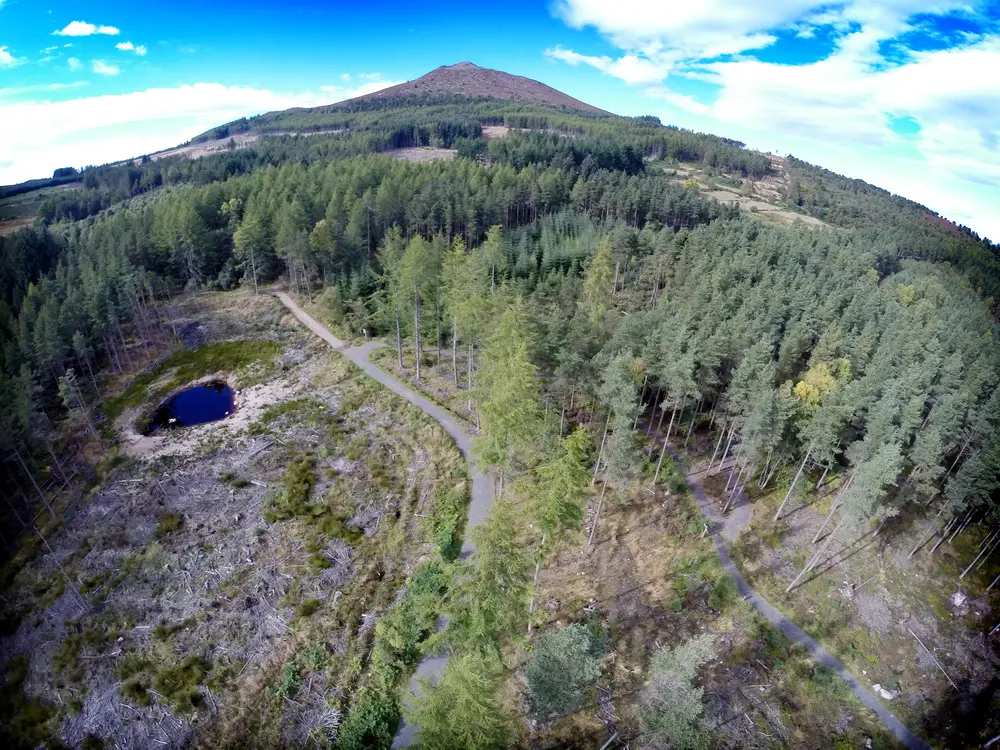
A typical conifer forest with mixed areas of younger and older trees, alongside harvested areas, creates a varied landscape that is home to many animals.
Biodiversity
When we think of biodiversity it's easy to think only of our most cherished animals, like eagles and wildcats. Beyond these stand-out creatures, Scotland's forests are home to a wealth of life that is vital to the ecosystem.
Conifer plantations are no exception. Insects and fungi flourish in these areas and provide food for a variety of creatures. Larger animals like pine marten also thrive in this environment, and raptors often prefer planted forests as nesting sites. Rare species also find a home within conifers. At the last count, Scottish conifer forests were home to 42 species on the IUCN threatened animal Red List.
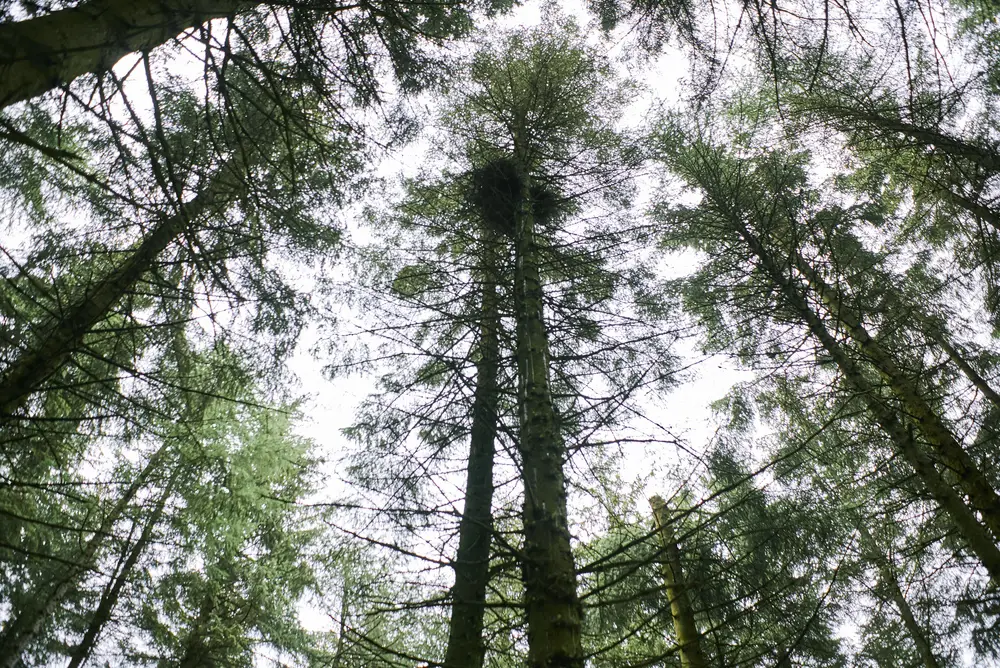
A raptor nest high up in the canopy of this conifer plantation.
Regular forest management also aids biodiversity. As areas are felled and re-planted, a mosaic of different habitats is created. This includes open land, areas of clear-fell, broadleaves, deadwood, stumps and more.
Our forests are managed to balance a variety of needs, and biodiversity is a key element in this process.
Environment
It’s also a case of what conifers can do for the environment better than other trees.
Most of Scotland has not held trees in more than 3,000 years. In this time, soils have degraded to make them less fertile, less healthy, and less able to store carbon. Forests and woods are a great way to improve the quality of soils. Conifers thrive on this thin soil, and are proven to grow better than their broadleaved cousins. This makes planting conifers one of the best methods for improving soil quality.
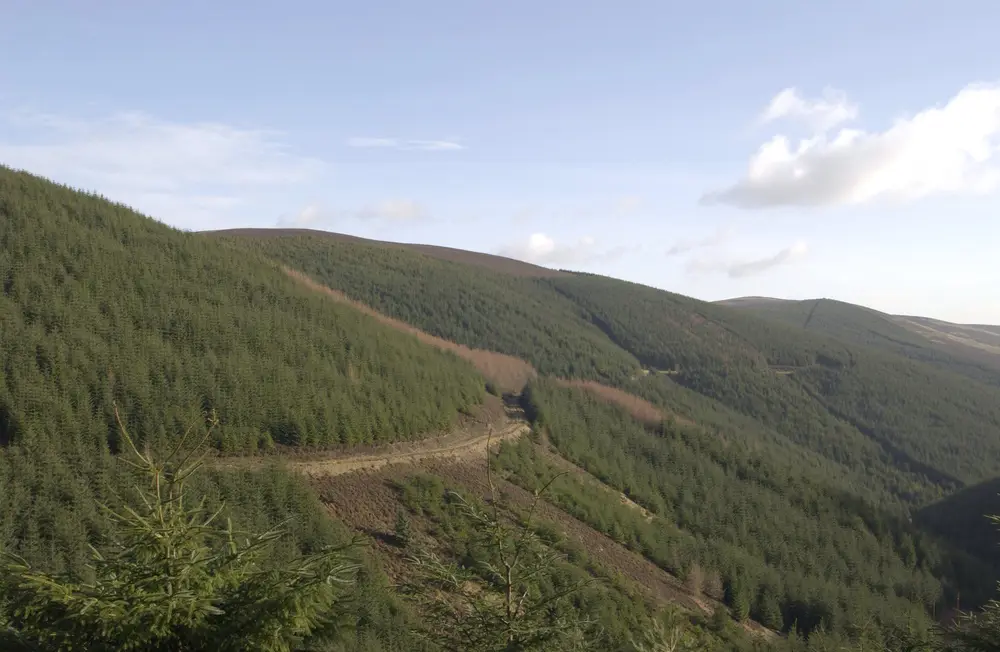
This sea of green is both providing a home to wildlife, capturing CO2, and growing essential materials for numerous uses.
For any given area, Sitka spruce provides three times the volume of timber compared to a native broadleaved wood, and does it twice as quickly. The efficiency of conifers means less need to disturb other natural woodlands. Also, the more wood grown and harvested in Scotland means less wood is required from overseas. This saves transport emissions and can help preserve old growth forests abroad.
Plantation conifers are proven to lock up more CO2 over time than native broadleaves, with Douglas fir and Sitka spruce leading the way. Plus, in the time it takes broadleaved trees to mature, it is possible to grow three or four generations of conifers. While society has a high demand for wood-based products already, softwoods like these are now being used to replace concrete and steel in construction. This efficiency can’t be ignored, and means C02 can be locked up in buildings, reducing the need for more polluting materials.
While all trees can absorb carbon and become a useful material, we have a need for more (and more sustainable) timber sooner rather than later. Conifers are the logical choice to provide this.
Producing the future
We all know a tree can produce wood for construction or furniture. However, new applications are being developed to make every tree go further.
The primary parts of wood (cellulose and lignin) and the extracts in wood and bark are being put to a huge number of uses. Beyond the obvious wooden items that are in everyone’s home, there are pallets for transport, sound boards for musical instruments, and even face masks.
Delving deeper shows that many of the uses of conifers are only now being understood. Chemicals and materials from conifers are used in medicines, paints, clothing and textiles. Even oils, foam, cosmetics, flavourings, carrier bags and flexible LCD screens contain elements from these trees.
With continuing research, the value of conifers to a sustainable planet is only increasing.

Laminated beams made from conifers. New construction techniques mean wood can be used to replace harmful concrete and energy-intensive steel.
The bottom line
None of the above is to say there is no need for broadleaved trees. There absolutely is a need for native woodland, and more of it. However, conifers are routinely dismissed as ugly, unsuitable, or money making exercises. The job of our forest planners though is not to make money. It is to plant the right trees in the right places to balance the needs of biodiversity, the environment, and society. The efficiency and versatility of conifers makes them a crucial component in helping Scotland become a sustainable nation.