
The Apprentice's View
Rachel Orchard is one of our Trees and Timber Apprentices working from our base in Durris, Aberdeenshire. As a newcomer to the forestry sector she has hit the ground running by winning the Lantra ALBAS award for Learner of the Year. After almost a year in the role, we asked Rachel to give us her thoughts on modern forestry, the challenges faced, and how young people can thrive in this industry.
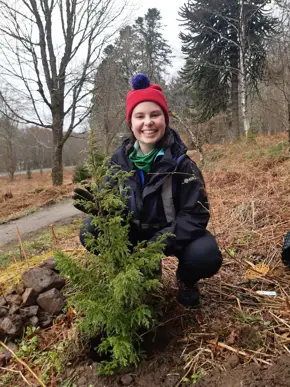
I’ve been a Trees and Timber Apprentice with Forestry and Land Scotland for about a year, based in Durris, Aberdeenshire. After finishing my Liberal Arts & Sciences bachelor’s degree online during the pandemic, I quickly realised that I didn’t want an office job. So I began looking into outdoor industries. Despite knowing very little about what working in forestry would be like, I’ve always loved trees and was curious to learn more.
Thankfully, the outdoors lifestyle has turned out to be everything I hoped for. Whether it is wildly windy and wet or glorious sunshine, the weather makes every day unique and is a key part of most conversations with colleagues!
As part of the Durris squad, my job is to carry out practical tasks to keep FLS forests running smoothly. With most forests serving many purposes like recreation, habitat generation, and sustainable timber production, it’s a varied role. I find the work stimulating and take great satisfaction from completing tasks that have a physical impact, such as using a chainsaw to safely fell a tree.
Over the course of my apprenticeship I have gained insight into many facets of the forestry industry. Site visits often raise concerns about current challenges, but also spark excitement for new opportunities. There is still so much scope for evolution within forestry. For example, I visited both a private and an FLS tree nursery to see the process of rearing saplings. This vital process seems simple at first, but is full of challenges:
- Both facilities I toured are expanding to meet the increasing demand for trees. Partly this is fuelled by government planting targets as part of climate change mitigation. What it means is that the nurseries need more seeds, more land and more facilities, which is no easy feat.
- The changing climate also makes choosing which species to grow especially difficult. Will species we plant now survive future pests and diseases which may arrive in Scotland? What species will thrive in warmer temperatures? Should we be looking to keep our forests native or look further afield for species and variants that could do better here?
- Diverse forests are known to be more resilient to pests, diseases and climate change. To do this, it means gathering seeds from a variety of species and provenances to ensure our forests have the best chance of thriving in the future.
I really enjoyed learning about and discussing these challenges. As forestry is often measured in decades, it means making the right decision now is crucial.
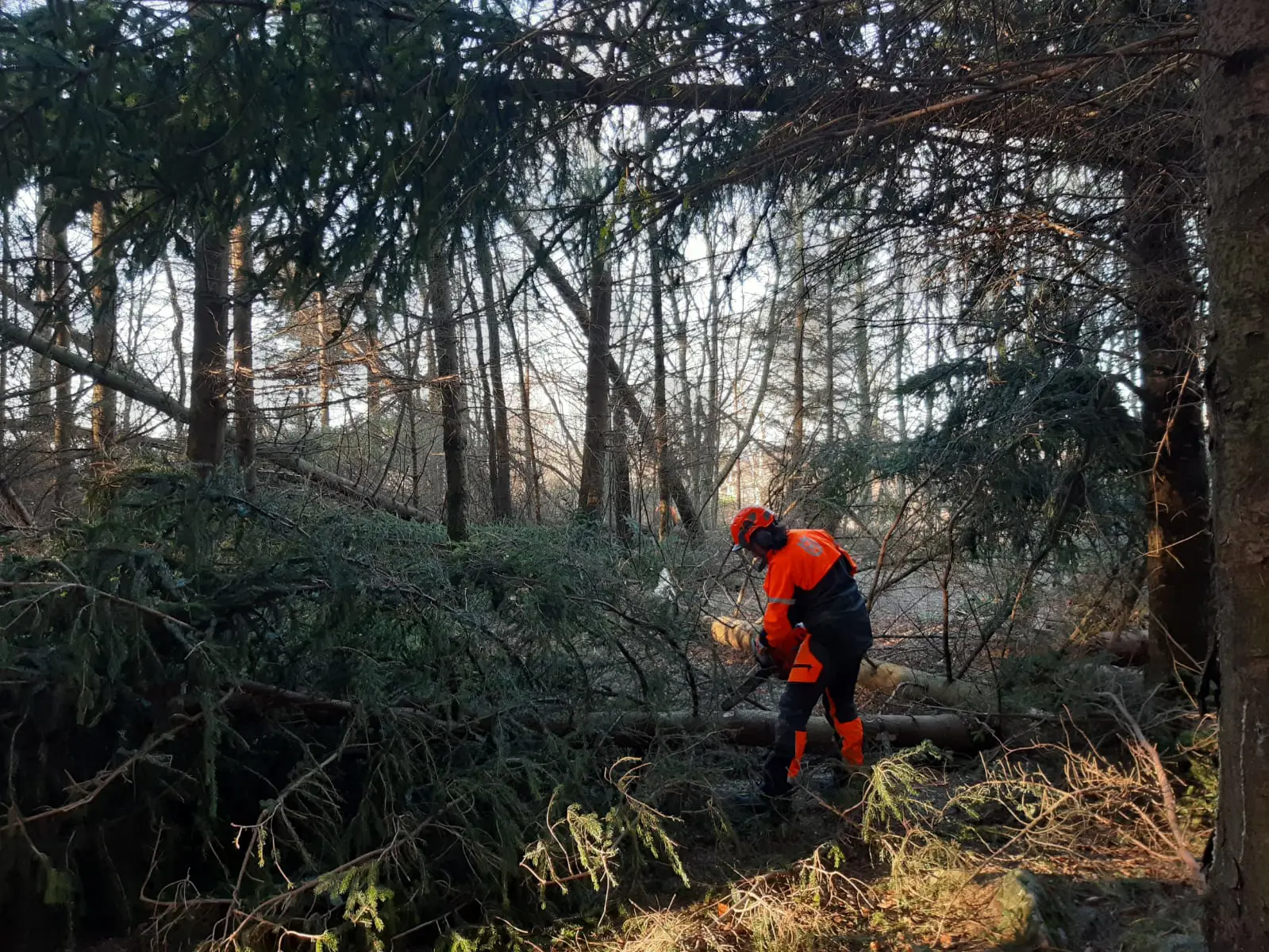
FLS’ own forest adaptation programme is trialling several new species like:
- Western Red Cedar
- Western Hemlock
- Macedonian Pine
- European Silver Fir
- Pacific Silver Fir
Combined with staggered planting, this means future forests will be more diverse in species and age. I think this change will help address the biodiversity emergency by making more niches for wildlife. This is crucial as forests can only regenerate if they are in a balanced relationship with their inhabitants. Think about how jays plant acorns that can sustain and spread oak woodland. I think more diverse forests are also needed to meet our human demands. By reducing the risk of pests, diseases and extreme weather to our forests, we can ensure there is sufficient local and sustainable timber. This reduces our reliance on timber from overseas, further reducing the carbon footprint of wood-based products.
Most broadleaf saplings are planted with plastic tubes and stakes for deer protection. One of the tasks I carry out is removing tubes to free the trees that have survived the deer’s persistent grazing. These tubes, if left uncollected, pollute the environment and can distort the trees they are meant to protect. Whilst plastic-free tree tubes are being developed I think we should be diligent about removing the legacy of these plastic tubes. As the trees mostly outlive and certainly outgrow us, I do not wish for future foresters to also be picking up bits of plastic tubing.
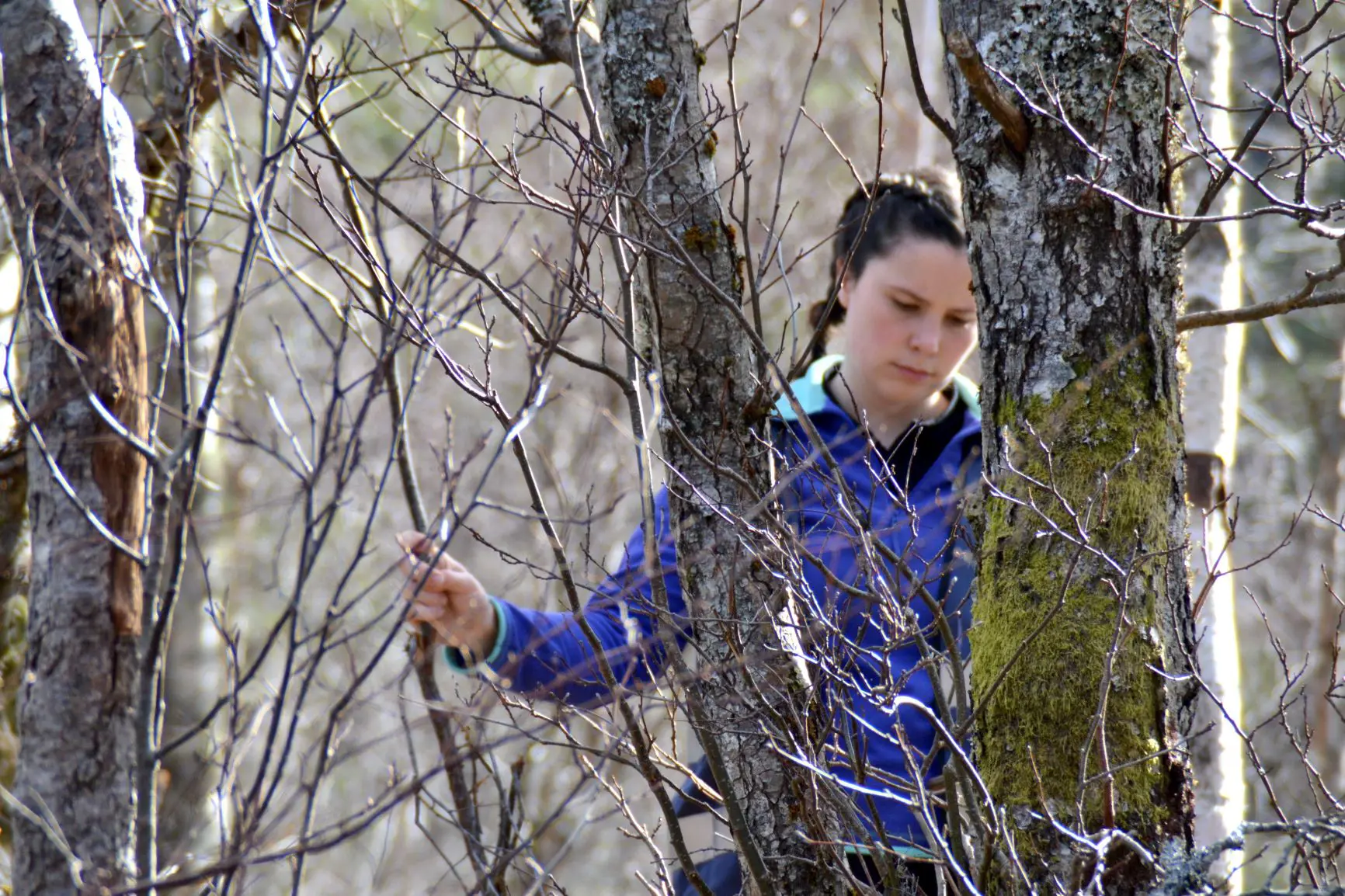
There is strong sense of community amongst foresters which is a great place to learn about original forest management practices. The variety and depth of knowledge among my colleagues means I’ve learnt about subjects as diverse as:
- How to use regeneration instead of planting
- Soil enrichment through broadleaf rotations
- Mixed species planting to enhance and maintain mycorrhizal networks
This community network is key for new, young foresters like myself to learn from those with decades of experience. It has really helped my understanding of forestry, and will ensure that past mistakes can be learned from, and best practices continued. This knowledge-sharing is also available through Scottish Forestry’s open-access database. In conjunction with other programmes and tools, it can equip foresters with detailed information to support management decisions. However, there is still room for improvement. The addition of an accessible dataset for all forest owners and managers to record their trials and progress would be a great asset. It could strengthen our understanding on what practices are working well, and encourage innovation to overcome challenges.
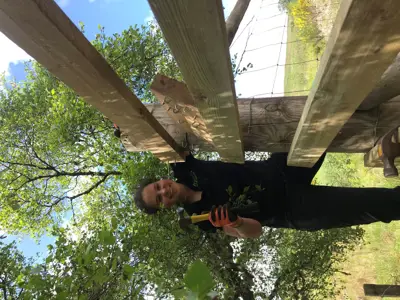
With the future in mind, I hope to play a positive part in addressing the changes forestry faces in the coming decades. Currently that role is on the ground but potentially, when I feel that I am ready, I’d like to move to a management or planning role. There are a lot of older foresters keen to pass on their knowledge to enthusiastic new entrants, but more could be done to spread the word about the diverse world of forestry. For example, community woodland groups can play an important role in engaging people of all ages and backgrounds to learn more about the opportunities in forestry. Similarly, teachers of all ages could be encouraged to highlight forestry careers for those interested in the outdoors.
In addition, Scottish Government initiatives such as the Climate Mitigation and Adaptation Practical Training Fund can provide forestry and ecology training. This gives an accessible route to develop skills for those hoping to enter the industry.
Most importantly in my view, we need to convince people that forestry is not only for big, beardy, 6’7” men (no-one in my team is over 5’8!). My fellow apprentice and Lantra’s ALBAS runner-up, Victoria Potts, and I are trying to help change this narrative and represent women in forestry through sharing our work on Instagram.