Forestry and Land Scotland Logo
  1. Visit
      1. Find a forest
      2. Explore forest parks
    1. Accessible forests
    2. Stay the night
      1. Waymarked trails
      2. Cycling
      3. Mountain biking
      4. Photography
      5. Orienteering
      6. Camping
      7. Treetop adventure
      8. Water sports
      9. Horse riding
      1. Things to see
      2. Trees
      3. Wildlife
      4. Heritage
      5. Things to see in Winter
    3. Plan a visit with a group
    4. Visiting safely
    5. Parking
    Forest map

    Search for a forest by map

    Forests & trails information and closures

    An overview of all closures and high risk warnings on trails.

    Stay the night

    Park overnight in selected forest car parks as part of our motorhome scheme.

  2. About us
      1. Who we are
      2. Our mission and vision
      3. Leadership team
      4. Our values
      1. Careers
      2. Current Vacancies
      3. What we offer
      4. Candidate information
      5. A day in the life
      6. Apprenticeships
    1. Key documents
    2. Our impact
    3. Our approach to Gaelic
    Current Vacancies

    Some text

  3. What we do
      1. Taking Climate Action
      2. The climate emergency
      3. Forest resilience
      4. Peatland restoration
      5. Carbon offsetting
      6. Biodiversity
      7. Renewable energy
      1. Managing the land
      2. Planning our land management
      3. Our sustainable forestry
      4. Our tree nursery
      1. Conservation
      2. Habitat conservation
      3. Wildlife conservation
      4. Historic environment conservation
    1. Supporting outdoor exploration
    2. Working with communities
    3. Our projects
  4. Living and Working
      1. For businesses
      2. Timber sales
      3. Procurements and tenders
      4. Business opportunities
      5. Farming opportunities
      6. Venison sales
      7. Firewood sales
      1. For communities
      2. Transfer land and buildings to your community
      3. Land management plan consultations
      1. Permissions and Permits
      1. Learning and Education
      2. Outdoor learning
      3. Activity sheets
    1. Buy Land or Buildings
    Land management plan consultations

    Text here

    Current job opportunities

    Text here

  5. Get involved
    1. Have your say on consultations
    2. Hold an event
    3. Apply for a community asset transfer (CAT)
    4. Arrange a visit
    5. Work with us
  6. News
  7. Contact
Suggested links
    1. Home
    2. News
    01 March 2022 5 minutes

    Seed to sapling

    Recently we delved into the process of collecting seeds to grow our trees. With 25 million trees planted in our forests every year, we need a lot of seeds. But what happens once we’ve got them? How do our seeds become forests? And how long does it take? 
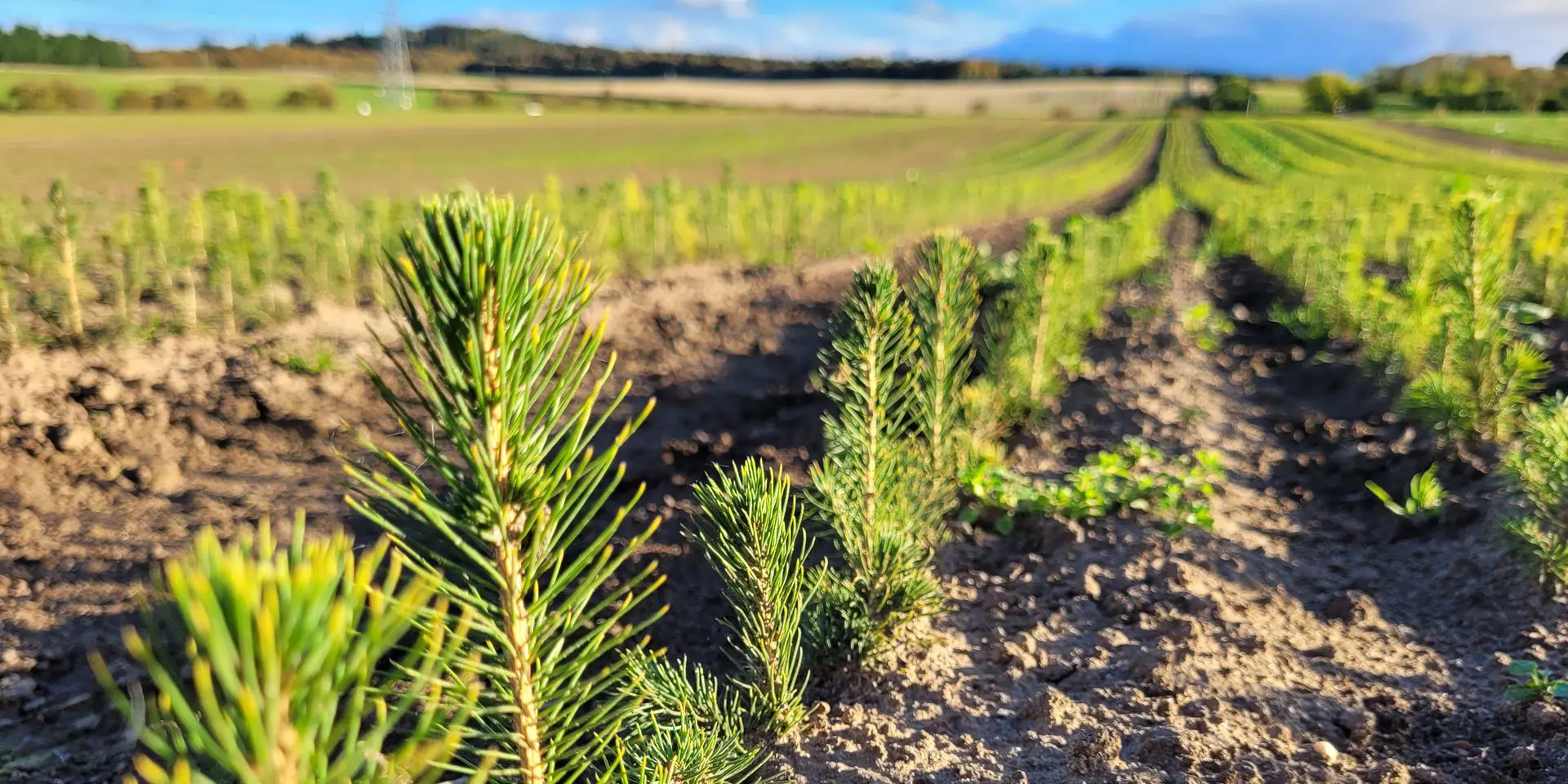
    Very small green coniferous trees planted in lines in a field with blue sky

    It sounds strange, but unlike seeds for your garden, we don’t initially plant seeds where we want the tree to grow. Sowing seeds directly onto land in the wild is extremely wasteful as most seed will not end up surviving to become a tiny tree. This is due to several factors like being eaten by animals, spoiled by extreme weather, or otherwise damaged. In turn, this will produce an inconsistent stand of trees and doesn’t maximise the use of our valuable seeds. Instead, we take our seeds and sow them in a controlled environment known as a tree nursery. 

    In the past we had many small nurseries across Scotland, but these days we have one large nursery at Newton, near Elgin, in north-east Scotland. The region sees a surprisingly high amount of sunshine and not too much rainfall. This makes it an ideal location for growing, and ours is not the only tree nursery in the area. 

    More about Newton Nursery

    The nursery environment looks and runs much like a farm. When the time is right, we broadcast sow the seeds initially in metre-wide beds around 100m long. At this point, the seeds grow in random locations within the rows. We then ensure weeds are removed and the entire nursery is fenced to protect them from animals, giving them the best chance to grow. 
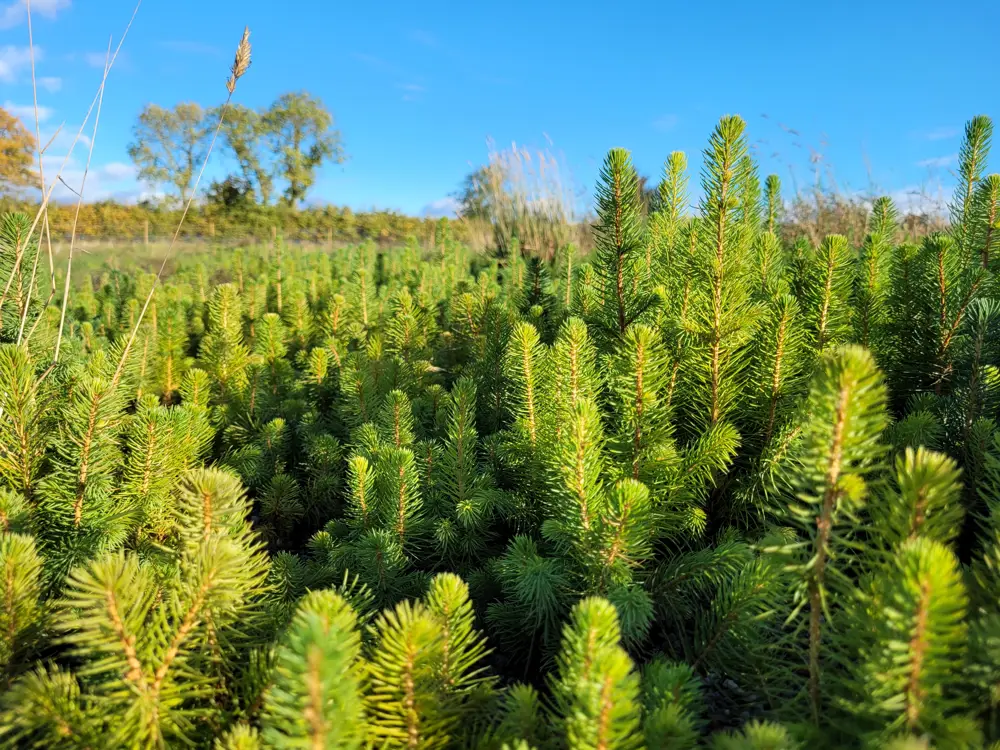
    Young green conifer trees growing in wide rows under blue skies

    Once our seedlings grow to a certain height, which is dependent on species, we lift them up from these beds and move them into beds in long lines, a process called lining-out. This allows us to give more space to each tree so it can continue to grow. Eventually, our seedlings reach a height where we can prepare them for moving to forests across the country. Heights vary but are typically between 15 and 40cm depending on the species. This whole process might take up to three years. 

    Looking to the future

    We’ve been working with the Scottish Government-backed CivTech team for several years to find solutions to common forestry issues. Innovations from this program have included TreeTape and SilviBio.

    TreeTape is a mechanised process of planting. Tiny 50mm tall trees previously grown from seeds in a glasshouse are placed in miniature paper pockets filled with Coir substrate (coir is made from coconuts). The TreeTape machine is able to plant around a million of these transplants in a day, compared to about 60,000 by existing machinery. We are still trialling this technology but it holds immense promise for making our nursery more efficient. You can find out more about this award-winning system in our news report.

    SilviBio is a specially formulated coating applied to seeds, and corresponding soil treatment. The eco-friendly formula traps moisture around the seed so they do not dry out. This has improved germination rates and means a more consistent crop is produced. Find out more in our news report.

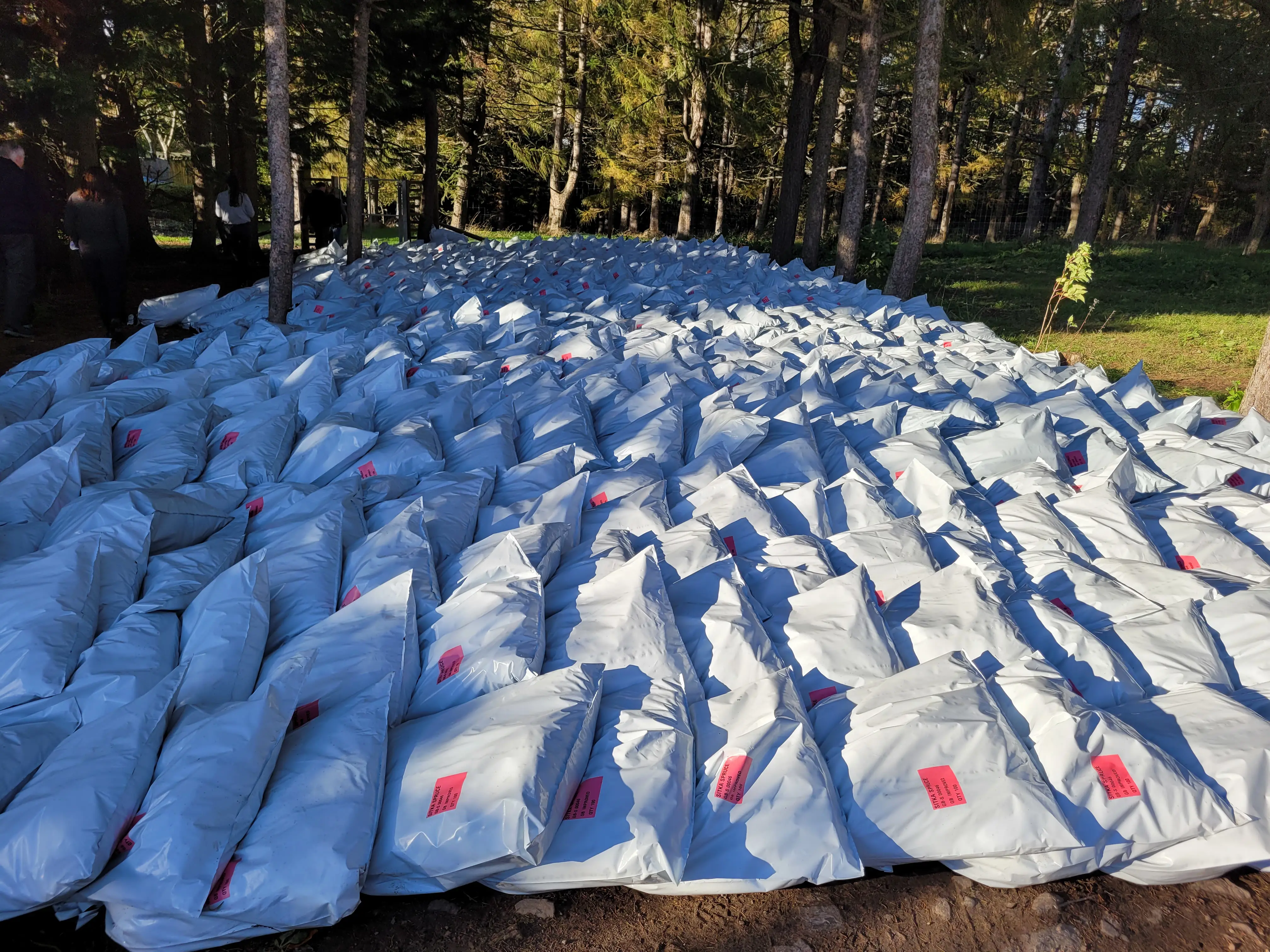
    Our nursery then gets an order from a regional team for so many thousand trees of a particular species. Using a specialist machine we can pull up the saplings and gather them in large crates. In our processing warehouse, they are graded into different sizes, culled or occasionally put back into the beds for further growth and packed into large bags for transportation. These bags can be taken directly out to the forest to be planted. 

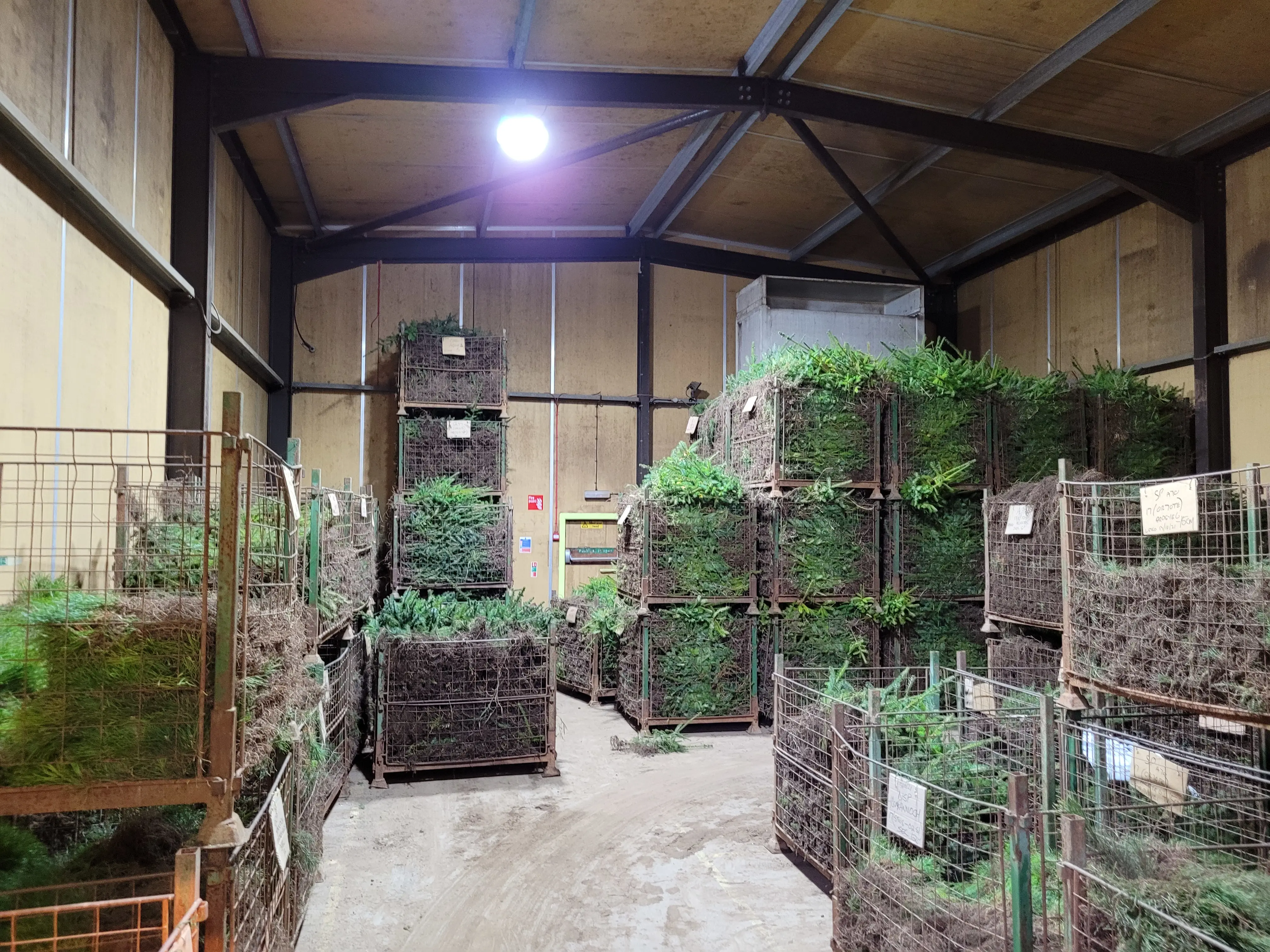
    When the weather is good we take advantage of that to lift as many transplants as possible to fill our humi store so that when the weather turns bad we can continue to work indoors to complete orders by grading and treating the trees with insecticide to protect against Pine Weevil and then bagging them up for despatch. Our specialist humi store is kept cool with a high humidity to preserve the trees out of soil.  

    When all the trees are ready, transportation is arranged and the team get all the bags into a lorry for the next step of their journey.  
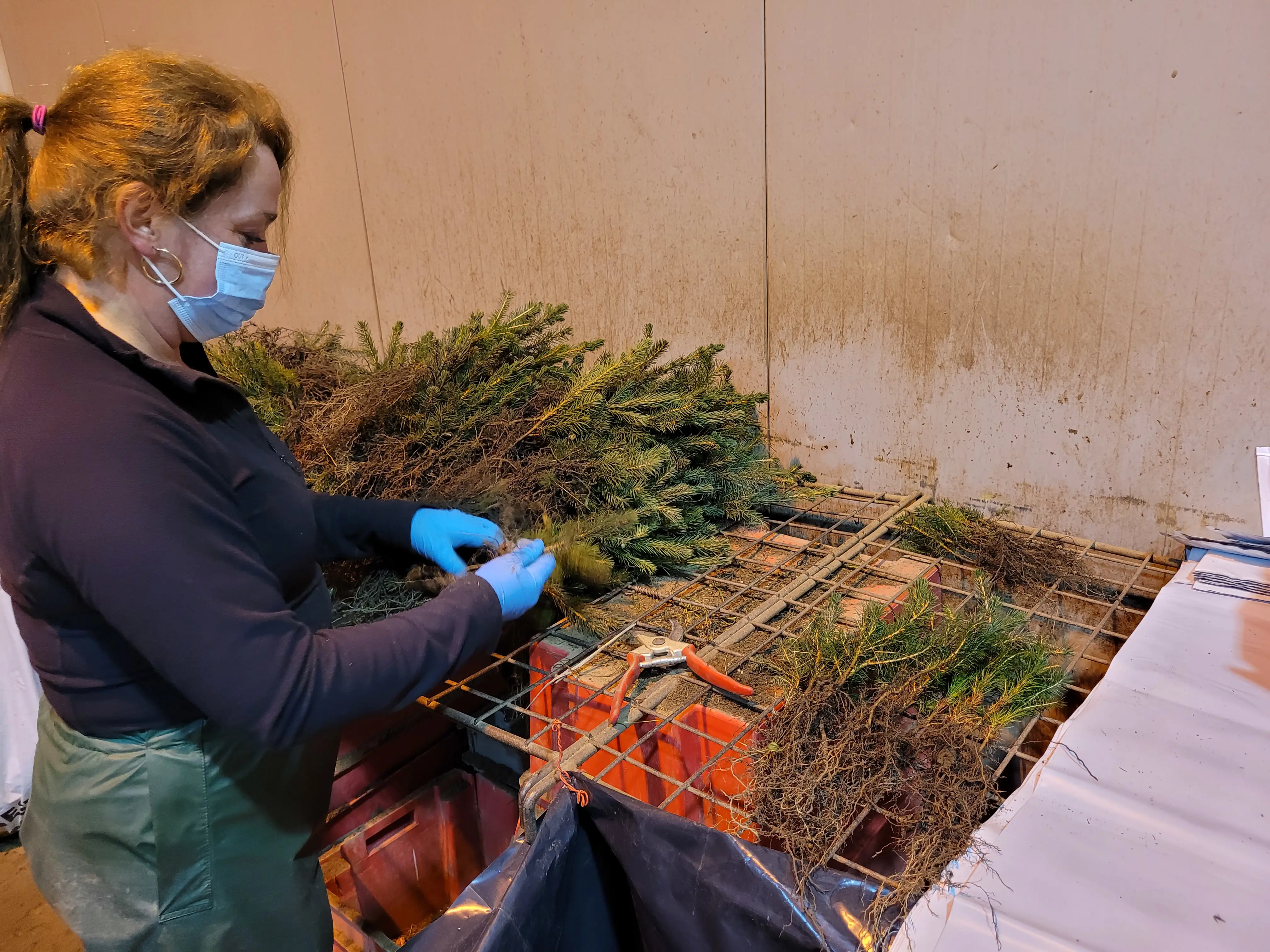
    A woman standing at a table inspecting young trees.
    Trees are graded by size and packed into bags before being sent out across Scotland.
    Crates of small trees stacked in a large warehouse.
    Inside the humi store. Cool temperatures with high humidity keep trees in good condition when out of soil.
    Lots of large white sacks placed on the ground.
    These bags contain thousands of young trees ready for delivery to forests throughout the country.
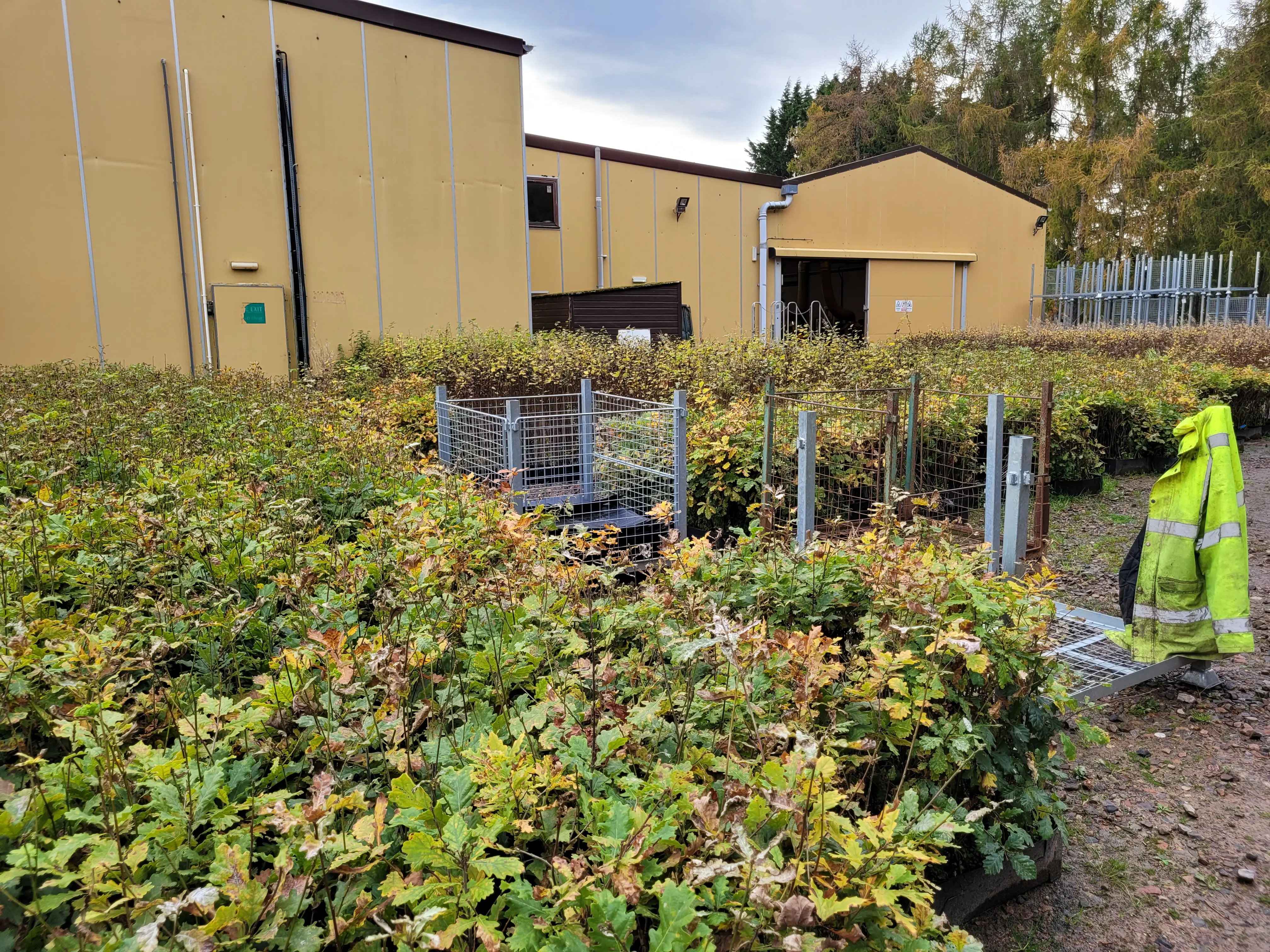
    Hundreds of broadleaf trees in creates beside a large warehouse
    Broadleaf trees out of soil and ready to be sent out for planting.
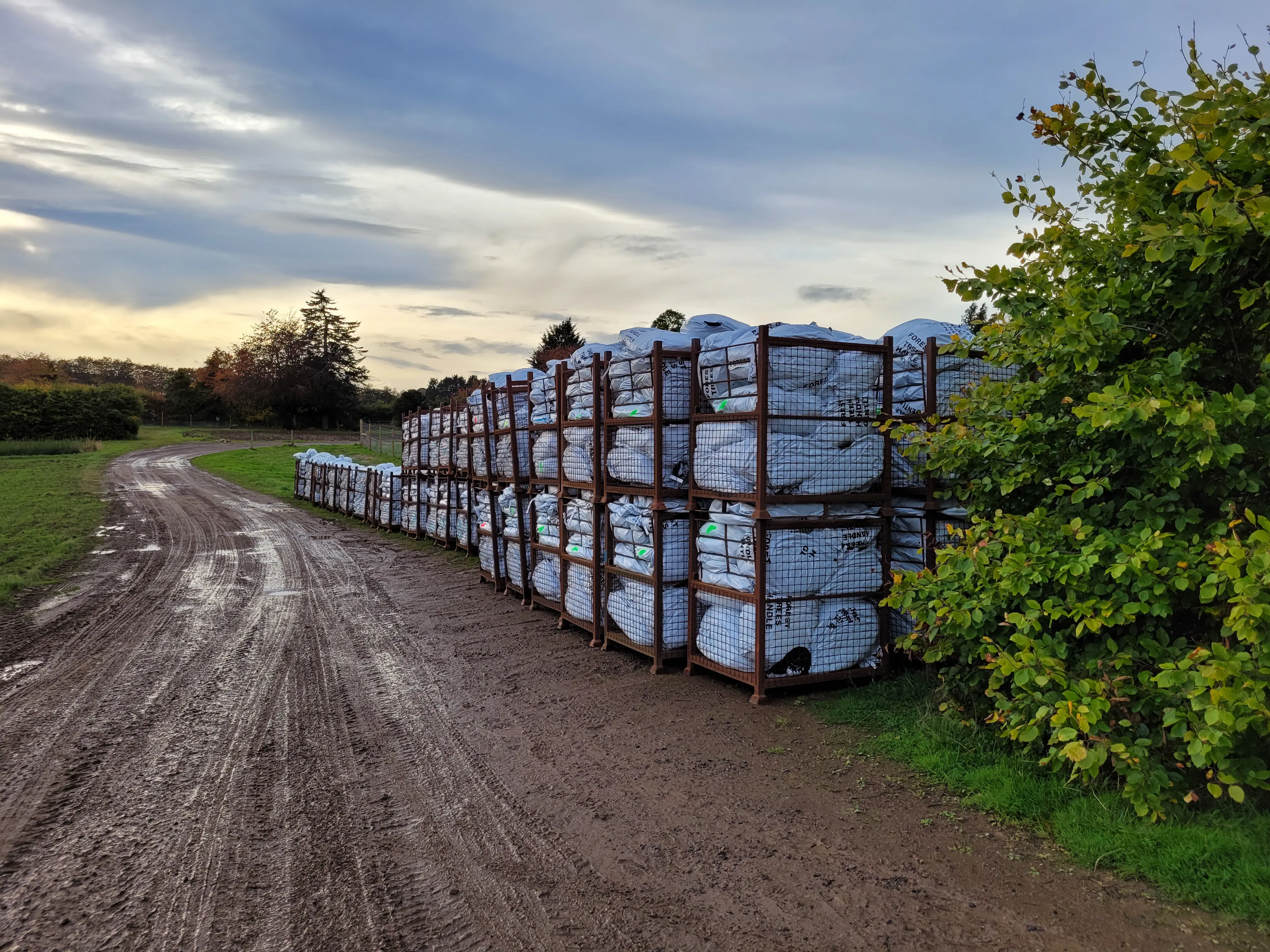
    Creates full of white bags at the side of a farm track.
    Make hay while the sun shines. It's important for the nursery team to lift trees in the good weather so they can work on grading, treating and packing in times of bad weather.
    ❮ ❯

    Our nursery currently has capacity to produce around 7 million trees a year, so we have to source trees from other nurseries too. However, an investment in our facilities means we aim to double the trees we grow at Newton over the next few years. More land, new facilities and innovative technology will allow us to be more productive. 

    More about Newton Nursery

    We’ve now seen the process from seed to sapling and got the trees to their final destination. The next step is final planting. Look out for a future article on our blog where we look at ground preparation, and actually getting trees in the ground.

    More from the blog

    Latest from FLS

    1. 12 Jan 2026

      Lesley's article

    2. 03 Oct 2025

      Scotland's Climate Week 2025: Working together in the Angus Glens

    3. 29 Sep 2025

      Scotland's Climate Week 2025: Working with partners to support beaver populations

    4. 19 Sep 2025

      Martens on the Move at Kirroughtree

    5. 20 Aug 2025

      Protecting endangered apple trees through teamwork

    Share this article

    • Share on Facebook
    • Share on X
    • Share on LinkedIn

    Feedback

    There is a problem

    Feedback

    Thank you for your feedback

    User feedback form


    Your feedback helps us to improve this website. Do not give any personal information because we cannot reply to you directly.


    Your feedback helps us improve this website. Do not provide any personal information here. If you need to get in touch with a query, please contact us.


    Your feedback helps us improve this website. Do not provide any personal information here. If you need to get in touch with a query, please contact us.

    Forestry and Land Scotland Logo

    Follow us on

    • Forestry and Land Scotland on Facebook
    • Forestry and Land Scotland on Twitter
    • Forestry and Land Scotland on Instagram
    • Forestry and Land Scotland on LinkedIn

    Utilities

    1. Accessibility
    2. Cookies
    3. Privacy Notice
    4. Terms and Conditions
    5. Freedom of Information
    6. Modern Slavery Statement

    Quick links

    1. Media Centre
    Forest Stewardship Council, the mark of responsible forestry Programme for the Endorsement of Forest Certification, PEFC
    © Crown Copyright
    Forests and land that Scotland can be proud of Link to gov.scot gov.scot