Forestry and Land Scotland Logo
  1. Visit
      1. Find a forest
      2. Explore forest parks
    1. Accessible forests
    2. Stay the night
      1. Waymarked trails
      2. Cycling
      3. Mountain biking
      4. Photography
      5. Orienteering
      6. Camping
      7. Treetop adventure
      8. Water sports
      9. Horse riding
      1. Things to see
      2. Trees
      3. Wildlife
      4. Heritage
      5. Things to see in Winter
    3. Plan a visit with a group
    4. Visiting safely
    5. Parking
    Forest map

    Search for a forest by map

    Forests & trails information and closures

    An overview of all closures and high risk warnings on trails.

    Stay the night

    Park overnight in selected forest car parks as part of our motorhome scheme.

  2. About us
      1. Who we are
      2. Our mission and vision
      3. Leadership team
      4. Our values
      1. Careers
      2. Current Vacancies
      3. What we offer
      4. Candidate information
      5. A day in the life
      6. Apprenticeships
    1. Key documents
    2. Our impact
    3. Our approach to Gaelic
    Current Vacancies

    Some text

  3. What we do
      1. Taking Climate Action
      2. The climate emergency
      3. Forest resilience
      4. Peatland restoration
      5. Carbon offsetting
      6. Biodiversity
      7. Renewable energy
      1. Managing the land
      2. Planning our land management
      3. Our sustainable forestry
      4. Our tree nursery
      1. Conservation
      2. Habitat conservation
      3. Wildlife conservation
      4. Historic environment conservation
    1. Supporting outdoor exploration
    2. Working with communities
    3. Our projects
  4. Living and Working
      1. For businesses
      2. Timber sales
      3. Procurements and tenders
      4. Business opportunities
      5. Farming opportunities
      6. Venison sales
      7. Firewood sales
      1. For communities
      2. Transfer land and buildings to your community
      3. Land management plan consultations
      1. Permissions and Permits
      1. Learning and Education
      2. Outdoor learning
      3. Activity sheets
    1. Buy Land or Buildings
    Land management plan consultations

    Text here

    Current job opportunities

    Text here

  5. Get involved
    1. Have your say on consultations
    2. Hold an event
    3. Apply for a community asset transfer (CAT)
    4. Arrange a visit
    5. Work with us
  6. News
  7. Contact
Suggested links
    1. Home
    2. News
    23 April 2024 3 minutes

    Rare species helping to restore native woodland

    Many don’t realise that Scotland is home to a native apple species, the wild apple (Malus sylvestris). Due to hybridisation, and historically being seen as unimportant the native wild apple is becoming an increasingly rare species.

    However, recently our teams worked with Highland Perthshire Community Land Trust as part of our partnership with the Heart of Scotland Forest Partnership to plant native wild apple trees in Highland Perthshire.

    Part of this partnership work involves providing practical experience for their Positive Destinations Rural Skills Training programme. The programme aims to bring young people into the land-based sector through a mixture of training and experience.
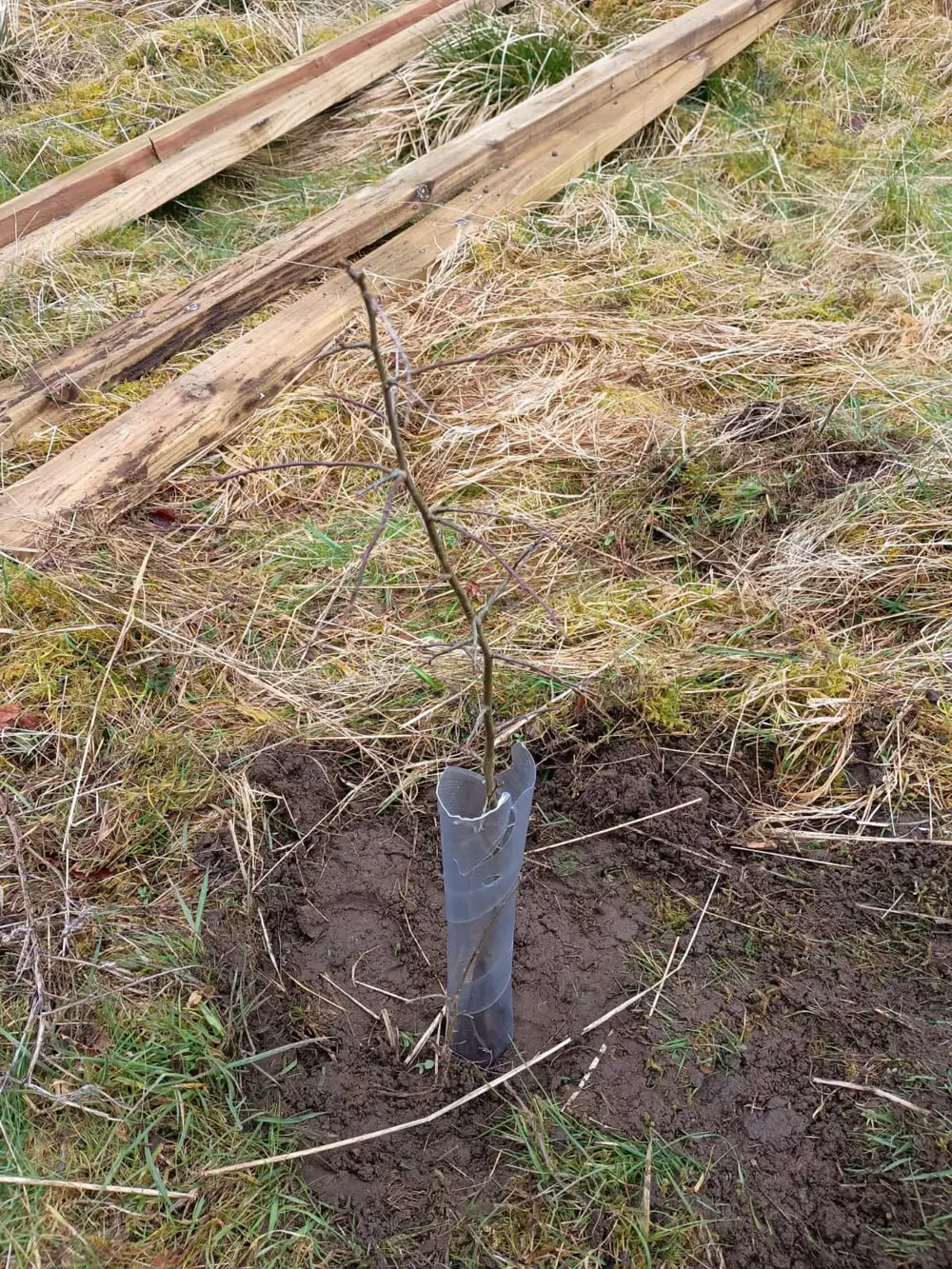
    A small apple tree

    The traineeship runs for 20 weeks, with trainees attending one day a week to learn rural skills including certified training in first aid, chainsaws, brushcutters, ATVs. There is also non-certified training like fencing, drystone dyking, practical work experience and habitat monitoring, working alongside skilled countryside workers. The vast majority of the trainees then go on to working in the sector, including our own craftspeople. 

    One of the tasks this month was planting and protecting wild apples.

    Wild apples grow sparsely and often in open woodlands. Ahead of planting our staff worked closely with Dr. Rick Worrell an ecologist and forester who specialises in this species. Together we grew genetically pure seedlings that could be planted in our forests. Our Environmental Forester Gareth Ventress, who worked closely on this project, said;

    One of the best things about my job is the opportunity to work with, and learn from, some of the countries leading experts like Rick. Then to go on and make a real difference with the conservation of some of Scotland’s rarest and most threatened species.

    To then be able to pass some of that knowledge on and help the trainees gain experience and skills to take into their future careers managing our countryside is awesome.

    Working with the trainees, our staff planted the saplings in Lassintulloch Forest, between Lochs Tummel and Rannoch. Because wild apples like space, they were place around 40 metres a part, which is quite a difference to our usual planting of commercial crop which is usually around 1.8 metres.

    In the future we want to use cattle to graze the area. The cattle will help break up the thick grass sward that has developed since clear-felling the area. They will also help to scarify the soil and help facilitate native tree seeds to germinate and naturally regenerate across the wider site, including the wild apple.
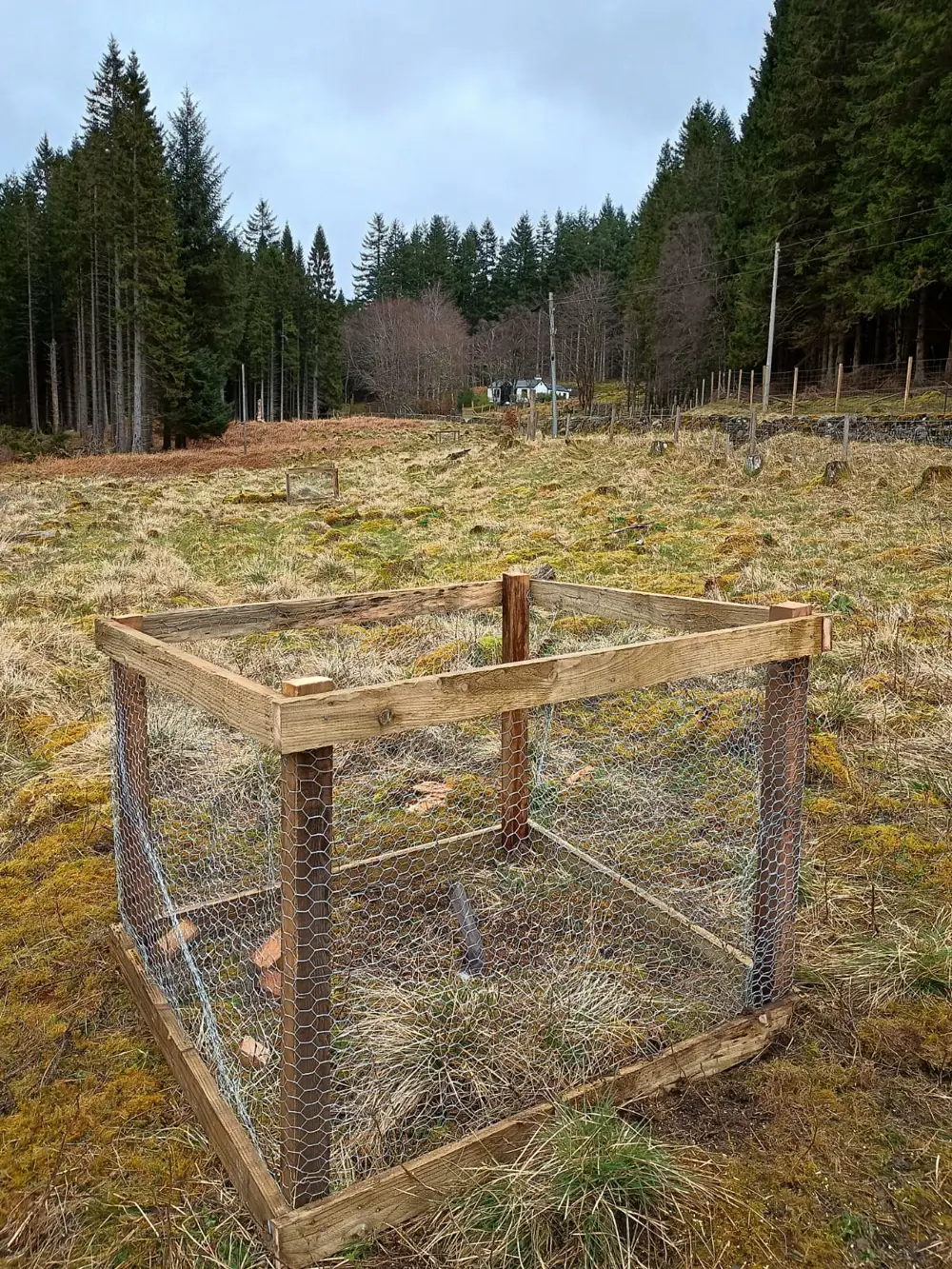
    A small tree in a wooden structure in a forest

    We decided to protect each tree with its own rabbit, cattle and deer proof post and rail enclosure. This will not only protect the wild apple trees but also encourages them to grow a more natural wide canopy and increase apple production.

    With the opportunity to mix tree planting, fencing and ecological learning this was a great task for the trainees to work alongside our staff to help with rare species conservation work.


    Latest from FLS

    1. 12 Jan 2026

      Lesley's article

    2. 03 Oct 2025

      Scotland's Climate Week 2025: Working together in the Angus Glens

    3. 29 Sep 2025

      Scotland's Climate Week 2025: Working with partners to support beaver populations

    4. 19 Sep 2025

      Martens on the Move at Kirroughtree

    5. 20 Aug 2025

      Protecting endangered apple trees through teamwork

    Share this article

    • Share on Facebook
    • Share on X
    • Share on LinkedIn

    Feedback

    There is a problem

    Feedback

    Thank you for your feedback

    User feedback form


    Your feedback helps us to improve this website. Do not give any personal information because we cannot reply to you directly.


    Your feedback helps us improve this website. Do not provide any personal information here. If you need to get in touch with a query, please contact us.


    Your feedback helps us improve this website. Do not provide any personal information here. If you need to get in touch with a query, please contact us.

    Forestry and Land Scotland Logo

    Follow us on

    • Forestry and Land Scotland on Facebook
    • Forestry and Land Scotland on Twitter
    • Forestry and Land Scotland on Instagram
    • Forestry and Land Scotland on LinkedIn

    Utilities

    1. Accessibility
    2. Cookies
    3. Privacy Notice
    4. Terms and Conditions
    5. Freedom of Information
    6. Modern Slavery Statement

    Quick links

    1. Media Centre
    Forest Stewardship Council, the mark of responsible forestry Programme for the Endorsement of Forest Certification, PEFC
    © Crown Copyright
    Forests and land that Scotland can be proud of Link to gov.scot gov.scot