Forestry and Land Scotland Logo
  1. Visit
      1. Find a forest
      2. Explore forest parks
    1. Accessible forests
    2. Stay the night
      1. Waymarked trails
      2. Cycling
      3. Mountain biking
      4. Photography
      5. Orienteering
      6. Camping
      7. Treetop adventure
      8. Water sports
      9. Horse riding
      1. Things to see
      2. Trees
      3. Wildlife
      4. Heritage
      5. Things to see in Winter
    3. Plan a visit with a group
    4. Visiting safely
    5. Parking
    Forest map

    Search for a forest by map

    Forests & trails information and closures

    An overview of all closures and high risk warnings on trails.

    Stay the night

    Park overnight in selected forest car parks as part of our motorhome scheme.

  2. About us
      1. Who we are
      2. Our mission and vision
      3. Leadership team
      4. Our values
      1. Careers
      2. Current Vacancies
      3. What we offer
      4. Candidate information
      5. A day in the life
      6. Apprenticeships
    1. Key documents
    2. Our impact
    3. Our approach to Gaelic
    Current Vacancies

    Some text

  3. What we do
      1. Taking Climate Action
      2. The climate emergency
      3. Forest resilience
      4. Peatland restoration
      5. Carbon offsetting
      6. Biodiversity
      7. Renewable energy
      1. Managing the land
      2. Planning our land management
      3. Our sustainable forestry
      4. Our tree nursery
      1. Conservation
      2. Habitat conservation
      3. Wildlife conservation
      4. Historic environment conservation
    1. Supporting outdoor exploration
    2. Working with communities
    3. Our projects
  4. Living and Working
      1. For businesses
      2. Timber sales
      3. Procurements and tenders
      4. Business opportunities
      5. Farming opportunities
      6. Venison sales
      7. Firewood sales
      1. For communities
      2. Transfer land and buildings to your community
      3. Land management plan consultations
      1. Permissions and Permits
      1. Learning and Education
      2. Outdoor learning
      3. Activity sheets
    1. Buy Land or Buildings
    Land management plan consultations

    Text here

    Current job opportunities

    Text here

  5. Get involved
    1. Have your say on consultations
    2. Hold an event
    3. Apply for a community asset transfer (CAT)
    4. Arrange a visit
    5. Work with us
  6. News
  7. Contact
Suggested links
    1. Home
    2. News
    13 December 2022 3 minutes

    Protecting rare species on west coast hazel
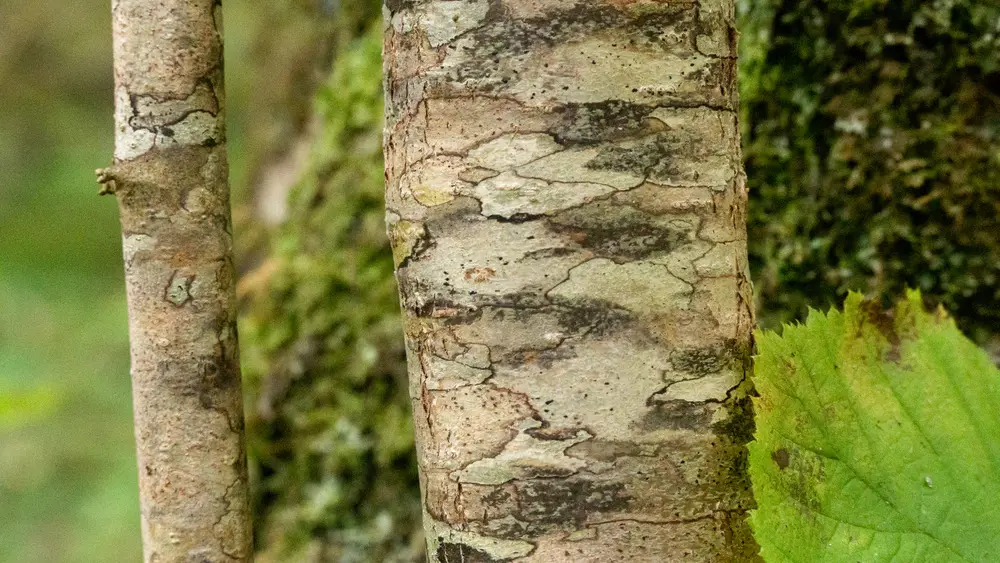
    A close up of hazel bark

    Hazel coppicing was a traditional practice in lowland Britain and is often now carried out to support biodiversity that needs temporary open space in woodlands. However, this form of management can be disastrous for the biodiversity that inhabits Scotland’s rainforests.

    Hazel is a native broadleaf tree that typically grows as multiple stems from a single stump or ‘stool’. These long straight poles were historically used for barrel hoops, wattle and daub walls and fence hurdles. Coppicing is the process of periodically cutting back young stems to the base of the stool to utilise the cut material and encourage regrowth.

    However, coppicing is not required for a hazel to thrive – it is quite capable of producing many young shoots without any management!

    In the western highlands of Scotland, hazel coppicing is detrimental to the precious biodiversity of our rainforest habitats – particularly if all the stems from a stool are removed and if large patches are coppiced.
    Two hazel sticks next to each other, one is brown and one is silver

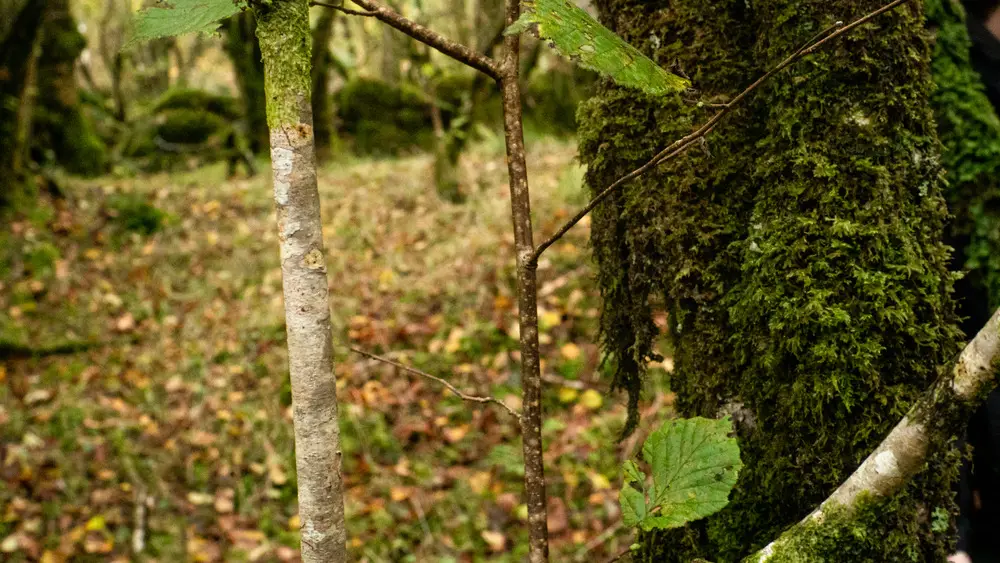
    A photo of a young hazel steam (centre) that has not yet acquired any lichens next to a more typical silver one with lichens growing on and in it (left). Note the deep layers of moss growing on the older stems to the far right.

    Hazel provides an important home for lichens, mosses and liverworts. In other parts of Britain hazel bark is often a light brown colour, however in the rainforests of Scotland the bark of young stems is typically a gorgeous silver colour caused by a lichen growing within the bark – which indicates the beginning of colonisation by a succession of different rainforest species.

    Stems of all sizes are needed on each stool so this succession can occur and progress to stems covered in moss and large leafy lichens.

    Scotland is home to 1,500 species of lichen, which is around 87% of all lichen species found in Britain. Scotland’s rainforests are some of the most important woodlands for lichens, mosses and liverworts in Europe.

    In the west Highlands, coppicing can have a big negative impact. There are ways to limit this impact, by working in more recent woodland with lower biodiversity and by only selecting individual stems rather than cutting the whole stool.  

    Hazel and the rainforest  

    Hazel is one of the key native species that make up our temperate rainforest. 

    Protecting hazel from deer browsing and encouraging its regeneration is a part of our Ancient Woodland restoration work which is a key focus in our new rainforest program.

    Learn more about Scotland's rainforest


    Latest from FLS

    1. 12 Jan 2026

      Lesley's article

    2. 03 Oct 2025

      Scotland's Climate Week 2025: Working together in the Angus Glens

    3. 29 Sep 2025

      Scotland's Climate Week 2025: Working with partners to support beaver populations

    4. 19 Sep 2025

      Martens on the Move at Kirroughtree

    5. 20 Aug 2025

      Protecting endangered apple trees through teamwork

    Share this article

    • Share on Facebook
    • Share on X
    • Share on LinkedIn

    Feedback

    There is a problem

    Feedback

    Thank you for your feedback

    User feedback form


    Your feedback helps us to improve this website. Do not give any personal information because we cannot reply to you directly.


    Your feedback helps us improve this website. Do not provide any personal information here. If you need to get in touch with a query, please contact us.


    Your feedback helps us improve this website. Do not provide any personal information here. If you need to get in touch with a query, please contact us.

    Forestry and Land Scotland Logo

    Follow us on

    • Forestry and Land Scotland on Facebook
    • Forestry and Land Scotland on Twitter
    • Forestry and Land Scotland on Instagram
    • Forestry and Land Scotland on LinkedIn

    Utilities

    1. Accessibility
    2. Cookies
    3. Privacy Notice
    4. Terms and Conditions
    5. Freedom of Information
    6. Modern Slavery Statement

    Quick links

    1. Media Centre
    Forest Stewardship Council, the mark of responsible forestry Programme for the Endorsement of Forest Certification, PEFC
    © Crown Copyright
    Forests and land that Scotland can be proud of Link to gov.scot gov.scot