Forestry and Land Scotland Logo
  1. Visit
      1. Find a forest
      2. Explore forest parks
    1. Accessible forests
    2. Stay the night
      1. Waymarked trails
      2. Cycling
      3. Mountain biking
      4. Photography
      5. Orienteering
      6. Camping
      7. Treetop adventure
      8. Water sports
      9. Horse riding
      1. Things to see
      2. Trees
      3. Wildlife
      4. Heritage
      5. Things to see in Winter
    3. Plan a visit with a group
    4. Visiting safely
    5. Parking
    Forest map

    Search for a forest by map

    Forests & trails information and closures

    An overview of all closures and high risk warnings on trails.

    Stay the night

    Park overnight in selected forest car parks as part of our motorhome scheme.

  2. About us
      1. Who we are
      2. Our mission and vision
      3. Leadership team
      4. Our values
      1. Careers
      2. Current Vacancies
      3. What we offer
      4. Candidate information
      5. A day in the life
      6. Apprenticeships
    1. Key documents
    2. Our impact
    3. Our approach to Gaelic
    Current Vacancies

    Some text

  3. What we do
      1. Taking Climate Action
      2. The climate emergency
      3. Forest resilience
      4. Peatland restoration
      5. Carbon offsetting
      6. Biodiversity
      7. Renewable energy
      1. Managing the land
      2. Planning our land management
      3. Our sustainable forestry
      4. Our tree nursery
      1. Conservation
      2. Habitat conservation
      3. Wildlife conservation
      4. Historic environment conservation
    1. Supporting outdoor exploration
    2. Working with communities
    3. Our projects
  4. Living and Working
      1. For businesses
      2. Timber sales
      3. Procurements and tenders
      4. Business opportunities
      5. Farming opportunities
      6. Venison sales
      7. Firewood sales
      1. For communities
      2. Transfer land and buildings to your community
      3. Land management plan consultations
      1. Permissions and Permits
      1. Learning and Education
      2. Outdoor learning
      3. Activity sheets
    1. Buy Land or Buildings
    Land management plan consultations

    Text here

    Current job opportunities

    Text here

  5. Get involved
    1. Have your say on consultations
    2. Hold an event
    3. Apply for a community asset transfer (CAT)
    4. Arrange a visit
    5. Work with us
  6. News
  7. Contact
Suggested links
    1. Home
    2. News
    05 April 2022 4 minutes

    Preparing our forests for the future

    Scotland’s forests are facing new threats from pests, diseases and a changing climate. In this article, we discuss what we’re doing to prepare our forests for an uncertain future.

    It’s difficult to prepare for a health threat when you don’t know what form the threat will take in the future. But that's what forest planners are trying to do right now. We don’t know which tree diseases to expect in the future. All we can do is take action to mitigate the threat once it presents itself and then learn to ‘live with it’.

    Tree diseases such as ‘Dutch Elm Disease’ are well known. It first spread to Britain a century ago and although the initial epidemic died down, a more aggressive strain of the pathogen took hold in the 1960s. Within 20 years, most mature elms had died. It continues to return in a 20-year cycle.
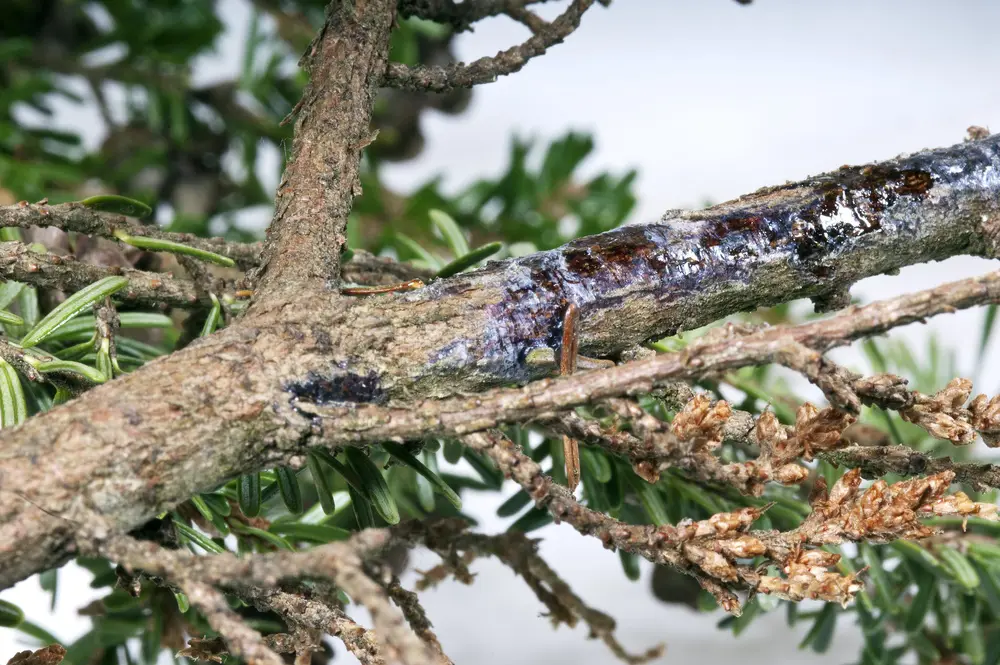
    A tree with damaged area caused by disease

    More recently, P. ramorum, a disease that affects larch trees, has caused extensive mortality, particularly in the wetter south and west of Scotland. It can’t be eradicated. The only way to slow the rate of spread is to fell the infected larch trees and those surrounding them. That is why more than half a million larches have been felled on Arran in the last two years.

    About P Ramorum

    Alan Gale, Adaptation and Resilience Manager for Forestry and Land Scotland, says, “If you had suggested to me 20 years ago that most larch in south and west Scotland in the 2020s would be gone I’d have found it difficult to believe. We have seen that disease impacts so quickly and changes all the plans. It has been catastrophic in some parts.”

    It is precisely because of these unknown threats that foresters are increasingly diversifying the trees they plant. We need to design forests that are a mosaic of different tree species, and plant new species that will better adapt to climate change. And we need to find trees that are more resilient to catastrophic events like storms and diseases, whilst enhancing nature.
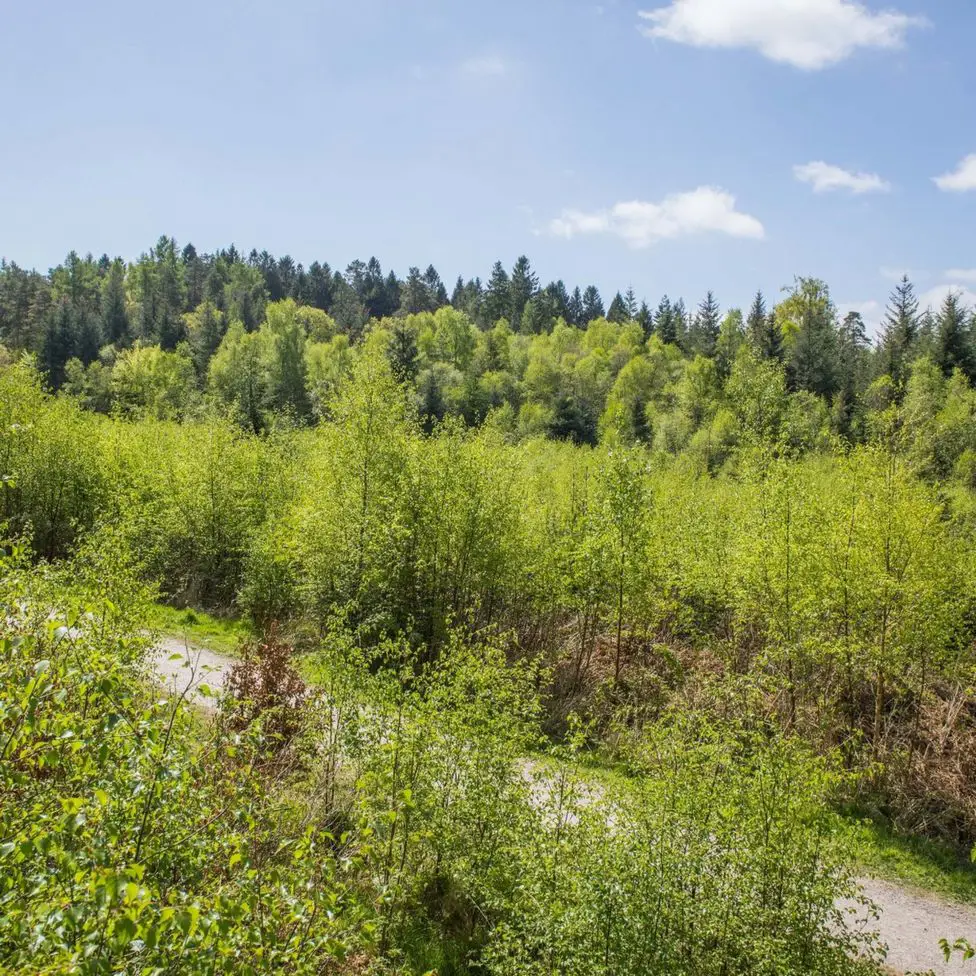
    Mixed tree species in bloom on a sunny day

    Some of the species now being grown in much larger numbers than ever before in Scotland include:

    • Noble Fir
    • Western Red Cedar
    • Western Hemlock
    • Macedonian Pine
    • European Silver Fir
    • Pacific Silver Fir

    These species already grow well in Scotland and forest planners are anticipating they will thrive in fifty years’ time as the climate warms.

    Many are especially well suited to productive forestry. Red cedar can become highly durable timber cladding. Other species such as Noble Fir bring beauty and variety to forests with different colours and lovely big cones.

    Timber and the climate

    These tree species are already being planted in places in Scotland where the soil and climate is suitable. The trick is making sure they are also suitable as the climate warms over the rest of the century. As these trees planted today grow older and more mature, the trees need to perform well in current, and changing, climates.

    As an example, in Glentress near Peebles, we have planted 500 hectares with a wide variety of species. These include native Scottish oak, hornbeam, birch, Noble Fir, Norway spruce and lots of Douglas fir.

    Species trials at Nether Horsburgh

    Outside Dalbeattie, near the Solway coast, a 10-hectare plot has been repurposed and planted with Douglas fir. This is anticipated to be one of the species that will cope best with climate change.

    While diversifying forests started in earnest around 10 or so years ago, it is now picking up pace. More foresters across Scotland, and the UK, are seeing how this process is a key part of the solution to the challenges of climate change.

    As Alan puts it, “There’s a big push to get more diversity into our forests in Scotland. Especially for our timber-producing forests, it’s vital to make them more resilient to pests, diseases and climate change. With climate change the science is clear but with pests and diseases things are much less certain. We need to plan for all eventualities. We have no idea what’s coming and the impact is often very fast and catastrophic.”   

    Just as with human health, there is no time for complacency. A new disease, P Pluvialis, was found in a woodland in Cornwall last autumn. This was the first time it had been detected in the UK. More outbreaks have since been detected, including in Scotland, showing just how fast it can spread.

    Alan continues, “That’s precisely why we are rapidly ramping up our efforts to diversify Scotland’s forests. By planting an array of species we are spreading the risks, over a longer time period.”

    More from the blog

    Latest from FLS

    1. 12 Jan 2026

      Lesley's article

    2. 03 Oct 2025

      Scotland's Climate Week 2025: Working together in the Angus Glens

    3. 29 Sep 2025

      Scotland's Climate Week 2025: Working with partners to support beaver populations

    4. 19 Sep 2025

      Martens on the Move at Kirroughtree

    5. 20 Aug 2025

      Protecting endangered apple trees through teamwork

    Share this article

    • Share on Facebook
    • Share on X
    • Share on LinkedIn

    Feedback

    There is a problem

    Feedback

    Thank you for your feedback

    User feedback form


    Your feedback helps us to improve this website. Do not give any personal information because we cannot reply to you directly.


    Your feedback helps us improve this website. Do not provide any personal information here. If you need to get in touch with a query, please contact us.


    Your feedback helps us improve this website. Do not provide any personal information here. If you need to get in touch with a query, please contact us.

    Forestry and Land Scotland Logo

    Follow us on

    • Forestry and Land Scotland on Facebook
    • Forestry and Land Scotland on Twitter
    • Forestry and Land Scotland on Instagram
    • Forestry and Land Scotland on LinkedIn

    Utilities

    1. Accessibility
    2. Cookies
    3. Privacy Notice
    4. Terms and Conditions
    5. Freedom of Information
    6. Modern Slavery Statement

    Quick links

    1. Media Centre
    Forest Stewardship Council, the mark of responsible forestry Programme for the Endorsement of Forest Certification, PEFC
    © Crown Copyright
    Forests and land that Scotland can be proud of Link to gov.scot gov.scot