Forestry and Land Scotland Logo
  1. Visit
      1. Find a forest
      2. Explore forest parks
    1. Accessible forests
    2. Stay the night
      1. Waymarked trails
      2. Cycling
      3. Mountain biking
      4. Photography
      5. Orienteering
      6. Camping
      7. Treetop adventure
      8. Water sports
      9. Horse riding
      1. Things to see
      2. Trees
      3. Wildlife
      4. Heritage
      5. Things to see in Winter
    3. Plan a visit with a group
    4. Visiting safely
    5. Parking
    Forest map

    Search for a forest by map

    Forests & trails information and closures

    An overview of all closures and high risk warnings on trails.

    Stay the night

    Park overnight in selected forest car parks as part of our motorhome scheme.

  2. About us
      1. Who we are
      2. Our mission and vision
      3. Leadership team
      4. Our values
      1. Careers
      2. Current Vacancies
      3. What we offer
      4. Candidate information
      5. A day in the life
      6. Apprenticeships
    1. Key documents
    2. Our impact
    3. Our approach to Gaelic
    Current Vacancies

    Some text

  3. What we do
      1. Taking Climate Action
      2. The climate emergency
      3. Forest resilience
      4. Peatland restoration
      5. Carbon offsetting
      6. Biodiversity
      7. Renewable energy
      1. Managing the land
      2. Planning our land management
      3. Our sustainable forestry
      4. Our tree nursery
      1. Conservation
      2. Habitat conservation
      3. Wildlife conservation
      4. Historic environment conservation
    1. Supporting outdoor exploration
    2. Working with communities
    3. Our projects
  4. Living and Working
      1. For businesses
      2. Timber sales
      3. Procurements and tenders
      4. Business opportunities
      5. Farming opportunities
      6. Venison sales
      7. Firewood sales
      1. For communities
      2. Transfer land and buildings to your community
      3. Land management plan consultations
      1. Permissions and Permits
      1. Learning and Education
      2. Outdoor learning
      3. Activity sheets
    1. Buy Land or Buildings
    Land management plan consultations

    Text here

    Current job opportunities

    Text here

  5. Get involved
    1. Have your say on consultations
    2. Hold an event
    3. Apply for a community asset transfer (CAT)
    4. Arrange a visit
    5. Work with us
  6. News
  7. Contact
Suggested links
    1. Home
    2. News
    27 July 2023 3 minutes

    Pine marten numbers on the increase in Galloway as technology trials yield positive results
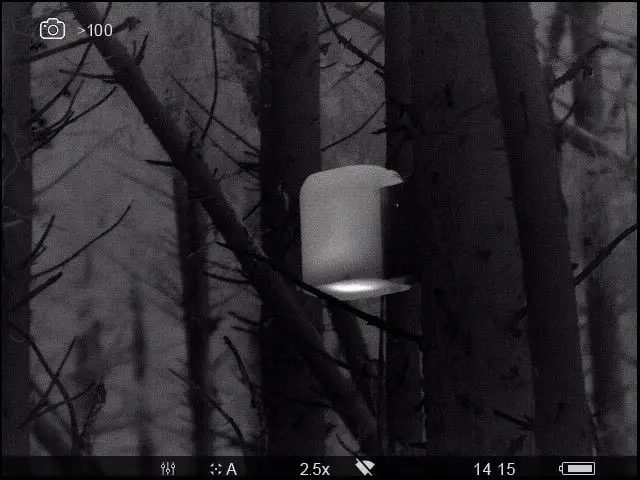
    A black and white thermal image of a box in a tree

    Last year we posted a blog about a new trial using thermal imaging cameras to survey artificial den boxes in Galloway Forest Park. We're pleased to confirm this innovative method of monitoring pine marten boxes has been a success.

    This spring, our team checked over 100 artificial nesting boxes to assess the local pine marten population, and detected a number of baby pine martens (called kits) using the technique.    

    Trail cameras were then fitted to 14 den boxes which provided a positive heat source (indicating evidence of occupation) in order to capture pine marten movements.

    Footage captured on the cameras – fitted by the Dumfries & Galloway Pine Marten Group – shows the kits being moved at around four weeks old by the mother, one at a time, down to a denning site closer to ground level so they’re less likely to injure themselves when they become more mobile. 

    Our thermal imaging trials have been taking place over the last 12 months. The handheld cameras can detect a heat source in the pine marten den boxes all year round, especially during crucial periods such as in spring when pine marten kits are born and also in winter when den boxes are used for shelter in harsh weather.    

    Speaking about the trials, Kim Kirkbride, our Environmental Forester in the area said, “Using the non-invasive thermal imaging camera allows us to remotely monitor how many den boxes are in use, without disturbing the inhabitants.  

    “We can establish whether populations of pine marten are increasing and if they’re breeding successfully. Pine martens are an important factor in grey squirrel control.  

     “We still have to carry out grey squirrel control, but the presence of the artificial dens in the national forest estate, helps to support pine marten numbers and importantly, the survival of the reds.” 

    Pine martens and red squirrels 

    Pine martens and red squirrels happily coexist in parts of Scotland. Pine marten are known to naturally predate upon squirrels and prefer greys over red squirrels as greys appear to be slower moving, less wary and therefore easier to catch. The pine martens are a natural tool to assist in grey squirrel management.    

    Galloway has one of the national red squirrel strongholds. Red squirrels are under threat from ever-increasing numbers of grey squirrels due to the greys carrying ‘squirrel pox’; this disease is fatal to red squirrels who, unlike the greys, have no resistance to it.  
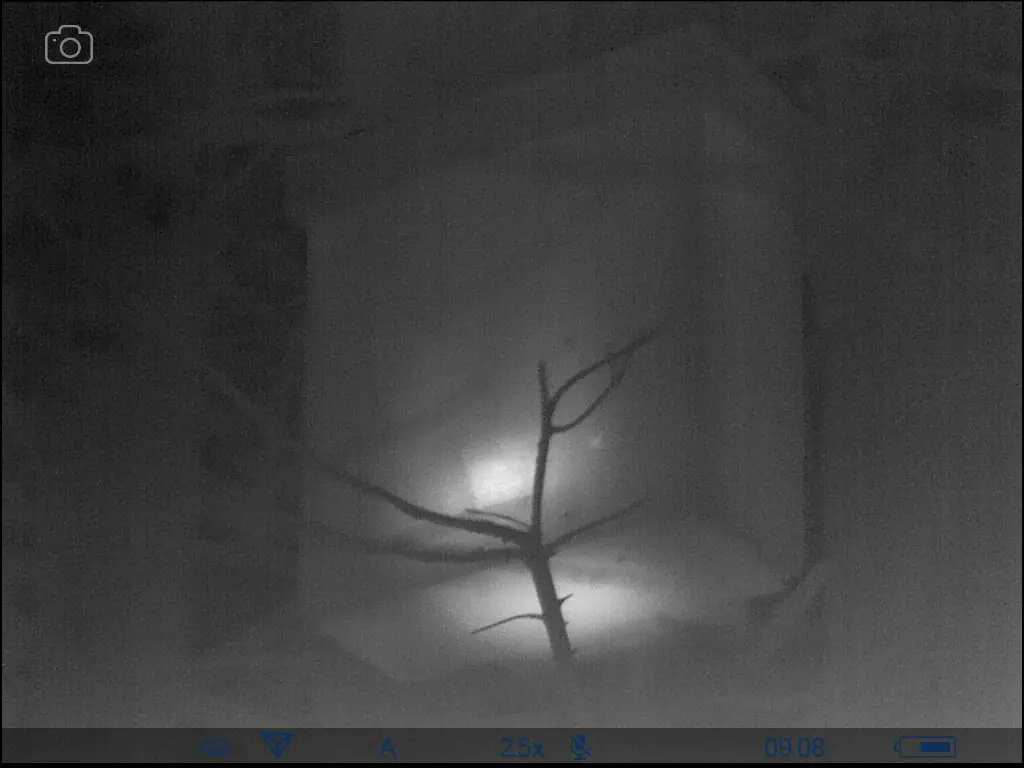
    A black and white thermal image of a box in a tree

    Why build artificial boxes? 

    We use artificial pine marten boxes in areas where red squirrel populations are particularly under threat because pine martens are slow breeders and artificial dens can help improve breeding success locally. 

    Plantation or productive forests - in particular soft wood grown for timber - do not offer an abundance of the safe, warm and dry tree cavities that the martens prefer to den in.  

    The artificial dens are installed around four or five metres off the ground. They’re wooden boxes with roofs to keep the rain and wind out and wood shavings inside them, to make them cosy. 

    Last year we also announced the installation of artificial pine marten dens along the east coast of Scotland and in Perthshire to help ward off advancing grey squirrels in the region.   

    We hope to use this technology at other sites across Scotland to help monitor pine marten on both a local and national level. 


    Latest from FLS

    1. 12 Jan 2026

      Lesley's article

    2. 03 Oct 2025

      Scotland's Climate Week 2025: Working together in the Angus Glens

    3. 29 Sep 2025

      Scotland's Climate Week 2025: Working with partners to support beaver populations

    4. 19 Sep 2025

      Martens on the Move at Kirroughtree

    5. 20 Aug 2025

      Protecting endangered apple trees through teamwork

    Share this article

    • Share on Facebook
    • Share on X
    • Share on LinkedIn

    Feedback

    There is a problem

    Feedback

    Thank you for your feedback

    User feedback form


    Your feedback helps us to improve this website. Do not give any personal information because we cannot reply to you directly.


    Your feedback helps us improve this website. Do not provide any personal information here. If you need to get in touch with a query, please contact us.


    Your feedback helps us improve this website. Do not provide any personal information here. If you need to get in touch with a query, please contact us.

    Forestry and Land Scotland Logo

    Follow us on

    • Forestry and Land Scotland on Facebook
    • Forestry and Land Scotland on Twitter
    • Forestry and Land Scotland on Instagram
    • Forestry and Land Scotland on LinkedIn

    Utilities

    1. Accessibility
    2. Cookies
    3. Privacy Notice
    4. Terms and Conditions
    5. Freedom of Information
    6. Modern Slavery Statement

    Quick links

    1. Media Centre
    Forest Stewardship Council, the mark of responsible forestry Programme for the Endorsement of Forest Certification, PEFC
    © Crown Copyright
    Forests and land that Scotland can be proud of Link to gov.scot gov.scot