
How we can help solitary bees
Around 270 species of bees are found in the UK, with nearly 90% solitary species. Some that can be seen in Scotland include the red mason bee, common carder bee and the chocolate mining bee that burrows in soil. So why are these bees important and what can we do to help them?
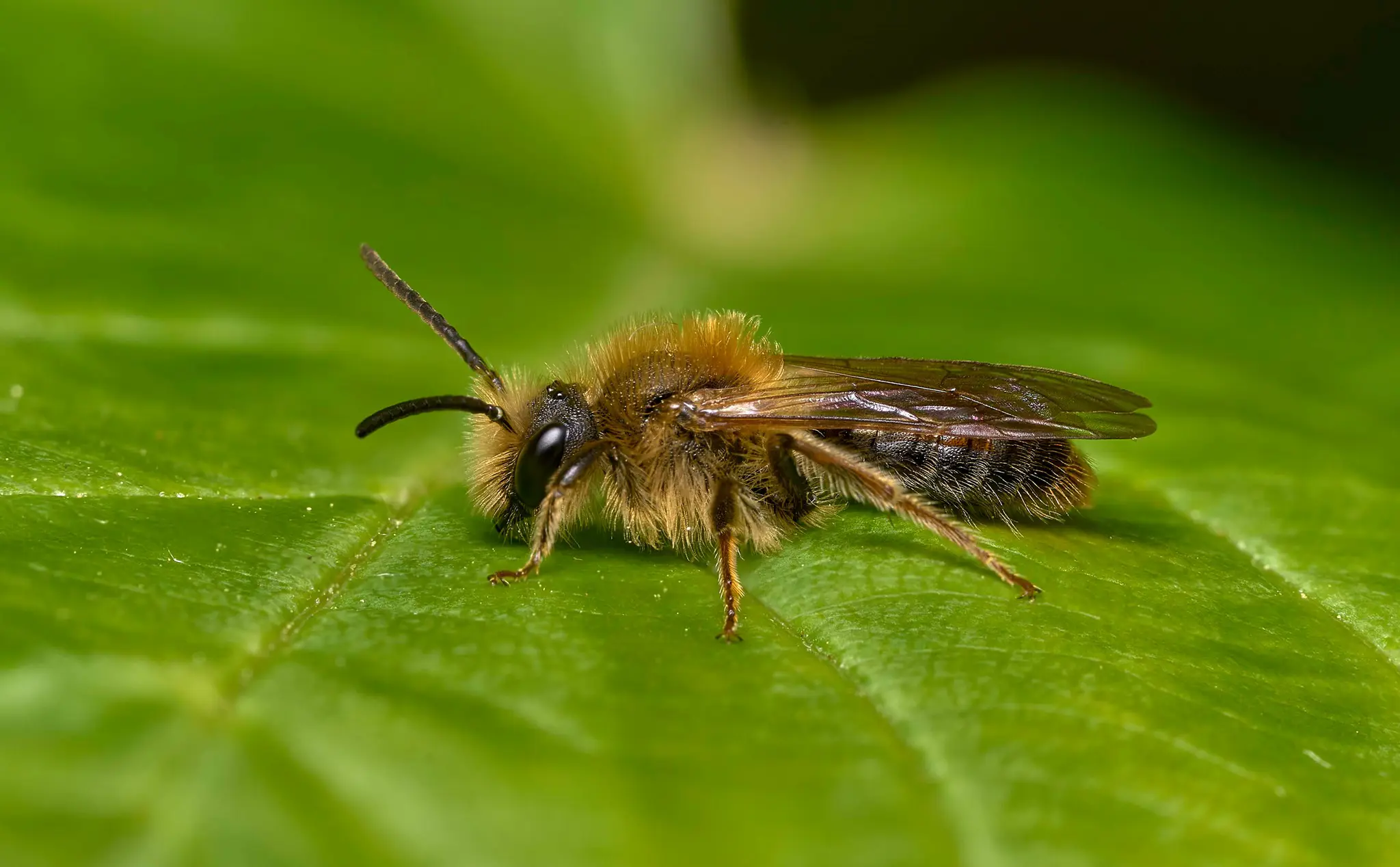
Chocolate mining bee (Andrena scotica)
With the signs of spring showing, many solitary bees have already been busy foraging. Compared to honey bees, solitary bees are able to stay active in lower temperatures, therefore increasing the efficiency of pollination. These bees can be a key pollinator for many of our tree and shrub species, including wild cherry (gean) and hawthorn. The bees are also vital pollinators for fruit trees in our gardens and public spaces and for crops including potatoes, broccoli and soft fruits.
Mention bees and most people think of honeybees buzzing away in hives, or of giant bumblebees but, in fact, most bee species in the UK are solitary bees.
Because they’re so important to our farmers and our gardens, it is vital that we do our bit to protect bees and give them a helping hand if we can."
Colin Edwards, Environment Manager at Forestry and Land Scotland.
People across Scotland are being encouraged to take an hour this month, now the weather is turning warmer, to build a ‘bee hotel’ for Scotland’s solitary bees. A simple bee hotel will provide a safe home for many of Scotland’s most common solitary bee species, providing vital nesting opportunities. Many other beneficial insect species can also use the bee hotel or insect house, so where possible, it is important to grow a variety of native plants and flowers in the garden so these important pollinators can continue to thrive. Solitary bees are not aggressive, therefore families and solitary bees can safely share outdoor spaces.
Building a bee hotel or an insect house is one of the easiest things you can do to help. It’s a fun thing to make with children and they might enjoy checking the bee hotel as the seasons progress, to see if it has any occupants."
What is a bee hotel?
The simplest bee hotel is a block of hardwood drilled with holes. The wood should be natural and untreated with the holes ranging from 4 to 10 mm in diameter and as deep as can be safely drilled.
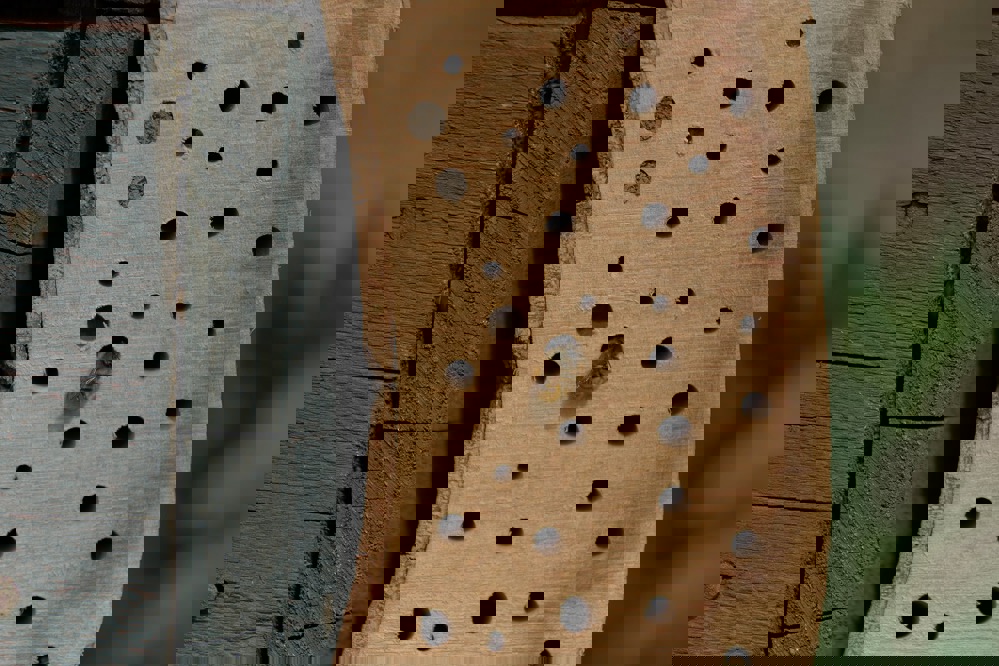
Other bee hotels can be made of things you’ll probably have in the garden shed – bamboo canes and an old plant pot! Both hotel types allows an adult solitary bee a safe place to rest, to build nest cells and lay a single egg in each cell, alongside a supply of pollen she has collected for the larvae to feed on.
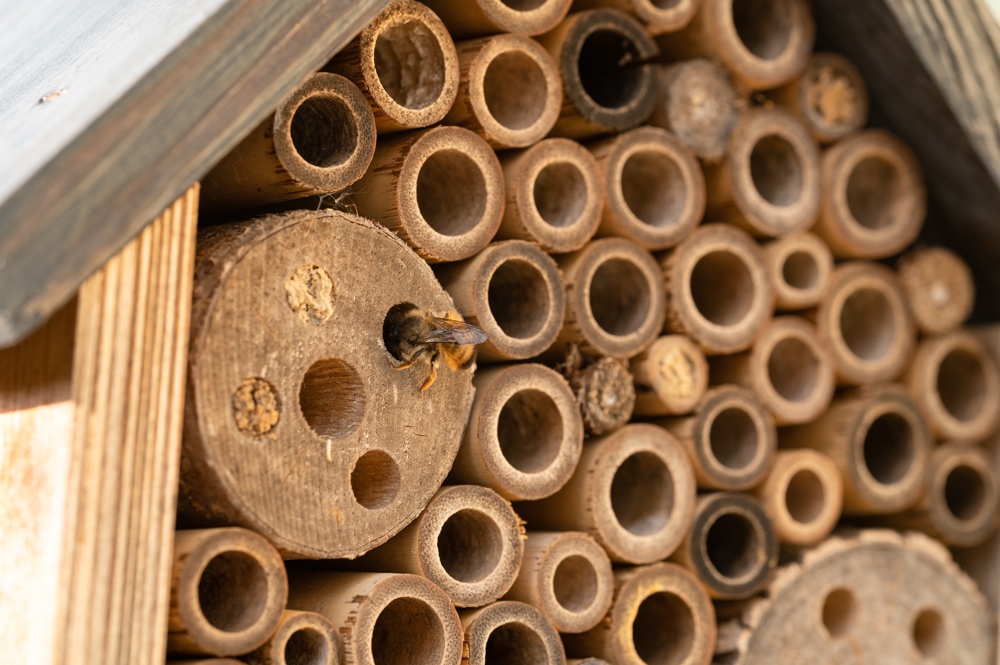
To make a bee hotel you will need:
- A block of dry untreated hardwood, or section of a branch.
- Wood drill bits ranging from 4mm to 10 mm, and at least 15cm in length. Or a few hollow bamboo canes or hollow stems from thistles, brambles, raspberries or elder - avoid using canes blocked inside as these create a barrier that the bees can't move past, but it’s fine for one end to be blocked.
- An old plant pot – preferably a clay one but plastic will do - about 15cm high.
- A handful of gravel or small stones.
- Secateurs, so you can make a nice clean cut.
Making instructions:
- Measure from the bottom of the pot to just below the rim.
- Cut your cane or hollow stem to this length, making sure there’s a clear and open end at least 2mm wide and up to 1cm. Small bees like smaller tubes!
- Make sure the cut ends don’t have any splinters or rough bits sticking out as these could damage the bees’ delicate wings. Use a sharp tool and smooth them with sandpaper if needs be.
- Continue to cut enough canes to fill the pot, until it’s tightly packed.
- Fill any gaps with the short, leftover bits.
- Find a sheltered, sunny spot on the ground somewhere, so that your bee hotel can stay dry and warm up quickly in the morning sun.
- Make a small base out of a handful of stones or gravel. Place the pot on top of the base, so that it tilts slightly ‘downhill’ so that any rainwater can run out.
- Alternatively hang it upside down from a tree.
- You want the tube openings to be dry and sheltered from heavy rain but not hidden, by overhanging vegetation.
Your bee hotel is now ready for guests to move in!
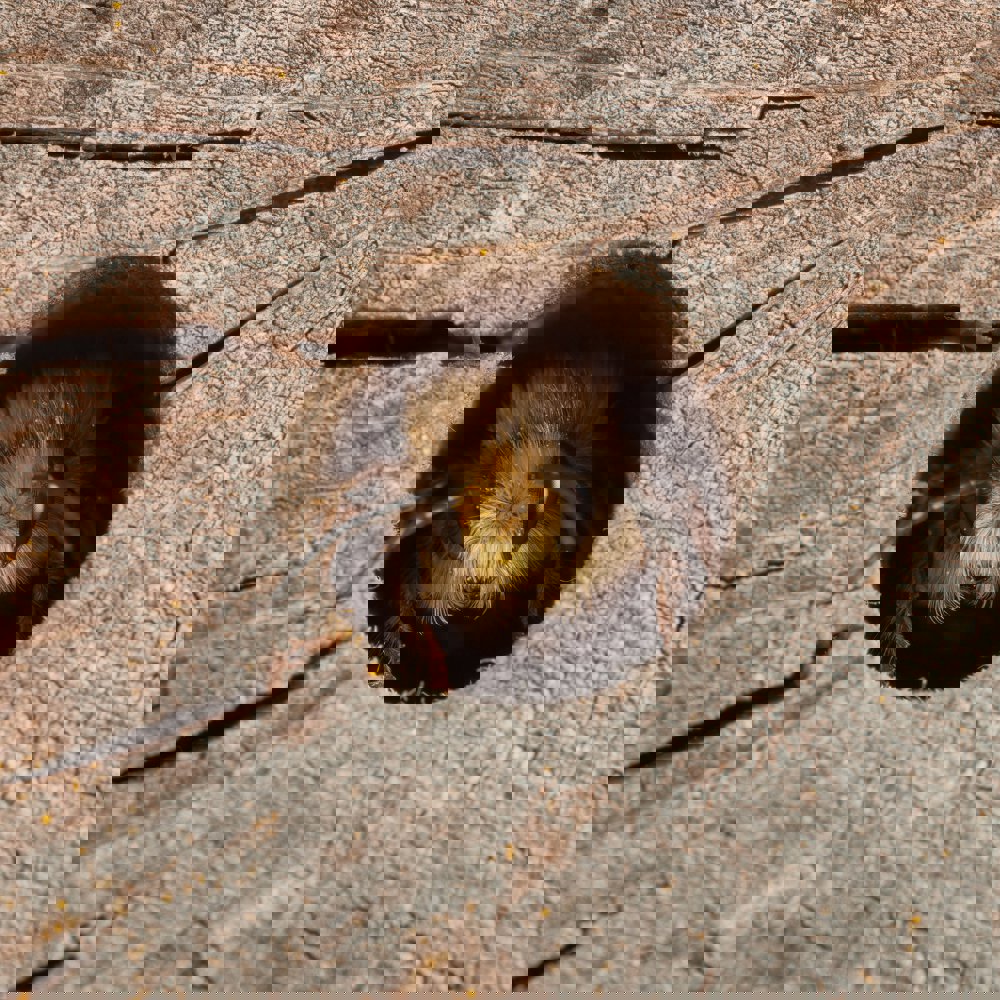
Depending on the species, bees could move into your hotel in spring or summer. You may even spot leafcutter bees flying to the hotel carrying bits of leaf nearly as big as themselves. Their plants of choice include roses and sometimes tree leaves such as lime.
Different bee species may use your hotel at the same time.
How to encourage bees to use your hotel
- Make sure it’s placed in a dry, sunny, sheltered spot.
- Use canes or stems that are hollow for at least 15 cm, longer if possible. They must be blocked at one end for bees to use them, just so long as the open end faces out the way!
- Grow flowers and plants that are ‘bee friendly’. This helps the bees collect the pollen and nectar they need to feed each egg. Any tree with spring blossom or catkins, such as willow, apple and cherry, is good and they’ll also visit garden flowers (especially blue ones). Other plants such as dog roses, honeysuckles, thistles and clover will support a wide range of solitary bees so if possible don’t mow all of your lawn but leave some areas to develop into wildlife habitat, especially patches of clover for the bees.
- Don't make your bee hotel too big. Better to make several smaller ones and place them in different parts of the garden.
- Replace the used canes or stems after the new generation of adult bees have hatched from the plugged tubes, but be sure to leave it a full year because many bees ‘over winter’ in the tubes.
- If you don't see any plugged tubes by October, try moving the hotel to a different location, in time for the following spring.