Forestry and Land Scotland Logo
  1. Visit
      1. Find a forest
      2. Explore forest parks
    1. Accessible forests
    2. Stay the night
      1. Waymarked trails
      2. Cycling
      3. Mountain biking
      4. Photography
      5. Orienteering
      6. Camping
      7. Treetop adventure
      8. Water sports
      9. Horse riding
      1. Things to see
      2. Trees
      3. Wildlife
      4. Heritage
      5. Things to see in Winter
    3. Plan a visit with a group
    4. Visiting safely
    5. Parking
    Forest map

    Search for a forest by map

    Forests & trails information and closures

    An overview of all closures and high risk warnings on trails.

    Stay the night

    Park overnight in selected forest car parks as part of our motorhome scheme.

  2. About us
      1. Who we are
      2. Our mission and vision
      3. Leadership team
      4. Our values
      1. Careers
      2. Current Vacancies
      3. What we offer
      4. Candidate information
      5. A day in the life
      6. Apprenticeships
    1. Key documents
    2. Our impact
    3. Our approach to Gaelic
    Current Vacancies

    Some text

  3. What we do
      1. Taking Climate Action
      2. The climate emergency
      3. Forest resilience
      4. Peatland restoration
      5. Carbon offsetting
      6. Biodiversity
      7. Renewable energy
      1. Managing the land
      2. Planning our land management
      3. Our sustainable forestry
      4. Our tree nursery
      1. Conservation
      2. Habitat conservation
      3. Wildlife conservation
      4. Historic environment conservation
    1. Supporting outdoor exploration
    2. Working with communities
    3. Our projects
  4. Living and Working
      1. For businesses
      2. Timber sales
      3. Procurements and tenders
      4. Business opportunities
      5. Farming opportunities
      6. Venison sales
      7. Firewood sales
      1. For communities
      2. Transfer land and buildings to your community
      3. Land management plan consultations
      1. Permissions and Permits
      1. Learning and Education
      2. Outdoor learning
      3. Activity sheets
    1. Buy Land or Buildings
    Land management plan consultations

    Text here

    Current job opportunities

    Text here

  5. Get involved
    1. Have your say on consultations
    2. Hold an event
    3. Apply for a community asset transfer (CAT)
    4. Arrange a visit
    5. Work with us
  6. News
  7. Contact
Suggested links
    1. Home
    2. News
    20 May 2024 5 minutes

    How Scotland’s foresters are battling non-native invasive species

    Invasive alien species are one of the main direct drivers of biodiversity loss worldwide. We’re making significant efforts to control invasive species across Scotland's national forests and land.

    As part of this, we’re tackling invasive plant species like Rhododendron ponticum, salal (Gaultheria shallon), and American skunk cabbage (Lysichiton americanus).

    We also support the efforts of other organisations to control species such as the North American signal crayfish; the American mink, which is a serious threat to native water vole; and the grey squirrel, which threatens the UK's native reds.
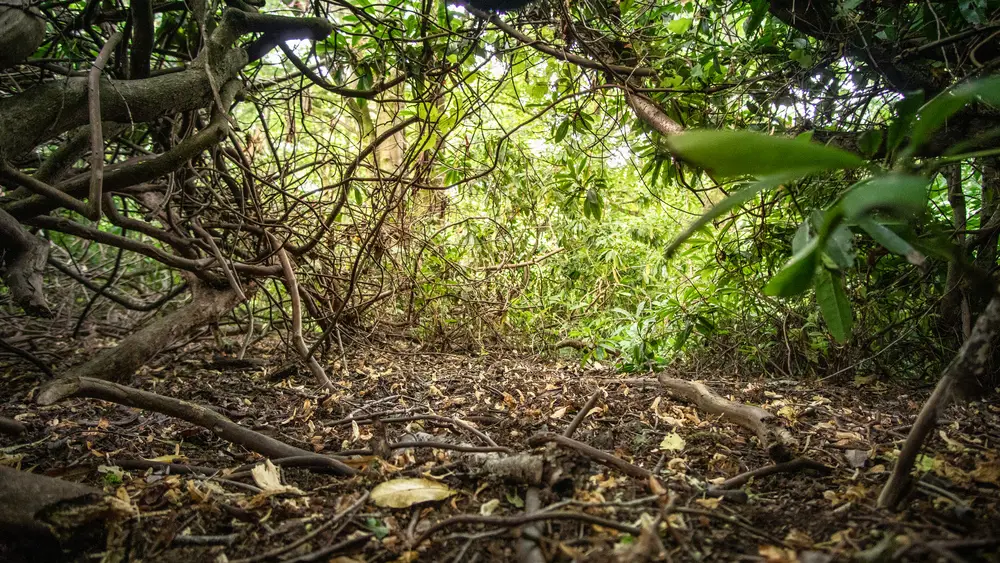
    Woody rhododendron shades out other ground vegetation.

    Rhododendron ponticum

    Perhaps the best-known non-native invasive plant is Rhododendron ponticum (referred to simply as "rhododendron" for the rest of this blog), which reduces the biodiversity value and quality of soils it grows in.

    Famously difficult to get rid of, it’s toxic to many species and research has shown it reduces the number of earthworms in the soil. It also physically reduces the presence of native ground flora and interrupts the natural regeneration of woodland.

    We’ve been working for over 25 years to turn back the relentless tide of this woody plant that is smothering much of the west coast and threatening unique rainforest habitat.

    Our work to tackle rhododendron involves: 

    Technology
    We're using drones to help map the best areas to focus our rhododendron removal efforts in a bid to give breathing room to Scotland’s rainforests.
    Rainforest restoration
    As part of our rainforest restoration work, we identify areas where rhododendron is impacting habitat quality and then control it with the careful application of approved herbicides. New, more effective stem-injection techniques have halved the time required to treat an area and, with a 90-100% success rate, significantly reduce the need for re-treatments. 
    Hand pulling small plants
    We’re also working to improve our survey of remote areas to identify so-called “pioneer bushes” before they become established and more difficult to tackle.  
    Encouraging a landscape scale approach
    Landscape-scale coordination is really powerful. In Glen Creran, rhododendron has been eliminated thanks to a four-year community project led by the Argyll and the Isles Coast and Countryside Trust. But this takes immense effort and the good will and support of the local community.  

    Earlier this year, we received £1.3m of Scottish Government funding to help boost activity to save Scotland’s rainforest. As well as reinforcing our rhododendron removal work and deer management, this funding will help us develop a long-term, strategic approach to safeguard this unique habitat, a third of which we manage.

    Gaultheria shallon

    An evergreen member of the heather family of plants, Gaultheria shallon was originally brought from North America, cultivated in the 1800s and planted as cover for game birds such as grouse.

    In recent years it has become highly invasive, especially in Argyll and west Scotland on sites formerly occupied by rhododendron, where it regenerates rapidly after clearance.

    American skunk cabbage

    American skunk cabbage, widely planted as an ornamental water plant, is most often found on pond margins, stream sides, bogs and in wet woodlands.

    Tall with huge leathery leaves and bright yellow 'flowers' resembling those of a British native plant (the cuckoo pint or lords-and-ladies) it gradually escaped from gardens and into the wild and has now become a real problem.

    Like rhododendron, Gaultheria shallon and American skunk cabbage are being controlled through the application of approved herbicides that do not pose a risk to other plant species or animals.
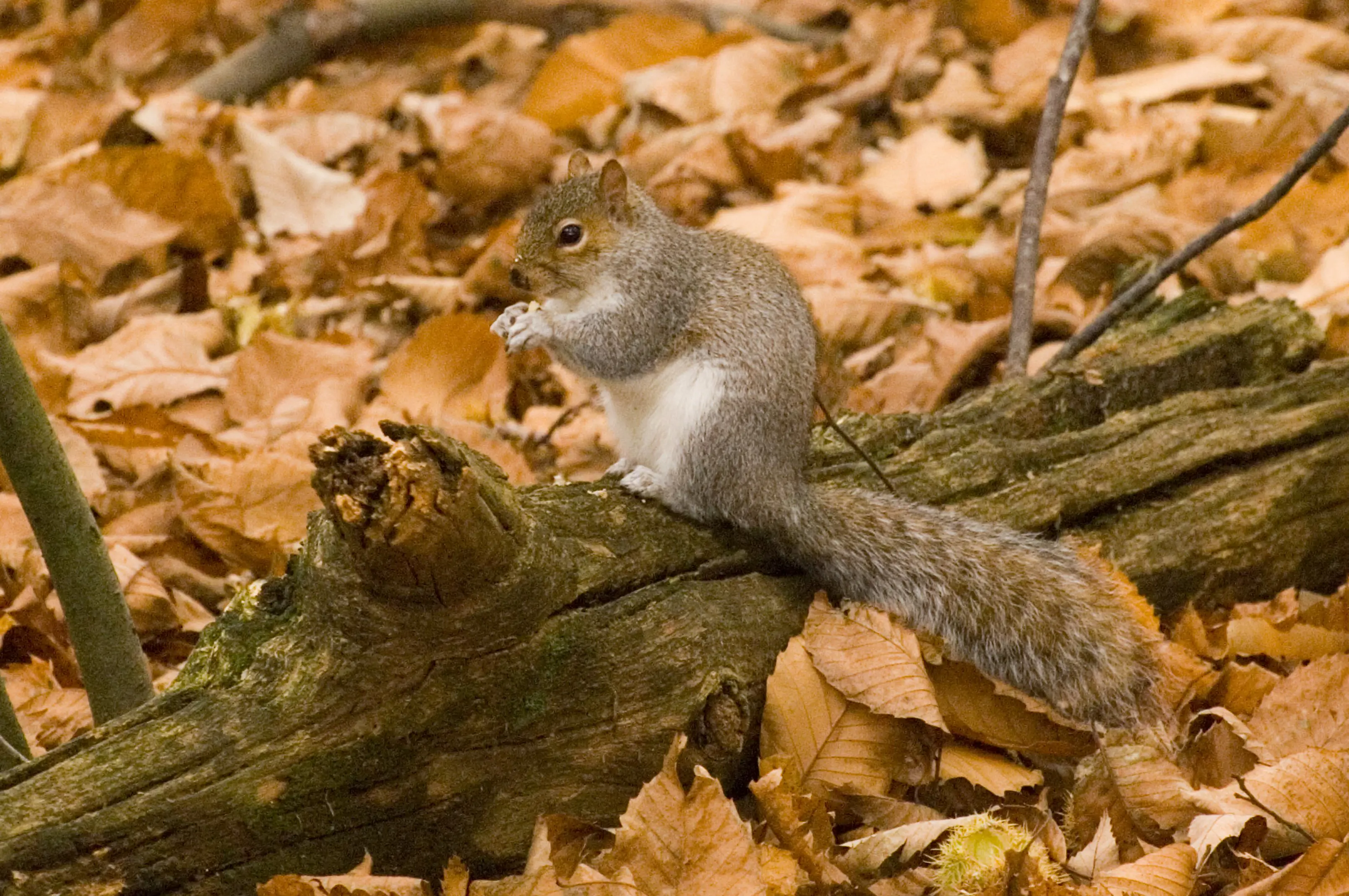
    Grey squirrel eating a sweet chestnut.Grey squirrels

    We’re also helping to control the march of grey squirrels by installing artificial pine marten boxes in our forests to boost pine marten numbers in particularly sensitive areas. Pine Martens eat grey squirrels, but appear to happily coexist with the more agile reds.

    Speaking about non-native and invasive species control, our Environment Manager, Colin Edwards, said:

    “Many of these alien species are threatening Scotland’s biodiversity including some of our unique and most precious rainforests.

    These invasive plant and animal species are also notoriously difficult to eradicate and achieving lasting success requires a co-ordinated approach, working with like-minded land managers, often at a landscape scale.

    “There are things that everyone can do to help, for example by participating in volunteer schemes that support landscape scale control of invasive plants and animals.”

    In Fife, landowners and people with gardens are being urged to help control grey squirrels via live trapping, to help halt the northward march of squirrel pox, a disease that is carried by greys and kills reds. The call comes after a red squirrel that had died from squirrel pox was found on the northern edge of Dunfermline early last month.

    Gardeners can help by being mindful of what they plant and checking what they already have growing in the garden. While plants from overseas have enriched the UK’s gardens, a small number have become highly invasive, threatening natural habitats and native species. The Royal Horticultural Society publishes a useful checklist of non-native invasive plants and suggestions for how to control or remove them.

    More from our blog

    Latest from FLS

    1. 12 Jan 2026

      Lesley's article

    2. 03 Oct 2025

      Scotland's Climate Week 2025: Working together in the Angus Glens

    3. 29 Sep 2025

      Scotland's Climate Week 2025: Working with partners to support beaver populations

    4. 19 Sep 2025

      Martens on the Move at Kirroughtree

    5. 20 Aug 2025

      Protecting endangered apple trees through teamwork

    Share this article

    • Share on Facebook
    • Share on X
    • Share on LinkedIn

    Feedback

    There is a problem

    Feedback

    Thank you for your feedback

    User feedback form


    Your feedback helps us to improve this website. Do not give any personal information because we cannot reply to you directly.


    Your feedback helps us improve this website. Do not provide any personal information here. If you need to get in touch with a query, please contact us.


    Your feedback helps us improve this website. Do not provide any personal information here. If you need to get in touch with a query, please contact us.

    Forestry and Land Scotland Logo

    Follow us on

    • Forestry and Land Scotland on Facebook
    • Forestry and Land Scotland on Twitter
    • Forestry and Land Scotland on Instagram
    • Forestry and Land Scotland on LinkedIn

    Utilities

    1. Accessibility
    2. Cookies
    3. Privacy Notice
    4. Terms and Conditions
    5. Freedom of Information
    6. Modern Slavery Statement

    Quick links

    1. Media Centre
    Forest Stewardship Council, the mark of responsible forestry Programme for the Endorsement of Forest Certification, PEFC
    © Crown Copyright
    Forests and land that Scotland can be proud of Link to gov.scot gov.scot