
How lasers, drones and real-time tracking are improving forestry
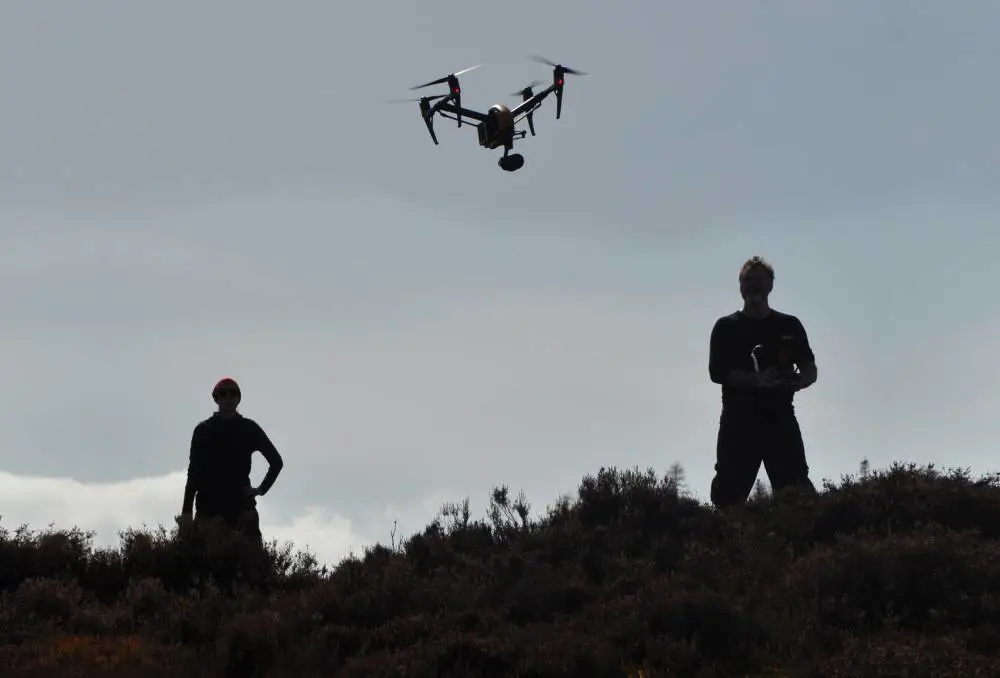 Forestry is adapting — and it needs to! We face challenges ranging from extreme weather events and physically difficult operating conditions to invasive species and disease.
That’s why we’re always on the lookout for creative solutions to help us work better, like using lasers to map the land or drones to stabilise steep slopes.
Let’s take a look at a few of the exciting projects we’re currently working on.
Cutting-edge laser technology
LiDAR (light detection and ranging) uses lasers to measure distances to objects with incredible precision.
It can gather very precise measurements and reveal features of the landscape that are hard to see with the naked eye.
In our case, the sensors and lasers are airborne but it’s possible to have ground-based set-ups too. When it comes to inspecting large sites, LiDAR is much more effective and less labour intensive than a traditional visual walkover.
Basically, a laser beam is fired towards the ground and reflections are picked up by a sensor. Tiny differences in the time it takes to detect the reflection tell us that there were differences in the distance the laser travelled. The end product is a digital 3D model that contains far more information than our previous records and aerial photography could provide.
LiDAR sees through the tree canopy and detects and maps different forest layers.
So, we can use it to help spot unrecorded archaeological sites or create detailed records of complex historic landscapes. For example, early in 2023, one of our foresters discovered what looked like a huge, mysterious jigsaw piece using LiDAR.
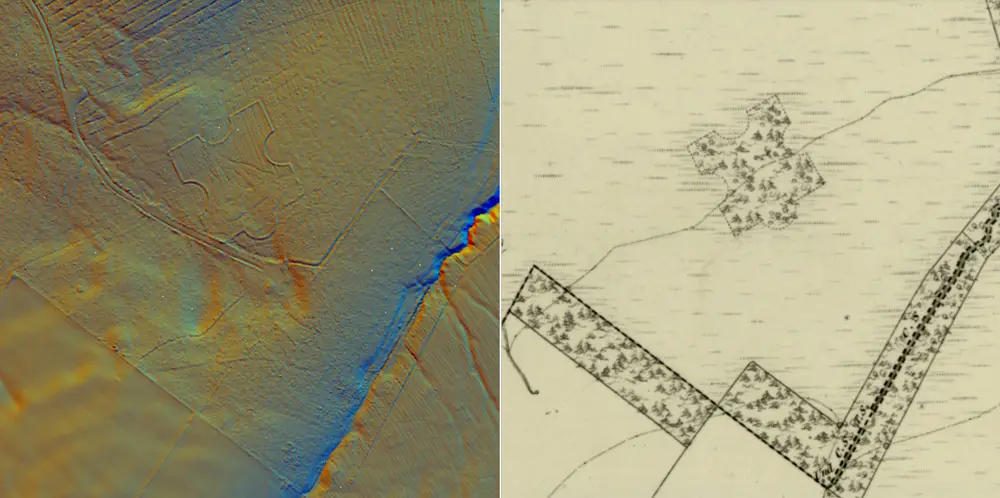
Roxburghshire Sheet XXVI, survey date 1858, publication date 1863
We can use it to plan harvesting operations and identify surface hazards like crags or loose boulders that might need to be made safe before work begins.
We can use it to help the monitoring of biodiversity, habitat assessment, and the identification of high conservation value areas.
LiDAR can even spot changes in the forest such as dead trees or signs of invasive species infestation or disease outbreaks, so we can act quickly to limit any damage. We use the data to identify areas prone to erosion, assess wildfire risk and to identify potential flood risks that might arise when trees are felled so that we can put drainage plans in place.
Our next aim is to use it to find the trees that customers and the market want at any given time so we can prioritise which sites we harvest and make sure our timber is used in the most efficient and appropriate way – ensuring Scotland’s precious resource goes further!
Better ways to grow
It’s not just timber felling that requires innovative solutions. When it comes to actually growing trees, the creative use of technology is helping us work towards the Scottish Government’s ambitious tree planting targets.
Tape4Trees
Whether it’s our brand-new glasshouse (that will be able to grow up to 19 million trees a year), underground irrigation system or the GPS alignment of all our tractors, our Newton nursery is full of clever ideas. None more exciting than the Tape4Trees planting system designed to make better use of Scotland’s limited tree seed bank.
Already used in food production, this agricultural technology has been repurposed for forestry — and it’s a game-changer.
Where we were previously able to plant up to 60,000 seedlings in a day, this new system allows us to plant a staggering 1 million trees in the same time.
It works by sowing seeds into a biodegradable paper tape of compost filled pockets. Once sown, the tape is placed in a glasshouse, providing ideal conditions for the young trees to grow.
Not only is this technology helping us to better contribute to Scotland’s climate emergency effort, it has the potential to deliver benefits to forestry around the world.
Vertical farming
Elsewhere, we’re trialling indoor vertical farming technology which could transform forestry and help the UK meet net zero targets faster.
Working with Intelligent Growth Solutions, some broadleaved tree seedlings are being grown to marketable size six times faster than traditional outdoor sowing. The trials, the first of their kind in the UK, have seen seedlings grow to 40-50 cm tall in just 90 days — in a field, that could take up to 18 months.
Both conifers and broadleaf trees have been grown successfully which is really important for our work.
The technique uses far less water than traditional methods. Fewer seeds are wasted too because the controlled steady state of a vertical farm minimises external factors which can hinder germination.
Tree-planting drones
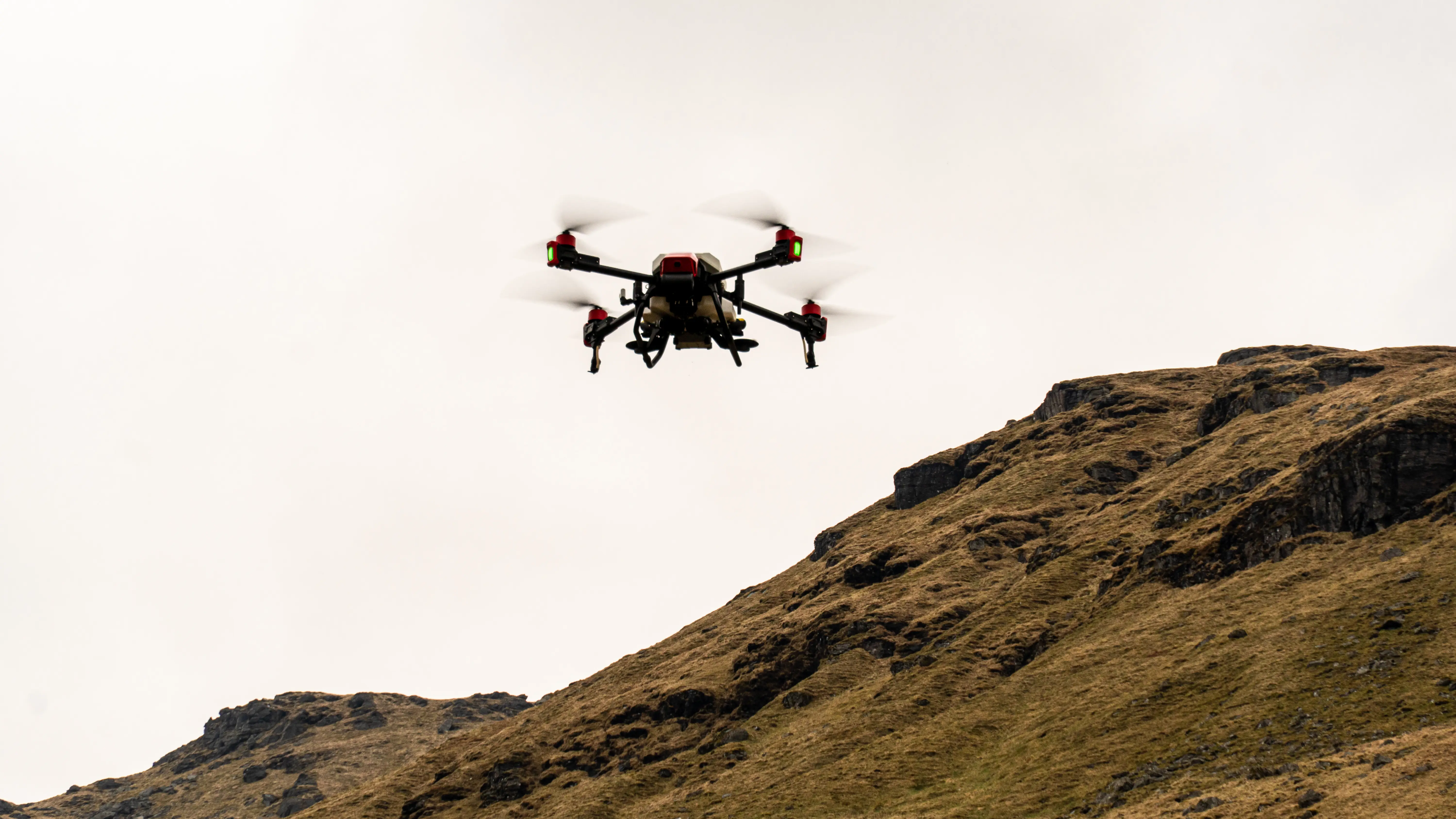 Although using drones to plant trees is quite common in North America and parts of Europe, it’s a pretty new idea for the UK.
Using a drone isn’t just quicker than scattering seeds by hand, it also allows us to efficiently plant sites that might be difficult or potentially dangerous for people to work on. Following two years of drone seeding trials on the steep slopes above the A83, we’re now hoping to try dispersing pellets that house the seed in a nutrient gel rather than just scattering it loose.
The idea is that the gel casing should increase the likelihood of germination.
These trials are part of our work with Transport Scotland to try to reduce the number of serious landslips that close the road up to the Rest and Be Thankful.
By planting native tree species sourced from the local area we’re helping to stabilise the slope and make it more resilient to the impact of heavy rainfall for future generations.
Real-time tracking for wildlife rangers
Even with all this clever tech to help seeds become trees, the threat of being eaten by animals is a serious one.
With over 1 million deer in Scotland, a number that has doubled in the past 30 years, deer impact our forests and land in many ways. They eat younger trees, strip the bark off older trees, over-graze in precious areas like ancient woodlands and compact the soil.
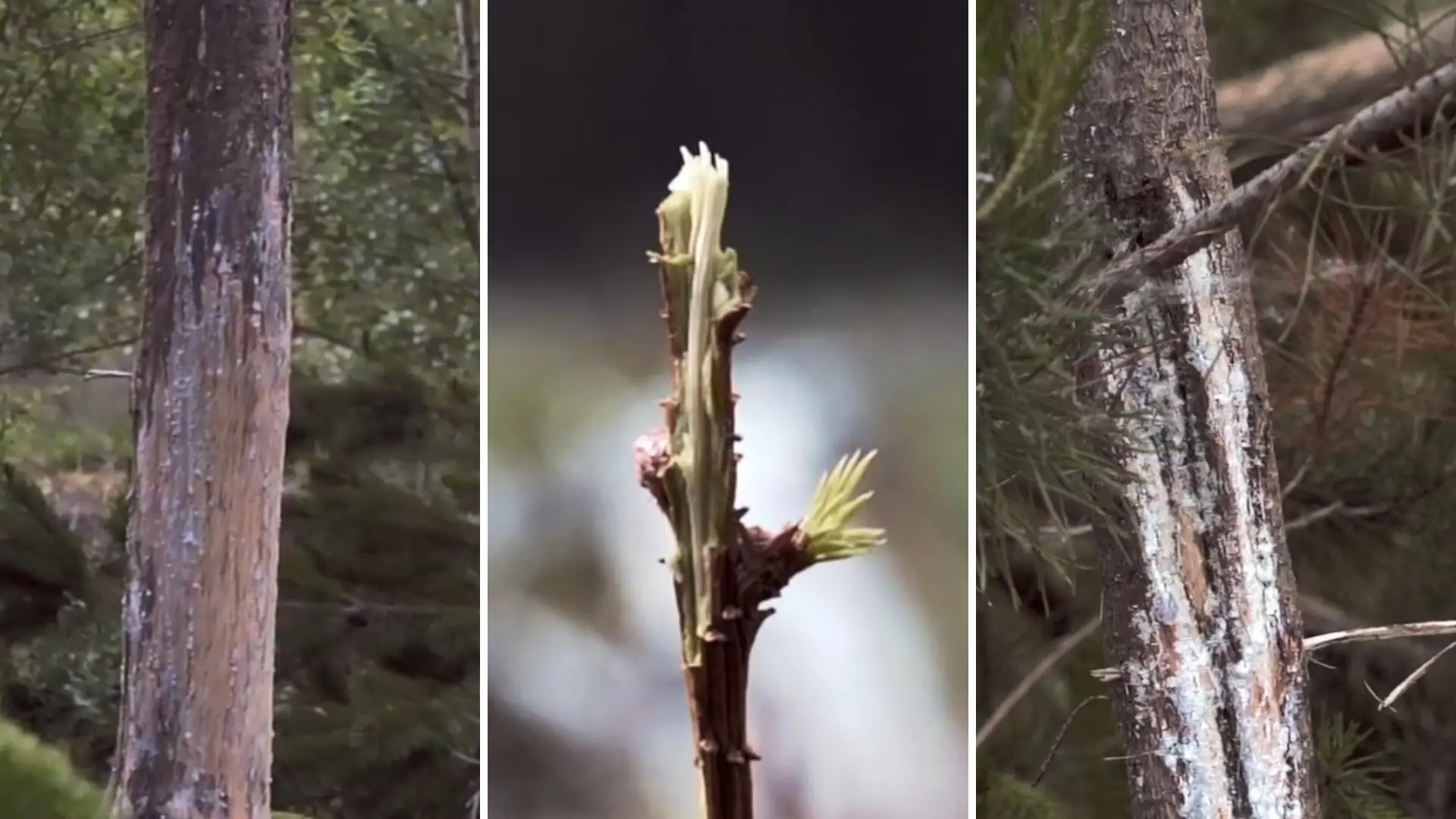 Some examples of damage caused by deer
Managing this problem is absolutely essential for us to deliver on our climate emergency action plan, meet biodiversity targets and conserve native woodland like the Caledonian pinewood at Glen Affric. It allows us to successfully establish new forests and minimise the impact deer have on the yield and quality of the sustainable timber we produce.
But it’s really hard work. Deer are naturally secretive and can quickly learn signs of searching strategies (for example, engine noises). So, our wildlife rangers spend a lot of time tracking animals, especially deer, over difficult terrain.
We’re working to find a way of making this easier for our rangers through the Scottish Government’s flagship CivTech programme. CivTech brings together the public sector, private sector and third sector charities to both identify real-world problems and then develop solutions. Our deer challenge is — how to make it easier for our wildlife rangers to locate every animal over five kilograms in a specified area in real time?
Sophisticated real-time tracking would mean we could better manage deer and so take better care of Scotland’s forests and land and boost ecological restoration.
We had a record number of submissions for this challenge, with a wide range of possible solutions. Two companies were chosen to develop their ideas.
2 Excel Aviation Ltd. are looking to use fixed-wing aircraft to provide infrared and true-colour imaging for real-time detection of wildlife and provide these locations to wildlife rangers in the field.
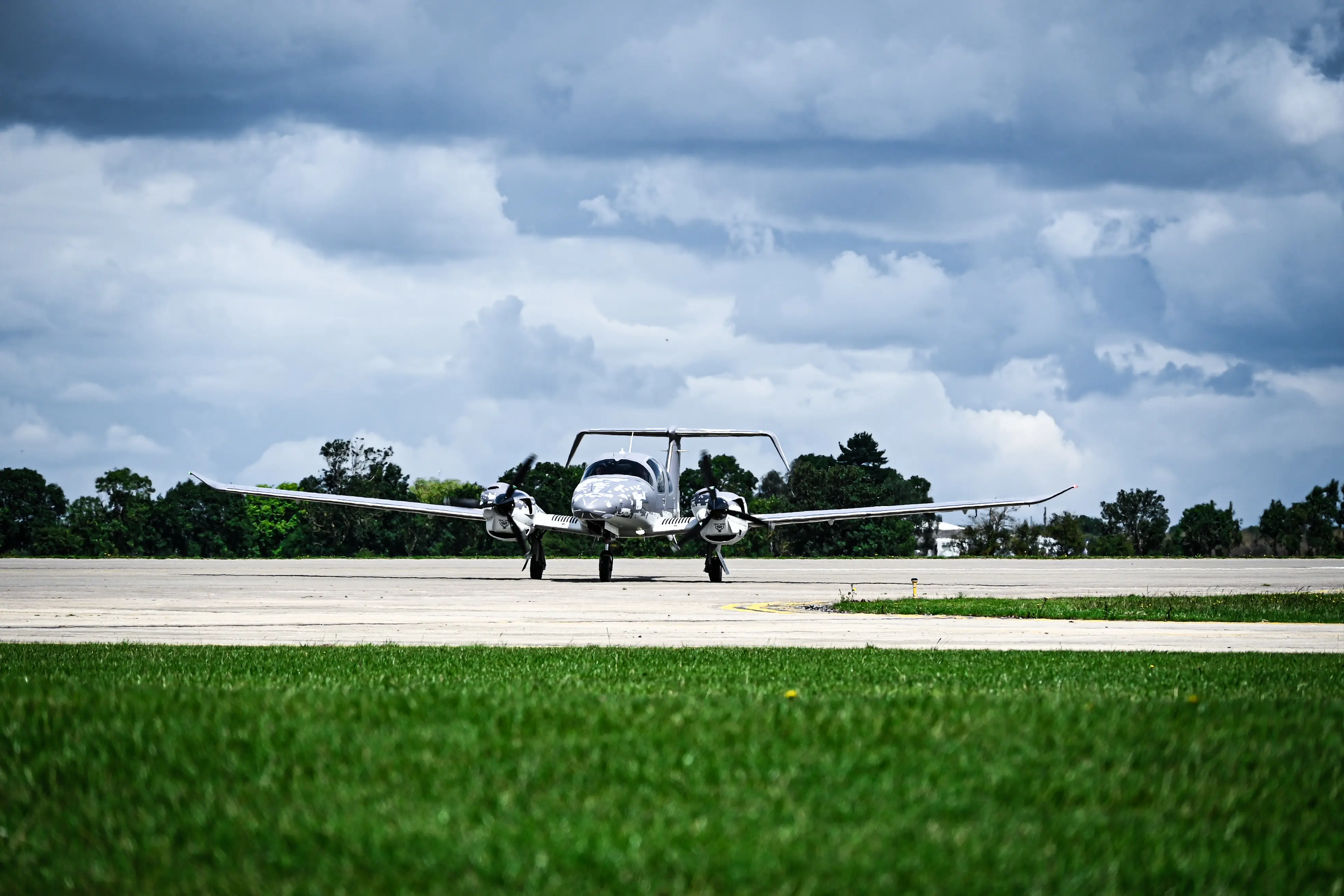 While Drone Wild's project focuses on using micro drones operated by wildlife rangers to accurately locate wildlife.
Using these devices to survey the land before they begin stalking should allow rangers to improve productivity and reduce the time spent looking for wildlife.
Both companies are currently undertaking field trials. We look forward to seeing the results of these trials and hope that this innovative technology will have a significant positive impact for the forests and land that we look after.
More clever ideas