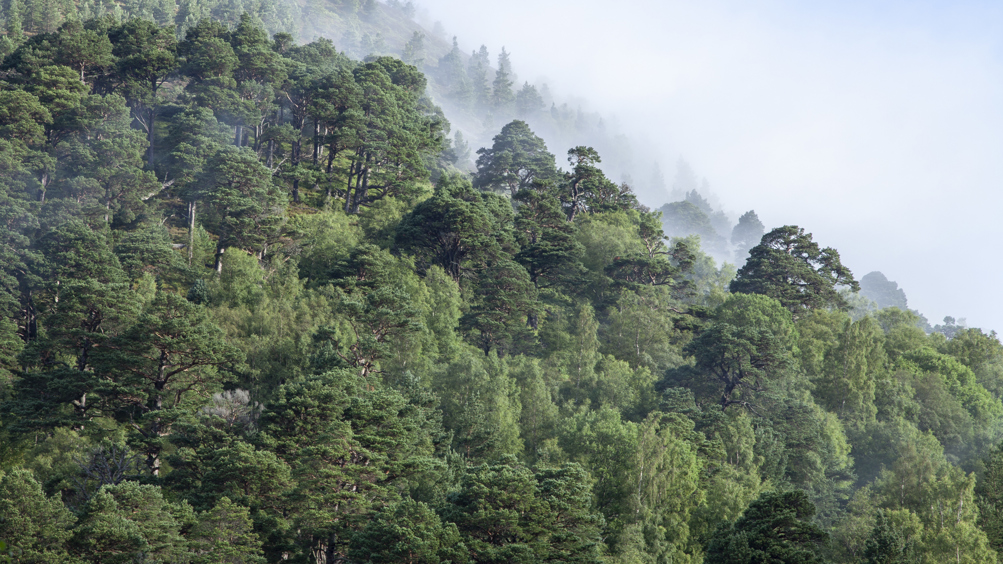
Glenmore - 100 years of public ownership
In November 1923, only four years after the establishment of the Forestry Commission, Glenmore was purchased from the Duke of Gordon. 2023 marks 100 years of public ownership of this much-loved place. Its transformation during this time can be seen as a miniature history of public forestry.
The early years
After the First World War, Britain's timber supply was at an all-time low. A steady supply of timber had been crucial for trench supports, scaffolding in shipyards and pit props for coal supplies. The forests of Glenmore had not escaped the saw and axe as German U-boats blocked imports. In the years that followed, efforts to plant trees were stepped up and thousands of forestry jobs were created. At Glenmore, a large planting programme began to create new forest at Badaguish.
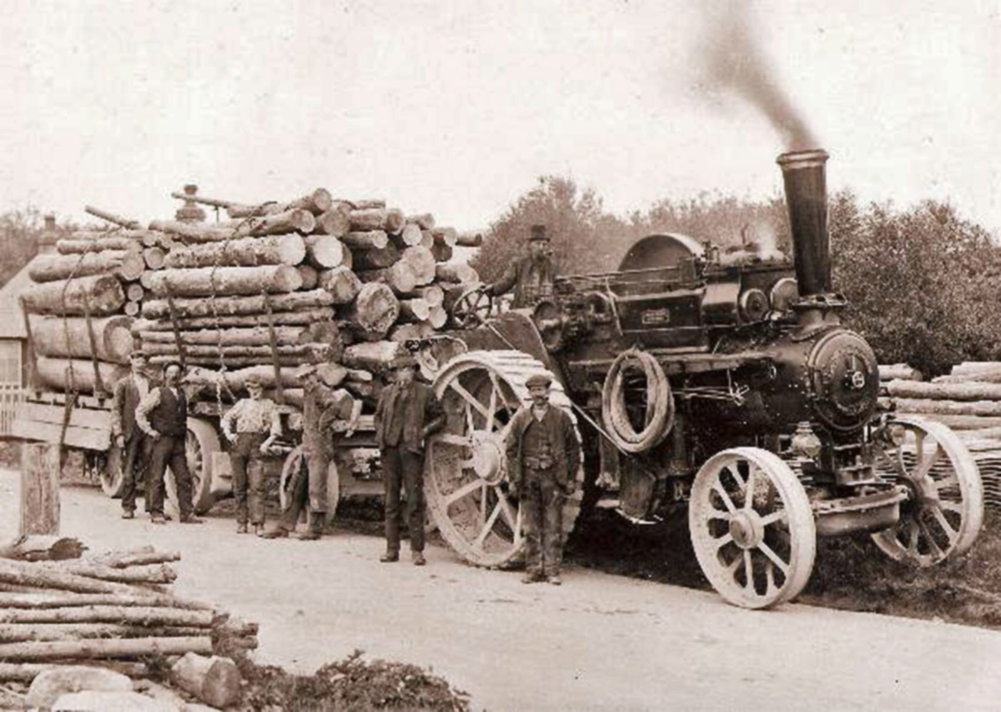 Traction Engine in Strathspey, 1925. Image Courtesy of Mary Bruce.
Glenmore during World War II
During World War II, Strathspey was a busy place with the Women's Timber Corps and Canadian Forestry Corps working in neighbouring forests. The trees planted in the 1920s and 1930s near Badaguish were still too young to fell. However, Glenmore was far from quiet. When Germany occupied Norway in 1940, many Norwegian resistance fighters escaped to Britain. The forests, mountains and lochside of Glenmore were perfect for training agents in the art of guerilla warfare with bombing and sabotage training. Remnants of disused railway lines they practiced blowing up can be seen in the sand near the shore of Loch Morlich.
This training was famously put into action at the Vemork hydro plant in Norway where fears had been growing that Nazi forces could use the heavy water at Vemork to create an atomic bomb. 'Operation Gunnerside' led by 23-year-old Joachim Rønneberg was a success with 500kg of heavy water being blown up. The men escaped by travelling 250 miles to Sweden on skis without one shot being fired. The operation later went on to be fictionalised in the 1965 film ‘The Heroes of Telemark’.
The Norwegian unit of the SOE (Special Operations Executive) was officially called STS 26 but became known as Kompani Linge in honour of the unit’s inspirational early leader, Captain Martin Linge (1894-1941). Glenmore continues to be a site of commemoration for the huge part those who trained here played in the war effort.
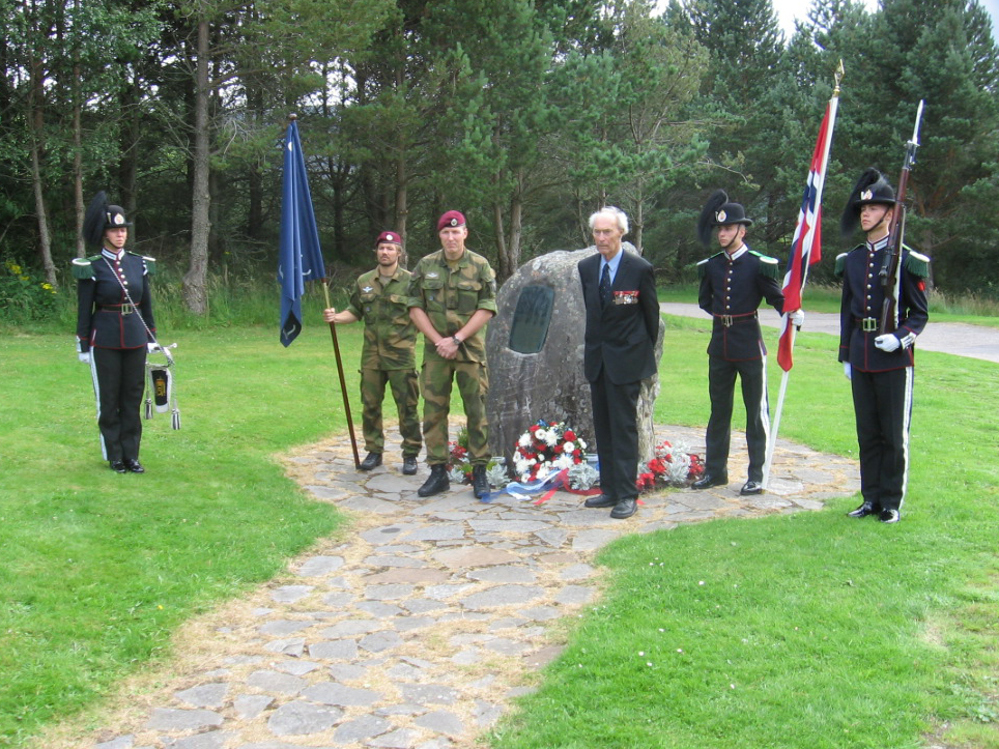 Joachim Rønneberg visits the memorial at Glenmore Visitor Centre in 2012.
Recreation
With a fast-developing reputation for mountaineering and winter sports, recreational access began to pick up in the post-war years. In 1948, Glenmore was designated as a Forest Park, while the 1950s saw the arrival of reindeer — which were once native to Scotland. The Cairngorms, with their sub-arctic conditions, were identified by Mikel Utsi and Ethel Lindgren as ideal habitat for reintroduction from Sweden. These reindeer remain one of the most popular visitor attractions in Glenmore. By the 1960s, nearby Aviemore was booming and a road was built from Glenmore to Coire Cas providing access to the slopes above.
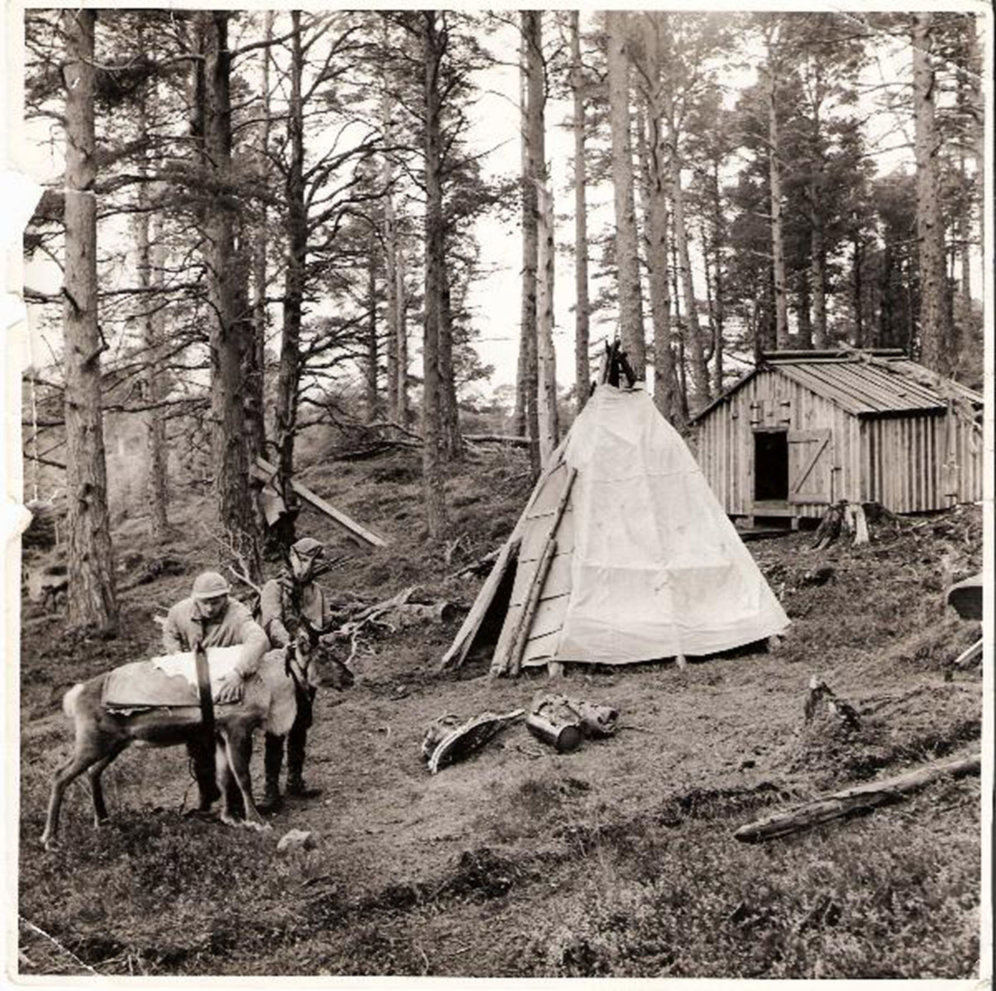
Mikel Utsi with reindeer, mid 1950s. Image Courtesy of Mary Ferguson.
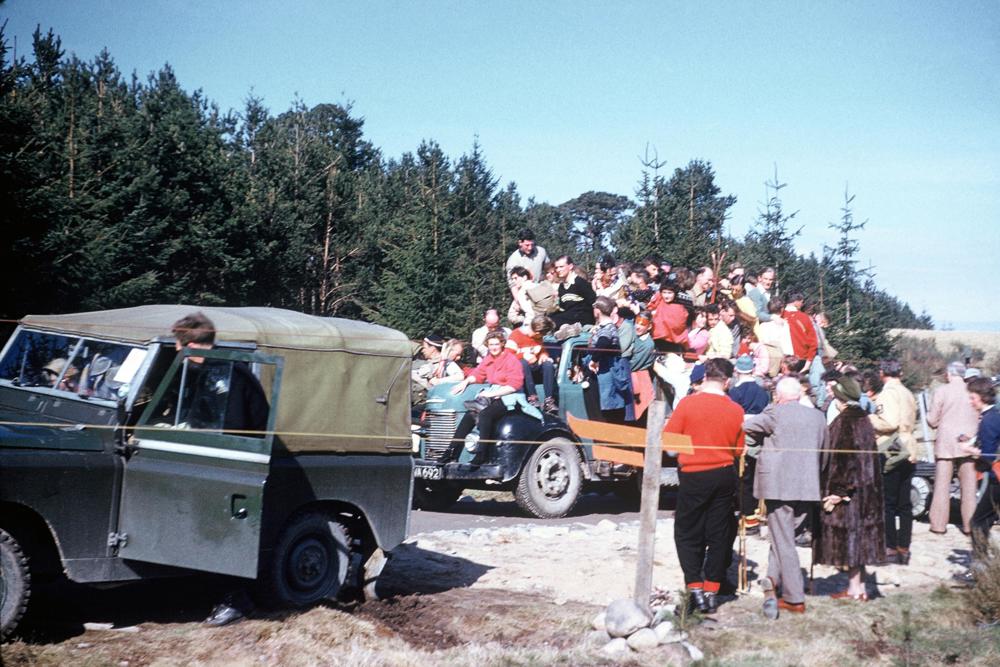
Ski bus at Hayfield, 1960.
Summer recreation increased too and the campsite could accommodate 1000 visitors by the end of the 1970s. Over the following decades high visitor numbers continued as facilities and waymarked trails were developed to offer different outdoor experiences.
"My memories were of a busy forest for recreation visitors. On one summer's day count there were 1200 people on Loch Morlich beach and 118 cars along the lochside road as car parks were full".
Bryce Reynard - Forester at Glenmore from 1973-1976
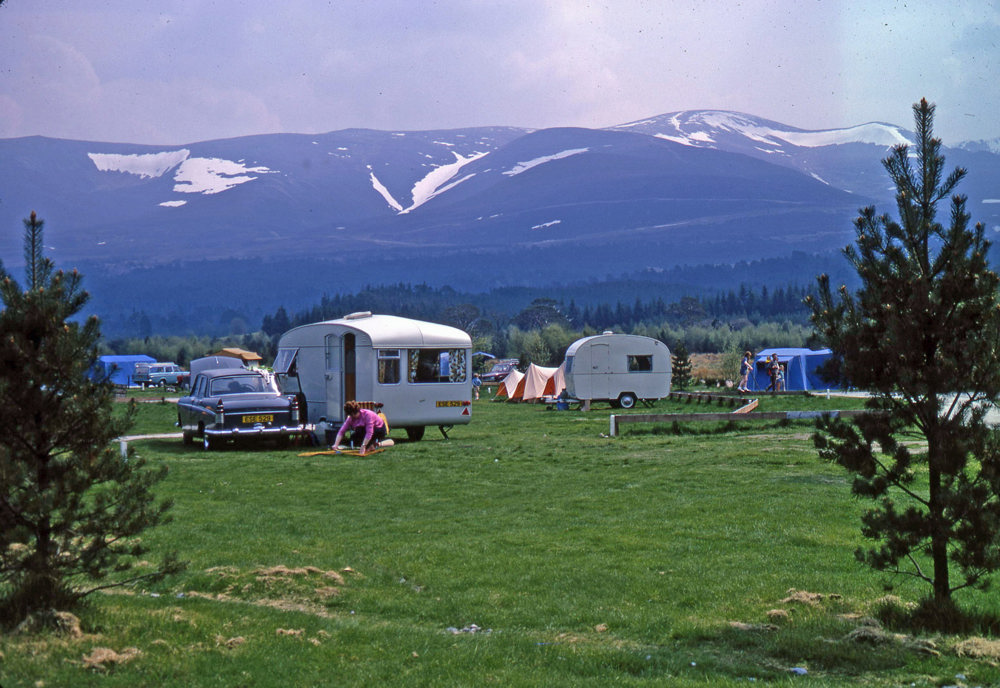
Glenmore Campsite, 1972.
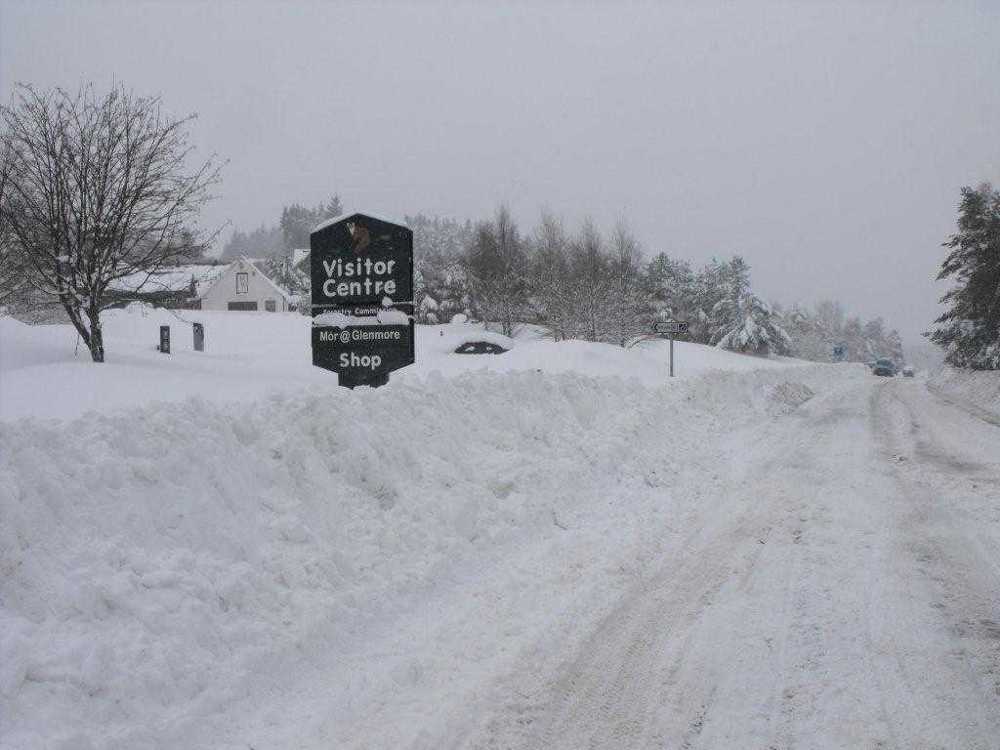
Glenmore, February 2010.
"I remember the challenges posed by the deep winter snows of 2009/10 that shut the glen, although for some visitors it was seen as more of an adventure".
Jack Mackay - Visitor Services, Inverness Forest District (1997-2018)
Restoration
Alongside recreation, Glenmore was a busy working forest and by the 1980s around 4000 cubic metres of timber was being sent to market each year. In the 1920s and 1930s, planting of non-native conifers had been preferred due to faster growing rates than native Scots pine. Many of the trees planted before World War II were now at a suitable age to be harvested.
Fire was as much an issue then as it is now, with 1300 acres of forest lost to a fire started by a cigarette in 1960. Ten years later, two fires within 12 months saw another 4000 acres destroyed.
Through the 1980s and 1990s greater emphasis was put on conservation and commitments were made to extend the area of the Caledonian pinewoods, with further designations recognising the importance of Glenmore.
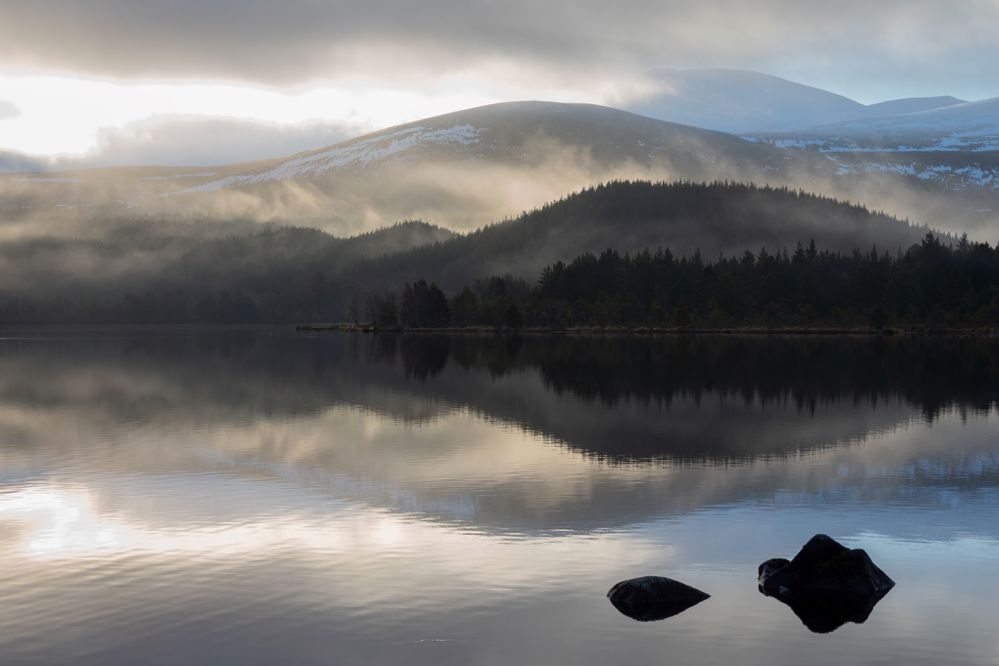
"Walking those quiet frosty woods at dawn with the mist clearing from the birch and pine stands and the sun rising over Cairngorm is still a memory that I treasure".
Neil McInnes - Forester at Glenmore from 2001 - 2007
David Jardine (Inverness District Manager 1996 - 2012) recalls how the restoration of the Caledonian pinewood was in "full swing" during the 1990s and 2000s. The Cairngorms National Park was established in 2003 and there was an increase in partnership working. As well as working with neighbouring landowners, Neil McInnes (Forester from 2001 - 2007) remembers time spent with Swedish and Norwegian foresters "to improve the forests for capercaillie and other pinewood species".
As part of Cairngorms Connect, efforts are ongoing to remove non-native conifers from the pinewoods and manage deer numbers to allow natural regeneration. Work over the decades has led to a successful expansion of native woodland, such as at Ryvoan. In November 2023, the Cairngorms Connect partnership was recognised by being awarded the Landscape Restoration Award at the Nature of Scotland Awards. Rare species such as the pine hoverfly have been shown to be breeding successfully across the partnership area. In the Spring of 2023, the number of capercaillie counted in Strathspey's forests showed an increase for the first time in years, offering some hope for this endangered species.
The Future
Over the next 100 years, the vision for Glenmore is a thriving, diverse habitat of forest, open land and wetlands providing high quality recreation with a sustainable tourist and forest economy. By working with our neighbours at a landscape scale, Forestry and Land Scotland will continue to build on the work of generations of foresters at Glenmore.