Forestry and Land Scotland Logo
  1. Visit
      1. Find a forest
      2. Explore forest parks
    1. Accessible forests
    2. Stay the night
      1. Waymarked trails
      2. Cycling
      3. Mountain biking
      4. Photography
      5. Orienteering
      6. Camping
      7. Treetop adventure
      8. Water sports
      9. Horse riding
      1. Things to see
      2. Trees
      3. Wildlife
      4. Heritage
      5. Things to see in Winter
    3. Plan a visit with a group
    4. Visiting safely
    5. Parking
    Forest map

    Search for a forest by map

    Forests & trails information and closures

    An overview of all closures and high risk warnings on trails.

    Stay the night

    Park overnight in selected forest car parks as part of our motorhome scheme.

  2. About us
      1. Who we are
      2. Our mission and vision
      3. Leadership team
      4. Our values
      1. Careers
      2. Current Vacancies
      3. What we offer
      4. Candidate information
      5. A day in the life
      6. Apprenticeships
    1. Key documents
    2. Our impact
    3. Our approach to Gaelic
    Current Vacancies

    Some text

  3. What we do
      1. Taking Climate Action
      2. The climate emergency
      3. Forest resilience
      4. Peatland restoration
      5. Carbon offsetting
      6. Biodiversity
      7. Renewable energy
      1. Managing the land
      2. Planning our land management
      3. Our sustainable forestry
      4. Our tree nursery
      1. Conservation
      2. Habitat conservation
      3. Wildlife conservation
      4. Historic environment conservation
    1. Supporting outdoor exploration
    2. Working with communities
    3. Our projects
  4. Living and Working
      1. For businesses
      2. Timber sales
      3. Procurements and tenders
      4. Business opportunities
      5. Farming opportunities
      6. Venison sales
      7. Firewood sales
      1. For communities
      2. Transfer land and buildings to your community
      3. Land management plan consultations
      1. Permissions and Permits
      1. Learning and Education
      2. Outdoor learning
      3. Activity sheets
    1. Buy Land or Buildings
    Land management plan consultations

    Text here

    Current job opportunities

    Text here

  5. Get involved
    1. Have your say on consultations
    2. Hold an event
    3. Apply for a community asset transfer (CAT)
    4. Arrange a visit
    5. Work with us
  6. News
  7. Contact
Suggested links
    1. Home
    2. News
    28 April 2023 4 minutes

    Fence post fluff

    If you go out to the more open areas of Scotland’s national forests and land, especially places with deep heather and old fence lines, you may see someone looking somewhat intently at the fence posts.

    They are likely checking each post for resting moths or other invertebrate species, such as small dark yellow underwing found on a post on Loch Shaw last year. Despite their unnatural purpose, fence posts are widely used by a range of species closely associated with open moorland and bog habitats. This is because they mimic the stems of trees and tall vegetation often missing from these sites.
    RBB2

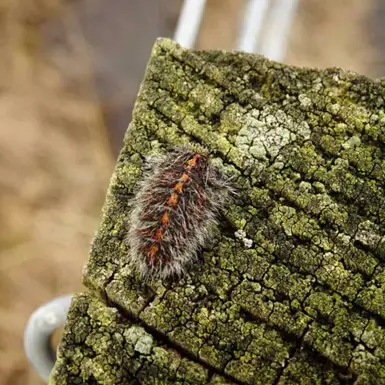
    A female Rannoch Brindled Beauty on a fence post in Glen Prosen

    One such moth we’ve been searching fence posts for is the Rannoch Brindled Beauty. Volunteers have recently recorded a population of these rare moths on one of our newer parcels of land just south of Cairngorms National Park. On the open landscape of Glen Prosen, old stock-fence posts are used by the flightless females and males. They have a strong preference for areas with abundant bog myrtle, on which the caterpillars feed, as well as heathers.

    Rannoch Brindled Beauty is a nationally scarce species with only localised distribution across the Highlands, Speyside and central region of Scotland. It is a peatland and moorland-dwelling species, with the Flanders Moss area being the most southerly place they are found. As lepidopterists, those who study and record moths and butterflies, learn more about Rannoch Brindled Beauties new records are added, including recent records at Glen Prosen.

    The female Rannoch Brindled Beauty resembles a blob of fluff: she is around 10-12 mm long, and easily spotted when sitting atop a fence post. She does technically have wings, but somewhere through evolution they have resulted in small vestigial wings.
    RBB3

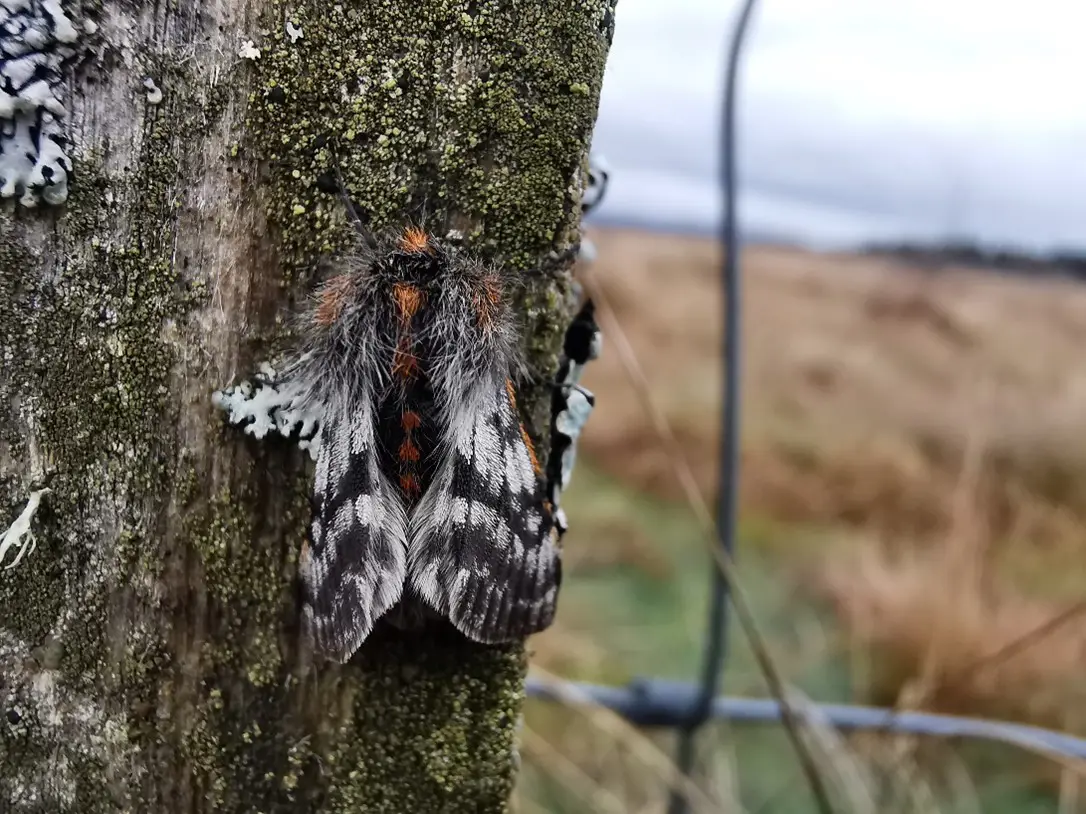
    A male Rannoch Brindled Beauty.

    The males are fully-winged. They are grey-whitish in appearance with orange marks along the lower wing edge. The fluffy body is also evident, with a fuzzy ‘head’ sticking out above his wings. Someone recently described the male as looking like it’s wearing a vintage-style fur coat, which our staff agreed was a fitting analogy. Both male and female have a broken orange line along their back.

    Since the females are ‘wingless’, they have limited mobility to disperse. This is where the fence posts come in. They climb to high points on their moors and bogs – fence posts and small Birch trees are ideal. A good lichen-covered fence post with lots of cracks is a female Rannoch Brindled Beauty’s favourite hang-out spot.

    Here, they pump out their pheromones and wait for the males to come. Once they’ve done their thing, the female then lays eggs in the cracked post. A few weeks later, small caterpillars hatch, send out silk strands which catch the breeze, and they float off – hoping to land on their food plant Bog Myrtle. Although a high-risk strategy it seems to have done the job so far.
    RBB4

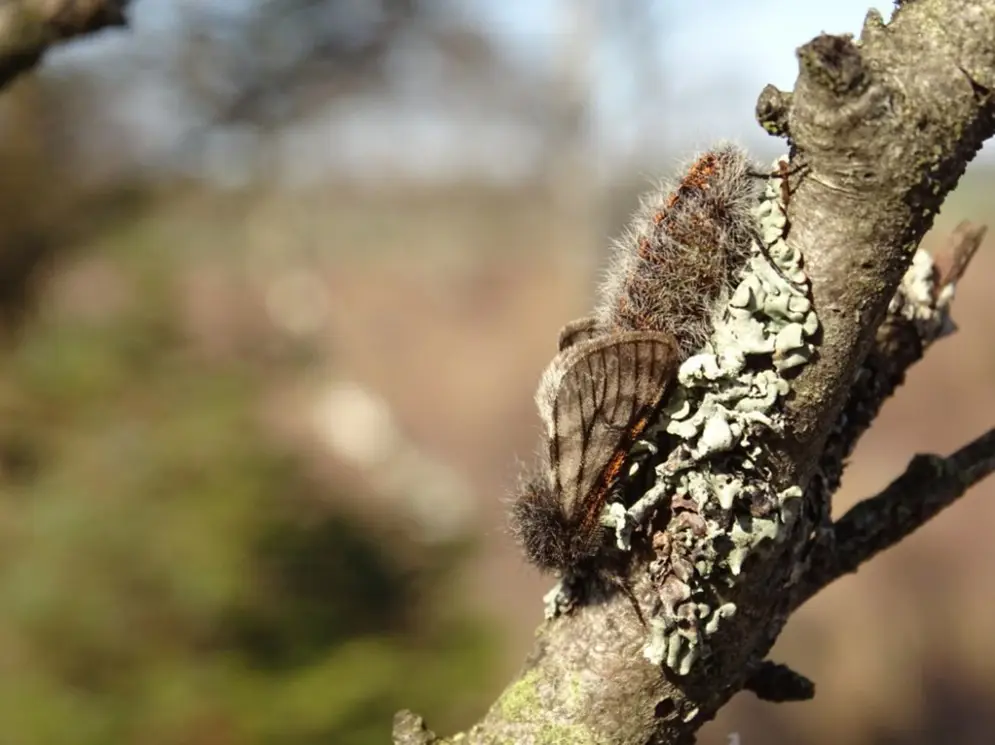
    A mating pair of Rannoch Brindled Beauty on a tree branch.

    This creative method of dispersal and survival depends on key habitat conditions and food supply, and the Rannoch Brindled Beauties serve as an indicator species for potential changes occurring on peat and moorland habitats. Factors like climate change and deer-overgrazing could have a dramatic effect on Rannoch Brindled Beauty’s and many other invertebrates.

    At Glen Prosen, people and nature will be at the heart of our landscape-scale plans for the area, plans that will include an element of tree planting, peatland restoration and habitat restoration work.

    The new local population at Glen Prosen will be surveyed in greater detail as plans for the site develop, to ensure their key habitat is protected and conditions for the enhancement of the species are incorporated into the sites overall objectives.

    If you are out and about on the more open areas of the country, especially places with deep heather and old fence lines, you may want to take a peek at the fence posts just in case there’s a Rannoch Brindled Beauty or other species present. Any sightings in the national forests and land can be reported to one of our regional offices. 


    Latest from FLS

    1. 12 Jan 2026

      Lesley's article

    2. 03 Oct 2025

      Scotland's Climate Week 2025: Working together in the Angus Glens

    3. 29 Sep 2025

      Scotland's Climate Week 2025: Working with partners to support beaver populations

    4. 19 Sep 2025

      Martens on the Move at Kirroughtree

    5. 20 Aug 2025

      Protecting endangered apple trees through teamwork

    Share this article

    • Share on Facebook
    • Share on X
    • Share on LinkedIn

    Feedback

    There is a problem

    Feedback

    Thank you for your feedback

    User feedback form


    Your feedback helps us to improve this website. Do not give any personal information because we cannot reply to you directly.


    Your feedback helps us improve this website. Do not provide any personal information here. If you need to get in touch with a query, please contact us.


    Your feedback helps us improve this website. Do not provide any personal information here. If you need to get in touch with a query, please contact us.

    Forestry and Land Scotland Logo

    Follow us on

    • Forestry and Land Scotland on Facebook
    • Forestry and Land Scotland on Twitter
    • Forestry and Land Scotland on Instagram
    • Forestry and Land Scotland on LinkedIn

    Utilities

    1. Accessibility
    2. Cookies
    3. Privacy Notice
    4. Terms and Conditions
    5. Freedom of Information
    6. Modern Slavery Statement

    Quick links

    1. Media Centre
    Forest Stewardship Council, the mark of responsible forestry Programme for the Endorsement of Forest Certification, PEFC
    © Crown Copyright
    Forests and land that Scotland can be proud of Link to gov.scot gov.scot