Forestry and Land Scotland Logo
  1. Visit
      1. Find a forest
      2. Explore forest parks
    1. Accessible forests
    2. Stay the night
      1. Waymarked trails
      2. Cycling
      3. Mountain biking
      4. Photography
      5. Orienteering
      6. Camping
      7. Treetop adventure
      8. Water sports
      9. Horse riding
      1. Things to see
      2. Trees
      3. Wildlife
      4. Heritage
      5. Things to see in Winter
    3. Plan a visit with a group
    4. Visiting safely
    5. Parking
    Forest map

    Search for a forest by map

    Forests & trails information and closures

    An overview of all closures and high risk warnings on trails.

    Stay the night

    Park overnight in selected forest car parks as part of our motorhome scheme.

  2. About us
      1. Who we are
      2. Our mission and vision
      3. Leadership team
      4. Our values
      1. Careers
      2. Current Vacancies
      3. What we offer
      4. Candidate information
      5. A day in the life
      6. Apprenticeships
    1. Key documents
    2. Our impact
    3. Our approach to Gaelic
    Current Vacancies

    Some text

  3. What we do
      1. Taking Climate Action
      2. The climate emergency
      3. Forest resilience
      4. Peatland restoration
      5. Carbon offsetting
      6. Biodiversity
      7. Renewable energy
      1. Managing the land
      2. Planning our land management
      3. Our sustainable forestry
      4. Our tree nursery
      1. Conservation
      2. Habitat conservation
      3. Wildlife conservation
      4. Historic environment conservation
    1. Supporting outdoor exploration
    2. Working with communities
    3. Our projects
  4. Living and Working
      1. For businesses
      2. Timber sales
      3. Procurements and tenders
      4. Business opportunities
      5. Farming opportunities
      6. Venison sales
      7. Firewood sales
      1. For communities
      2. Transfer land and buildings to your community
      3. Land management plan consultations
      1. Permissions and Permits
      1. Learning and Education
      2. Outdoor learning
      3. Activity sheets
    1. Buy Land or Buildings
    Land management plan consultations

    Text here

    Current job opportunities

    Text here

  5. Get involved
    1. Have your say on consultations
    2. Hold an event
    3. Apply for a community asset transfer (CAT)
    4. Arrange a visit
    5. Work with us
  6. News
  7. Contact
Suggested links
    1. Home
    2. News
    04 July 2022 4 minutes

    Dunoon arboretum helping to replace diseased larch trees
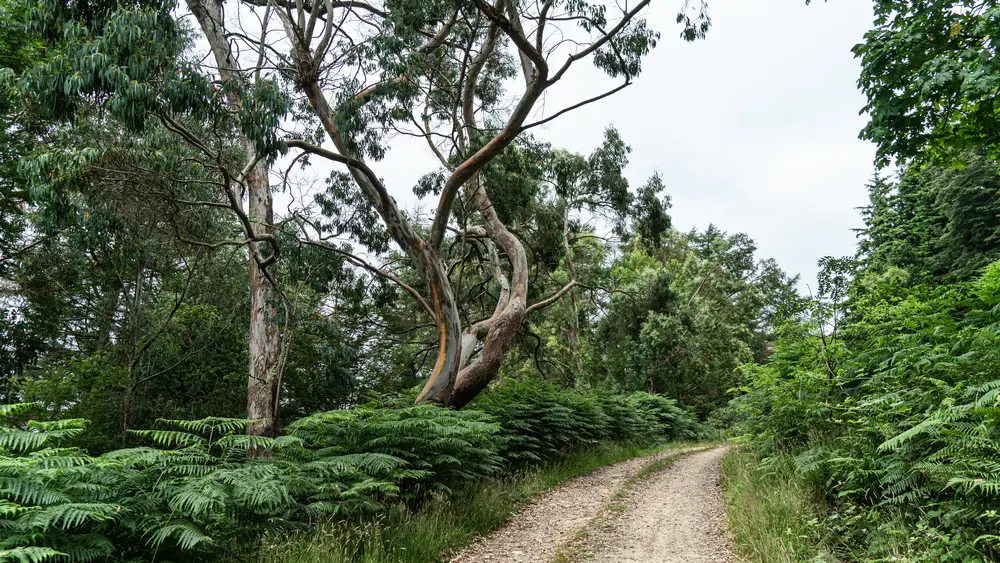
     

    A gravel path through a forest

    A unique arboretum on the west coast is helping foresters choose tree species that can withstand Scotland’s changing climate.

    Kilmun Arboretum was established in Dunoon in the 1930s as a living laboratory where forestry experts could test trees’ performance against the west coast’s weather.

    Over 260 tree species were planted there in very small plots. Some liked the Scottish weather and soil, some did not. Over 200 species thrived, making the arboretum internationally significant and one of the most important sites for British forestry. The species tested in Kilmun are planted in forests all over the UK.

    The arboretum is now helping solve a problem facing foresters: how to replace the thousands of larch trees that must be felled due to the outbreak of a tree disease in south west Scotland.
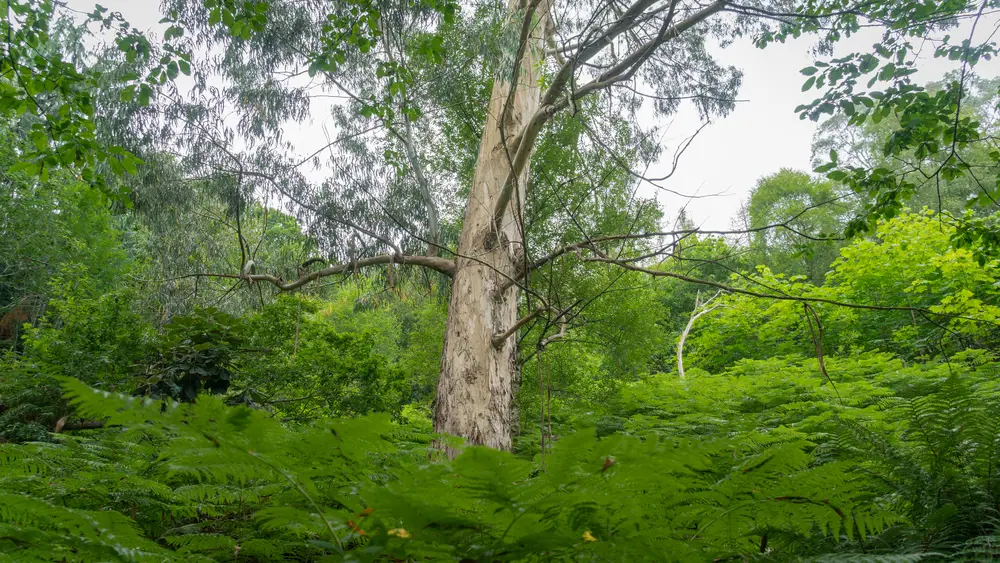
    kilmun arboretum 11 of 33

    Learn more about Kilmun Arboretum Kilmun Arboretum

    About 100 hectares of larch planted on land adjacent to Kilmun Arboretum are due to be felled this year. This is because Phytophthora ramorum, the disease affecting them, can’t be eradicated. The only way to slow the rate of spread is to fell the infected trees and those surrounding them. The question of what to plant in their place will be answered by the arboretum.

    Gareth Waters, interim head of operational support at Forestry and Land Scotland, which manages both sites, said: “We’ll be planting a variety of species in a mosaic pattern to create a diverse and resilient forest. We are still finalising the selection of trees with Forest Research, but a visit to Kilmun Arboretum provides plenty of obvious choices. Western red cedar, Serbian spruce and Macedonian pine have all done well there and would probably suit this site.

    “It’s all about the right tree in the right place. Other species that are doing brilliantly in the arboretum, like the red maple, might not be appropriate as they have poor commercial timber properties. We’ll also avoid using certain species in areas where they can regenerate freely and squeeze out the competition.”

    There is also the question of deer management.

    Gareth said: “Deer in Scotland tend to find alternative tree species much tastier than Sitka spruce, which accounts for over 50% of our forestry. “The first six to seven years of a tree’s life are vital, so we’ll look at deer management tactics like protective fencing or culling to protect the trees and give them the best chance of maturing."

    While the arboretum was first planted in the 1930s, Forestry and Land Scotland continues to work with Forest Research to trial new species there. Scientists at Forest Research help long and shortlist potential species. The most recently planted are Chinese cedar, Moroccan fir, Qinghai spruce and Scots pine.

    Matt Parratt from Forest Research said: “At Kilmun we prioritise tree species that are threatened in the wild, may be adapted to a future climate or have the potential to produce usable timber. The moist oceanic climate makes Kilmun particularly suited for species from similar climatic zones, such as the Pacific northwest of North America, Chile, and the northeast of Asia and Japan.

    “These are experimental plantings, but they help us to support others to develop plans for future forests in Scotland and the rest of the UK. The arboretum has many ‘champion’ trees. These are prize specimens of their species, like Eucalyptus nitens, or shining gum, which in 2017 was 36.5m tall, the tallest example of this species in Britain and Ireland. It also has the only mature stand of ‘Big Leaf Maples’ in the entire UK."

    Gareth said Kilmun is referred to by many as a ‘forest garden’ and that visitors often have no idea they are visiting an international hot spot for tree species research.

    “Visitors wander through the small forests of silver firs, coastal redwoods and Chilean southern beech and have a lovely day out. They don’t know that those trees will help us make resilient forests that are resistant to climate change, disease and other unknown threats.

    “There’s nowhere quite like Kilmun.”
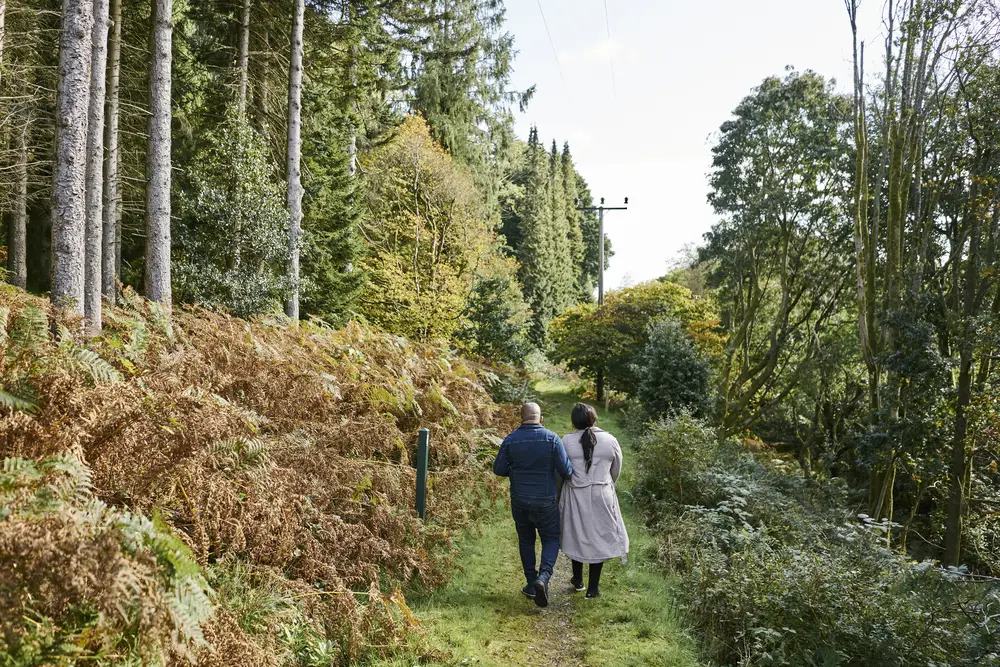
    a couple walking down a grassy forest path

    How you can help protect Scotland’s trees

    Pests and diseases are some of the biggest threats to Scottish forests. You can help slow the spread by washing your boots, bike tyres, and even your dog’s feet before and after visiting a forest.

    Learn more about how you can protect our forests:

    Latest from FLS

    1. 12 Jan 2026

      Lesley's article

    2. 03 Oct 2025

      Scotland's Climate Week 2025: Working together in the Angus Glens

    3. 29 Sep 2025

      Scotland's Climate Week 2025: Working with partners to support beaver populations

    4. 19 Sep 2025

      Martens on the Move at Kirroughtree

    5. 20 Aug 2025

      Protecting endangered apple trees through teamwork

    Share this article

    • Share on Facebook
    • Share on X
    • Share on LinkedIn

    Feedback

    There is a problem

    Feedback

    Thank you for your feedback

    User feedback form


    Your feedback helps us to improve this website. Do not give any personal information because we cannot reply to you directly.


    Your feedback helps us improve this website. Do not provide any personal information here. If you need to get in touch with a query, please contact us.


    Your feedback helps us improve this website. Do not provide any personal information here. If you need to get in touch with a query, please contact us.

    Forestry and Land Scotland Logo

    Follow us on

    • Forestry and Land Scotland on Facebook
    • Forestry and Land Scotland on Twitter
    • Forestry and Land Scotland on Instagram
    • Forestry and Land Scotland on LinkedIn

    Utilities

    1. Accessibility
    2. Cookies
    3. Privacy Notice
    4. Terms and Conditions
    5. Freedom of Information
    6. Modern Slavery Statement

    Quick links

    1. Media Centre
    Forest Stewardship Council, the mark of responsible forestry Programme for the Endorsement of Forest Certification, PEFC
    © Crown Copyright
    Forests and land that Scotland can be proud of Link to gov.scot gov.scot