Forestry and Land Scotland Logo
  1. Visit
      1. Find a forest
      2. Explore forest parks
    1. Accessible forests
    2. Stay the night
      1. Waymarked trails
      2. Cycling
      3. Mountain biking
      4. Photography
      5. Orienteering
      6. Camping
      7. Treetop adventure
      8. Water sports
      9. Horse riding
      1. Things to see
      2. Trees
      3. Wildlife
      4. Heritage
      5. Things to see in Winter
    3. Plan a visit with a group
    4. Visiting safely
    5. Parking
    Forest map

    Search for a forest by map

    Forests & trails information and closures

    An overview of all closures and high risk warnings on trails.

    Stay the night

    Park overnight in selected forest car parks as part of our motorhome scheme.

  2. About us
      1. Who we are
      2. Our mission and vision
      3. Leadership team
      4. Our values
      1. Careers
      2. Current Vacancies
      3. What we offer
      4. Candidate information
      5. A day in the life
      6. Apprenticeships
    1. Key documents
    2. Our impact
    3. Our approach to Gaelic
    Current Vacancies

    Some text

  3. What we do
      1. Taking Climate Action
      2. The climate emergency
      3. Forest resilience
      4. Peatland restoration
      5. Carbon offsetting
      6. Biodiversity
      7. Renewable energy
      1. Managing the land
      2. Planning our land management
      3. Our sustainable forestry
      4. Our tree nursery
      1. Conservation
      2. Habitat conservation
      3. Wildlife conservation
      4. Historic environment conservation
    1. Supporting outdoor exploration
    2. Working with communities
    3. Our projects
  4. Living and Working
      1. For businesses
      2. Timber sales
      3. Procurements and tenders
      4. Business opportunities
      5. Farming opportunities
      6. Venison sales
      7. Firewood sales
      1. For communities
      2. Transfer land and buildings to your community
      3. Land management plan consultations
      1. Permissions and Permits
      1. Learning and Education
      2. Outdoor learning
      3. Activity sheets
    1. Buy Land or Buildings
    Land management plan consultations

    Text here

    Current job opportunities

    Text here

  5. Get involved
    1. Have your say on consultations
    2. Hold an event
    3. Apply for a community asset transfer (CAT)
    4. Arrange a visit
    5. Work with us
  6. News
  7. Contact
Suggested links
    1. Home
    2. News
    17 May 2021 4 minutes

    Conservation management helps rare lichen in Culbin

    Lichen are important organisms for tackling climate change and increasing biodiversity. However, recent monitoring work had shown some older coastal woodlands have taken over lichen habitat. We can help fix this with modern conservation efforts as we continue to find better ways for nature and forestry to exist together.

    Planting in Culbin began in the 1920s to stabilise dunes. This created habitat for rare plants and fungi such as the one-flowered wintergreen and Devil's tooth fungus. Slowly, this new rich woodland replaced the native heathland that grew amongst the sand. 


    A small patch of green and white lichen sit on a small rock on a rocky beachAn example of bare shingle habitat with some early signs of lichen

    Sand shifts over time, and in Culbin the movement revealed pebbled areas called 'shingle'. This rocky habitat below is ideal for a range of lichen species which have adapted to live in harsher conditions.  

    These Cladonia lichens need the shingle habitat to be relatively stable. But, if it's too stable, the area will be taken over by plants and scrub. Finding a balance between the two is an essential part of the area's management. 

    This type of lichen loves sunlight and doesn't do well in the shade coming from the trees. During regular site monitoring, it was noticed the lichen was struggling to compete with the changed woodland. This lead to NatureScot declaring the lichen in Culbin in unfavourable condition.
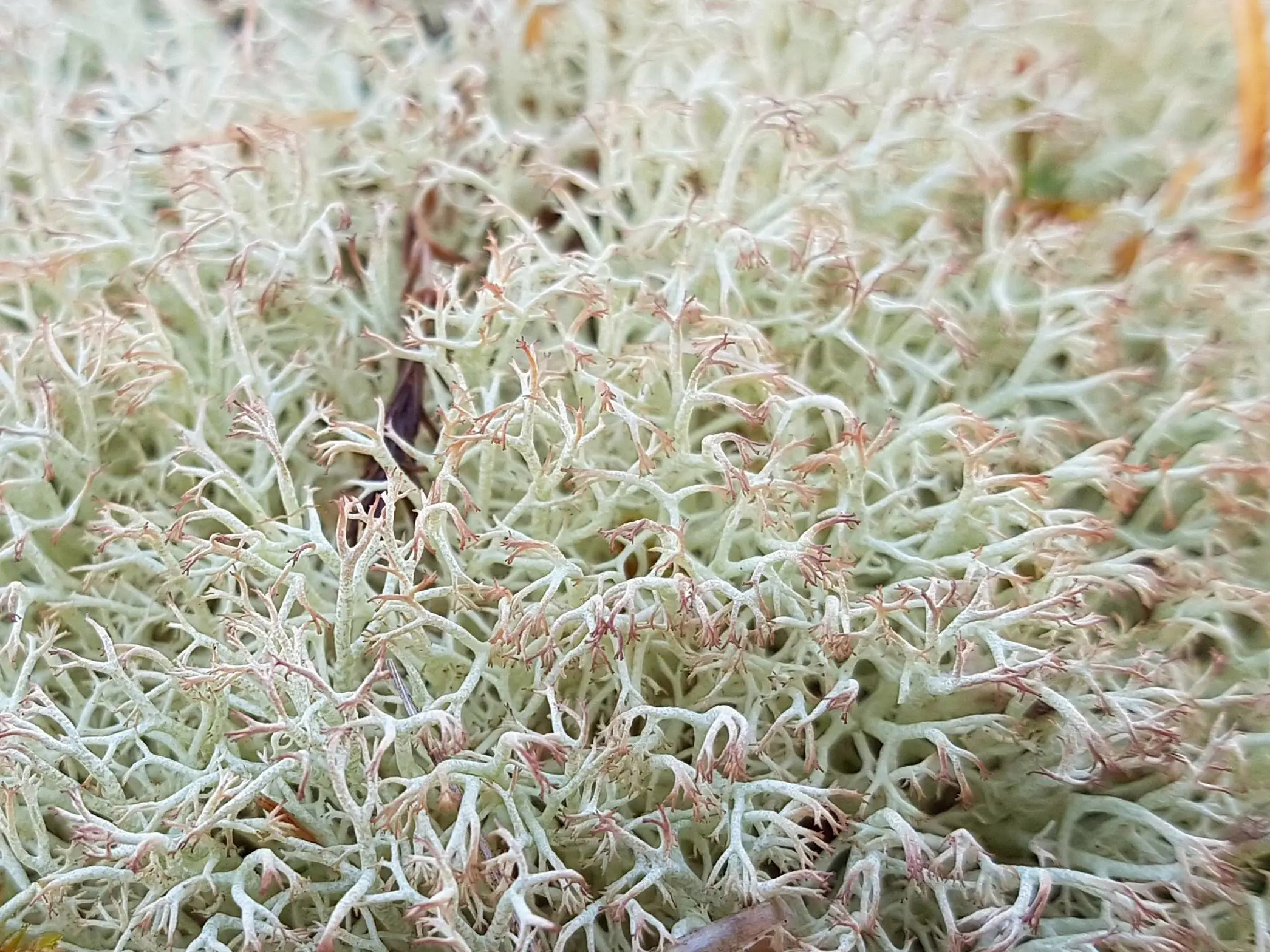
    A close up of white and teal lichenA close up of a cladonia lichen found in Culbin forest

    Issues facing lichen in Culbin forest: 

    • The trees have stabilised the sand too much and are now stopping it from moving;
    • Needles from the pine trees are likely to decompose, creating soil which covers the vital sandy habitat the lichen needs;
    • There are more grassy areas because of the lack of sand movement, which also takes over lichen habitat;
    • Pine trees cast shade, which blocks the sunlight lichens need.

    Lichen bed restoration in Culbin forest 

    Restoring balance in Culbin is not easy. Our team has worked hard alongside NatureScot to develop a better approach that works for both humans and nature. To re-establish lichen habitat, we needed to remove some of the trees causing the issues. Harvesting can be difficult in sites like this, as lichen beds are incredibly fragile and vulnerable to disturbances. 

    Two forestry workers in safety gear stand in a lichen forest, one points to the distance

    With routes carefully marked through areas with the most needle coverage and planning around spots with the best shingle habitat, our contractors carefully removed over 2,000 tonnes of timber from Culbin.

    The timber removal took three times longer than usual, but the reward saw growth in lichen habitat and overall biodiversity. Culbin's lichen community is now recognised by NatureScot as 'unfavourable, recovering due to management'.
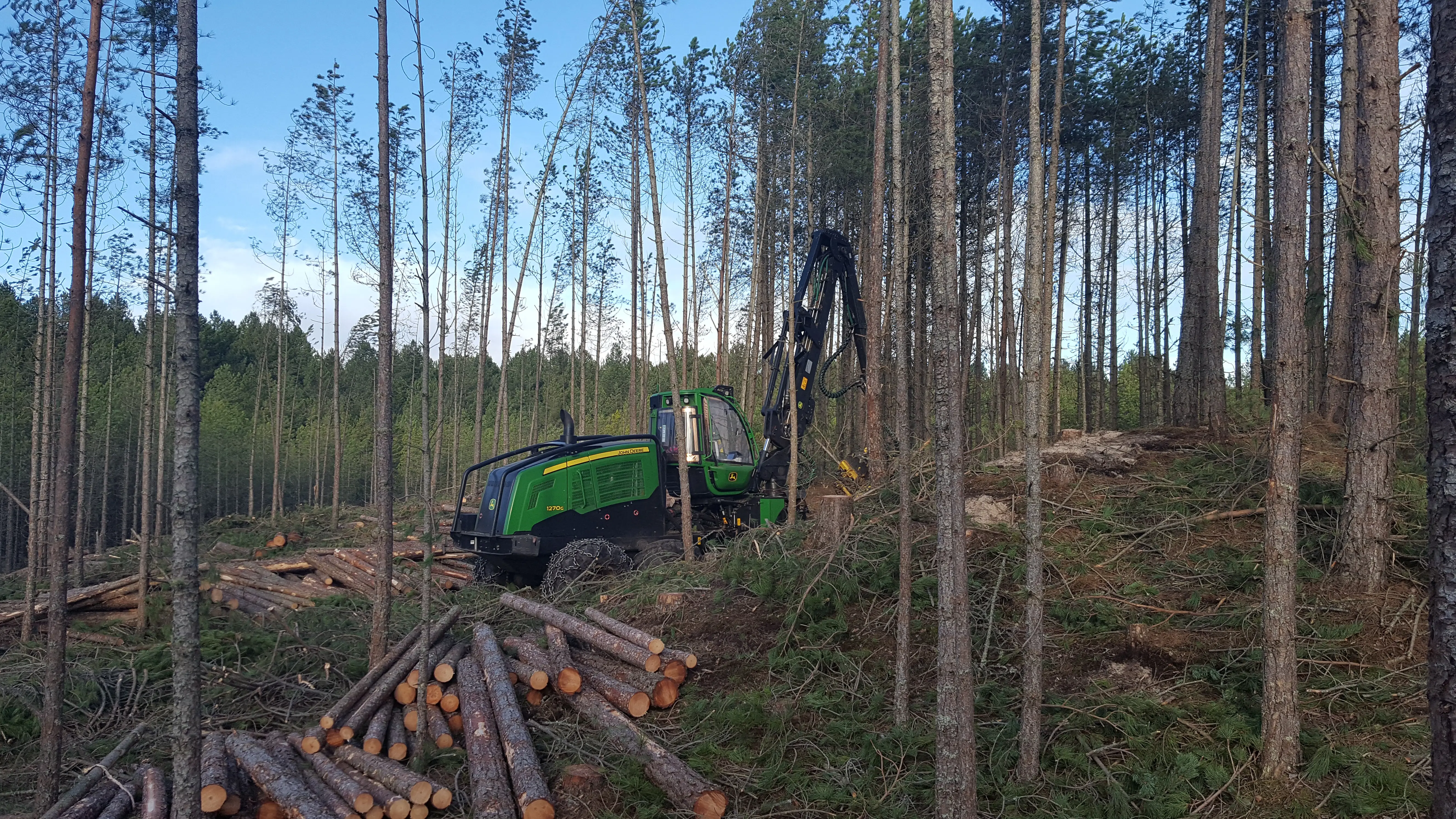
    Forestry equipment removing timber from a pine forestA harvester carefully removing timber in Culbin, allowing more light to reach the forest floor.

    Dave Genney, Nature Scot's advisor for lichens, fungi and bryophytes, said,  

    "Managing these important species of open habitat in a commercially productive forest is not an easy task. Culbin is a very special site for ground-dwelling lichens, and this work is testament to the thought and dedication of FLS staff and the knowledge, skills and care of those they've worked with. This collaborative approach is exactly what is needed as we tackle the combined climate and biodiversity crisis." 

    We need to consider what's next for these essential organisms, which comes from careful planning and conversations with experts to create the best plan to help lichen thrive in coastal plantation woodlands. If you're visiting Culbin, you are welcome to look at the lichen areas, but please stick to forest roads and tracks.

    If you do venture off-road, stick to areas of dense needle cover to avoid your feet sluffing off this rich and vulnerable biodiversity. And, fear not! The areas described only cover a small part of Culbin - You will still be able to enjoy many miles of pine forest as well as stunning views out over the Culbin Bar, the Moray Firth and beyond.

     Find out more


    Latest from FLS

    1. 12 Jan 2026

      Lesley's article

    2. 03 Oct 2025

      Scotland's Climate Week 2025: Working together in the Angus Glens

    3. 29 Sep 2025

      Scotland's Climate Week 2025: Working with partners to support beaver populations

    4. 19 Sep 2025

      Martens on the Move at Kirroughtree

    5. 20 Aug 2025

      Protecting endangered apple trees through teamwork

    Share this article

    • Share on Facebook
    • Share on X
    • Share on LinkedIn

    Feedback

    There is a problem

    Feedback

    Thank you for your feedback

    User feedback form


    Your feedback helps us to improve this website. Do not give any personal information because we cannot reply to you directly.


    Your feedback helps us improve this website. Do not provide any personal information here. If you need to get in touch with a query, please contact us.


    Your feedback helps us improve this website. Do not provide any personal information here. If you need to get in touch with a query, please contact us.

    Forestry and Land Scotland Logo

    Follow us on

    • Forestry and Land Scotland on Facebook
    • Forestry and Land Scotland on Twitter
    • Forestry and Land Scotland on Instagram
    • Forestry and Land Scotland on LinkedIn

    Utilities

    1. Accessibility
    2. Cookies
    3. Privacy Notice
    4. Terms and Conditions
    5. Freedom of Information
    6. Modern Slavery Statement

    Quick links

    1. Media Centre
    Forest Stewardship Council, the mark of responsible forestry Programme for the Endorsement of Forest Certification, PEFC
    © Crown Copyright
    Forests and land that Scotland can be proud of Link to gov.scot gov.scot