Forestry and Land Scotland Logo
  1. Visit
      1. Find a forest
      2. Explore forest parks
    1. Accessible forests
    2. Stay the night
      1. Waymarked trails
      2. Cycling
      3. Mountain biking
      4. Photography
      5. Orienteering
      6. Camping
      7. Treetop adventure
      8. Water sports
      9. Horse riding
      1. Things to see
      2. Trees
      3. Wildlife
      4. Heritage
      5. Things to see in Winter
    3. Plan a visit with a group
    4. Visiting safely
    5. Parking
    Forest map

    Search for a forest by map

    Forests & trails information and closures

    An overview of all closures and high risk warnings on trails.

    Stay the night

    Park overnight in selected forest car parks as part of our motorhome scheme.

  2. About us
      1. Who we are
      2. Our mission and vision
      3. Leadership team
      4. Our values
      1. Careers
      2. Current Vacancies
      3. What we offer
      4. Candidate information
      5. A day in the life
      6. Apprenticeships
    1. Key documents
    2. Our impact
    3. Our approach to Gaelic
    Current Vacancies

    Some text

  3. What we do
      1. Taking Climate Action
      2. The climate emergency
      3. Forest resilience
      4. Peatland restoration
      5. Carbon offsetting
      6. Biodiversity
      7. Renewable energy
      1. Managing the land
      2. Planning our land management
      3. Our sustainable forestry
      4. Our tree nursery
      1. Conservation
      2. Habitat conservation
      3. Wildlife conservation
      4. Historic environment conservation
    1. Supporting outdoor exploration
    2. Working with communities
    3. Our projects
  4. Living and Working
      1. For businesses
      2. Timber sales
      3. Procurements and tenders
      4. Business opportunities
      5. Farming opportunities
      6. Venison sales
      7. Firewood sales
      1. For communities
      2. Transfer land and buildings to your community
      3. Land management plan consultations
      1. Permissions and Permits
      1. Learning and Education
      2. Outdoor learning
      3. Activity sheets
    1. Buy Land or Buildings
    Land management plan consultations

    Text here

    Current job opportunities

    Text here

  5. Get involved
    1. Have your say on consultations
    2. Hold an event
    3. Apply for a community asset transfer (CAT)
    4. Arrange a visit
    5. Work with us
  6. News
  7. Contact
Suggested links
    1. Home
    2. News
    01 October 2020 4 minutes

    10 things you didn't know about conifers

    To celebrate National Conifer Week, we’ve delved into our archives and mined information from our foresters to bring you 10 fun facts about this ubiquitous family of trees.
    National Conifer Week

    1: Latin

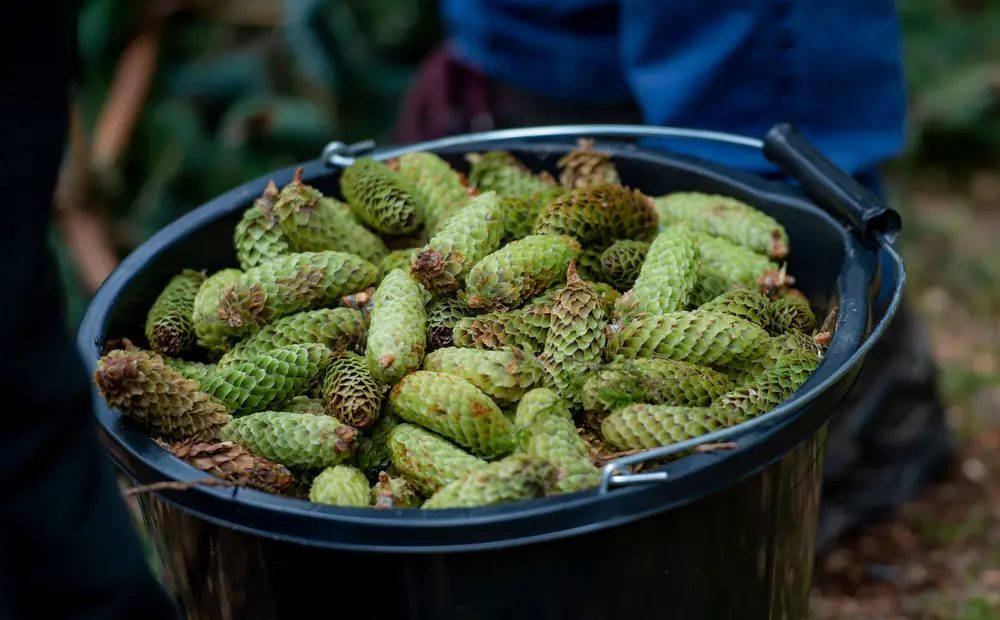
    Green pine cones in a black bucket

    The word ‘conifer’ comes from the Latin ‘conus’ (cone) and ‘ferre’ (to bear), which put together means ‘the one that bears cones’. Virtually all conifers produce cones though the size, shape, colour and texture vary greatly. The Coulter Pine produces cones up to 50cm long and weighing up to 5kg! Fortunately, this species isn’t found in Scotland, otherwise a forest walk would require a hard hat!

    2: Out in the cold
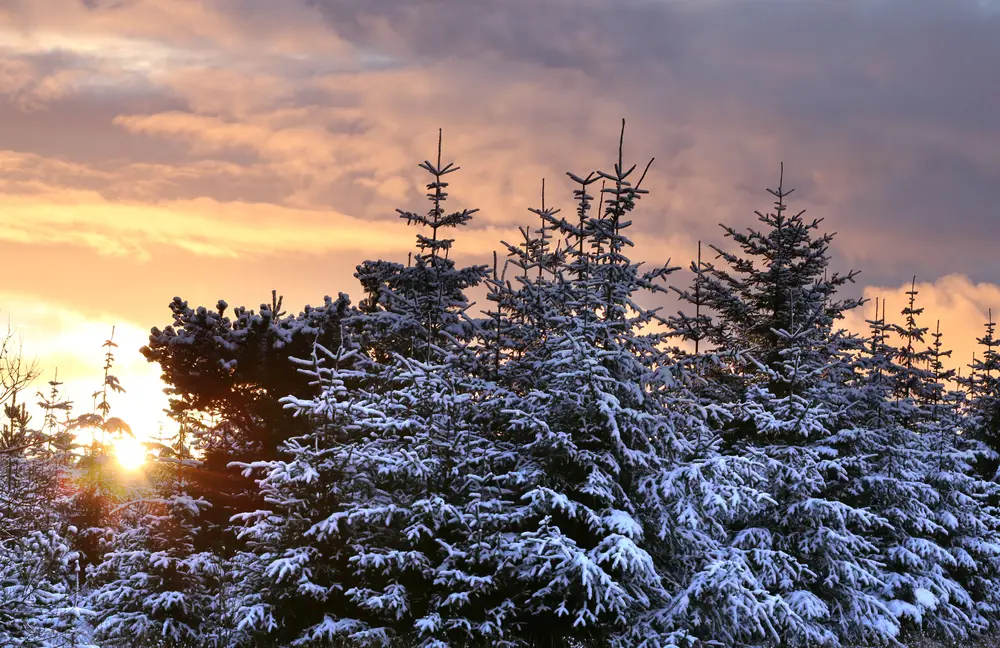
    Snow covered coniferous trees

    Most conifers are ideally designed to survive cold winters. Downward sloping limbs help shed snow in cold, northern climates where the weight of snow could easily break a branch. Likewise, the needles are typically smooth and waxy to help snow slide off. To better deal with the cold, conifers can move water out of their cells to the spaces in between. This means that when the water freezes, the trees’ cells remain intact rather than being destroyed by the ice.

    3: Pro-Environment

    Coniferous trees form part the taiga or boreal forest, a vast area of forest and land circling most of the planet just below the Arctic Circle. This area stretches through Russia, Alaska, Canada and Scandinavia and is one of the biggest carbon sinks on the planet, locking up millions of tons of Co2. It is also a home for hardy wildlife like deer, wolves and foxes.

    4: Gender equality

    Most conifers are simultaneously male and female. This is called monoecious and is common among many tree species. A single tree can produce female cones that are fertilised by male pollen. Once fertilised, the cone can drop from the tree and begin to germinate if conditions are right. Sometimes a cone can remain fertilised for several years before falling to the ground to germinate, waiting until conditions are optimal for growing.


    5: Jurassic park
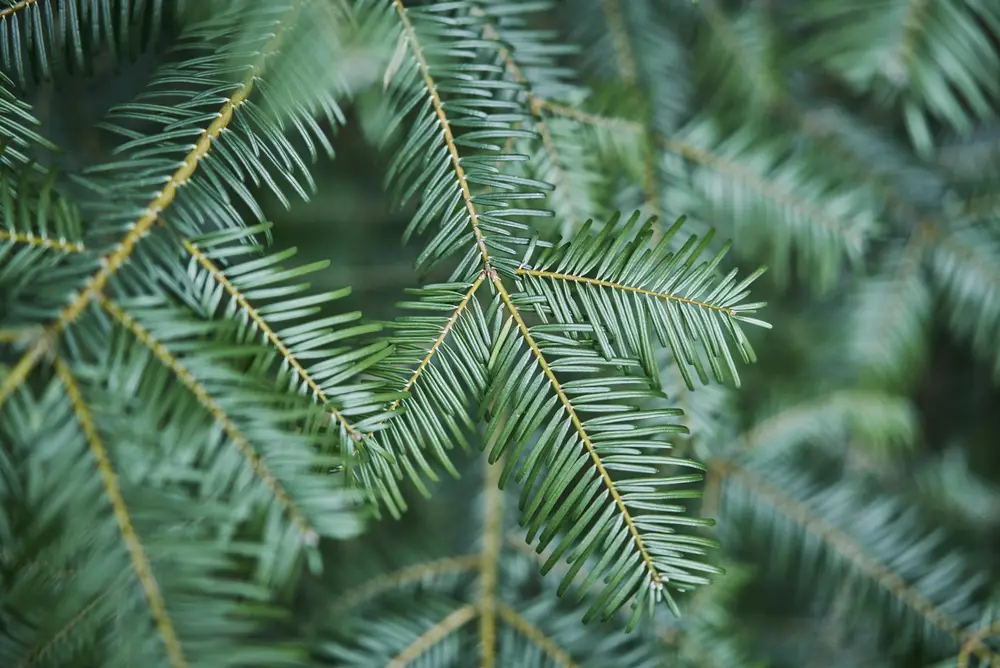
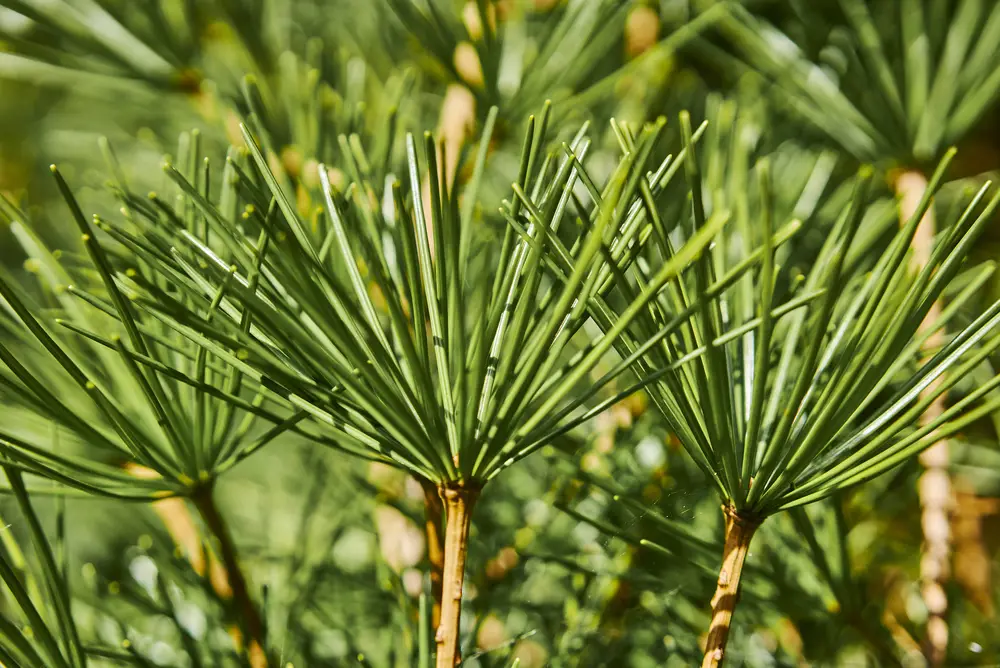
    Image of tree needles a dinosaur may have eaten

    It is thought that conifers formed a substantial part of the diet of herbivorous dinosaurs. During the Mesozoic era when dinosaurs thrived, conifers were the dominant land plant with flowering plants only appearing later. The resinous needles provided nutrition in abundance.


    6: Life saver

    Needles from pine trees can be made into a tea that can fight off scurvy. Scurvy results from a lack of vitamin C and can cause massive health issues, and for early sailors exploring the world, frequently resulted in many crew dying in agony. Gram for gram, pine needles have more vitamin C in them than an orange and were used, sometimes unwittingly, to reverse the effect of scurvy on long sea voyages.

    In Korea, sollipcha is a traditional tea made using pine needles, pine pollen and lashings of honey. This produces a delicate and fresh tea with a unique flavour, though it’s unlikely to trouble earl grey any time soon!

    7: Squeaky clean
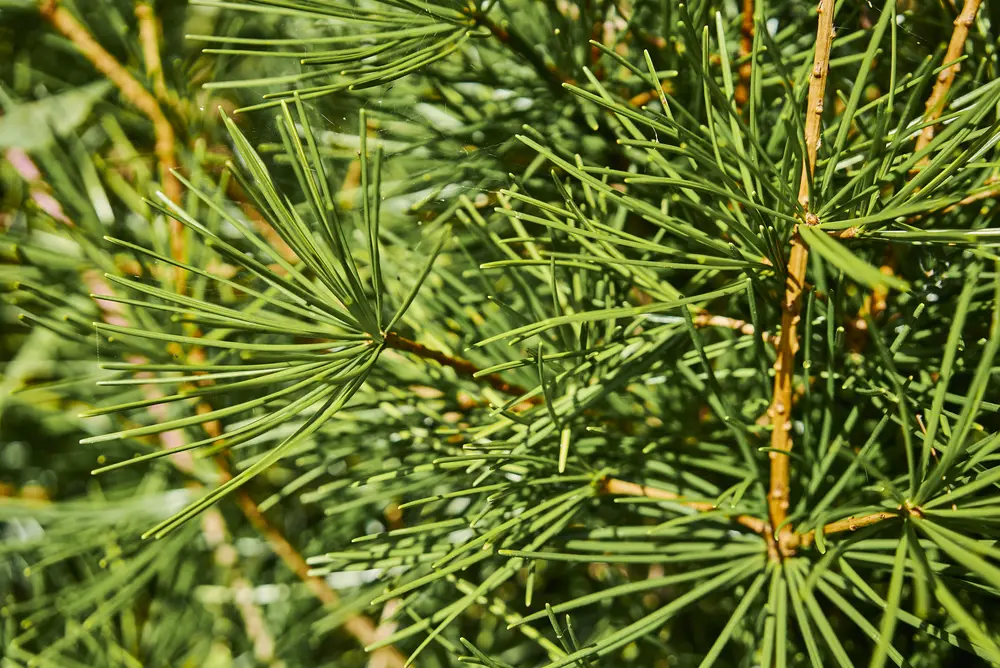
    Image of pine needles

    Coniferous forests are clean. Very clean. Often the uniform trees and relatively clear forest floor combine to lower airborne bacteria resulting in an ultra fresh environment. In Victorian times, many sanatoriums and other medical facilities were built in or near forests to offer clean air to their patients.

    8: Great taste

    Coniferous tress aren’t known for producing much food for humans but they do produce delicious pine nuts, as well as juniper berries which are a key ingredient in gin. Juniper trees are one of only 3 conifer trees native to Scotland, which probably accounts for the large number of gin distillers based in Scotland!

    9: Self healing
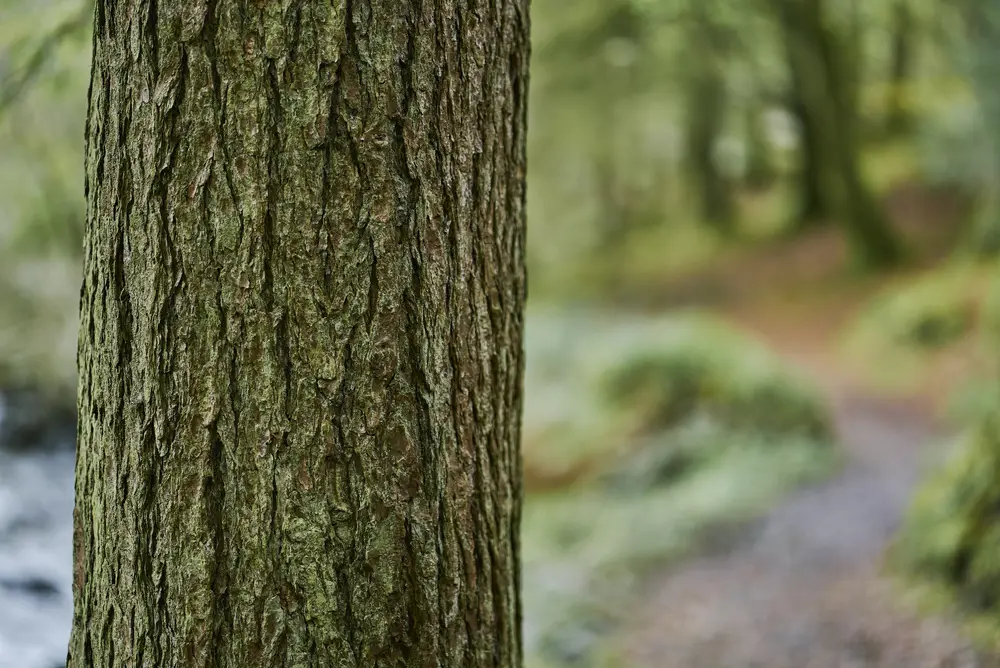
    Image of trunk of conifer tree

    Many coniferous trees have the ability to patch themselves up. If attacked by a burrowing insect the tree can secrete a scented, gummy resin that fills over the hole and hardens, protecting the tree from further damage. The scent can also deter insects from coming too close.

    10: Scottish conifers

    Scotland is home to a number of conifer species including Pine, Fir, Larch and Spruce, as well as rarer species like Redwood. Yew is one of only three conifers native to Scotland (along with Juniper and Scot’s Pine), and though rare, is extremely long lived. A yew tree is not considered ancient until at least 900 years old. The Fortingall Yew, situated in a churchyard near Aberfeldy, is thought to be at least 3,000 years old and possibly as old as 5,000 years.


    Discover more about conifers on our tree tree pages and by visiting our forests!

    Latest from FLS

    1. 12 Jan 2026

      Lesley's article

    2. 03 Oct 2025

      Scotland's Climate Week 2025: Working together in the Angus Glens

    3. 29 Sep 2025

      Scotland's Climate Week 2025: Working with partners to support beaver populations

    4. 19 Sep 2025

      Martens on the Move at Kirroughtree

    5. 20 Aug 2025

      Protecting endangered apple trees through teamwork

    Share this article

    • Share on Facebook
    • Share on X
    • Share on LinkedIn

    Feedback

    There is a problem

    Feedback

    Thank you for your feedback

    User feedback form


    Your feedback helps us to improve this website. Do not give any personal information because we cannot reply to you directly.


    Your feedback helps us improve this website. Do not provide any personal information here. If you need to get in touch with a query, please contact us.


    Your feedback helps us improve this website. Do not provide any personal information here. If you need to get in touch with a query, please contact us.

    Forestry and Land Scotland Logo

    Follow us on

    • Forestry and Land Scotland on Facebook
    • Forestry and Land Scotland on Twitter
    • Forestry and Land Scotland on Instagram
    • Forestry and Land Scotland on LinkedIn

    Utilities

    1. Accessibility
    2. Cookies
    3. Privacy Notice
    4. Terms and Conditions
    5. Freedom of Information
    6. Modern Slavery Statement

    Quick links

    1. Media Centre
    Forest Stewardship Council, the mark of responsible forestry Programme for the Endorsement of Forest Certification, PEFC
    © Crown Copyright
    Forests and land that Scotland can be proud of Link to gov.scot gov.scot