
Collecting cones from our Caledonian pinewoods
The Caledonian Forest is home to some of our most iconic species, including the tree that dominates these forests – the Scots pine. Our Tree Nursery and Seed Resource Manager - Kenny Hay, has been out in all conditions, traversing tough terrain to collect the seed of Scotland’s national tree.
Our Caledonian pinewoods are under threat from several pressures: tree diseases, browsing pressure from deer, and a changing climate are all impacting on the forests ability to regenerate and expand naturally. We have decided to start collecting seed as a safeguard to preserving the genetic base of these forests. We are also building our own seed store at Newton to safely store seeds for the future. This provides us the flexibility to raise seedlings in the future and plant them out as a fundamental part of the pinewood’s recovery if other activities fail to achieve successful regeneration.
The collection of the seed from pine cones is essential in our efforts to protect these forests from existing threats and safeguard our native pinewoods for future generations.
Collection
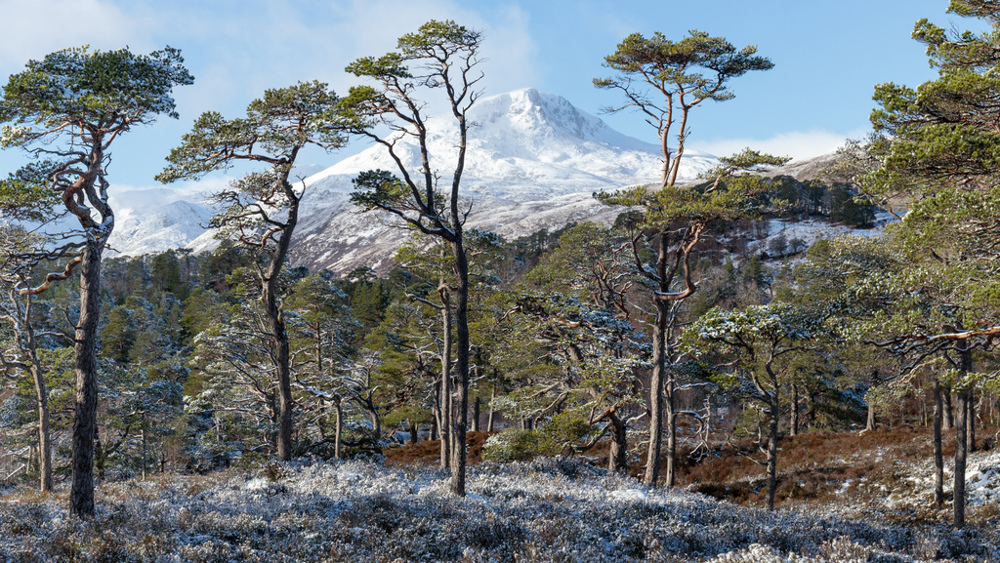
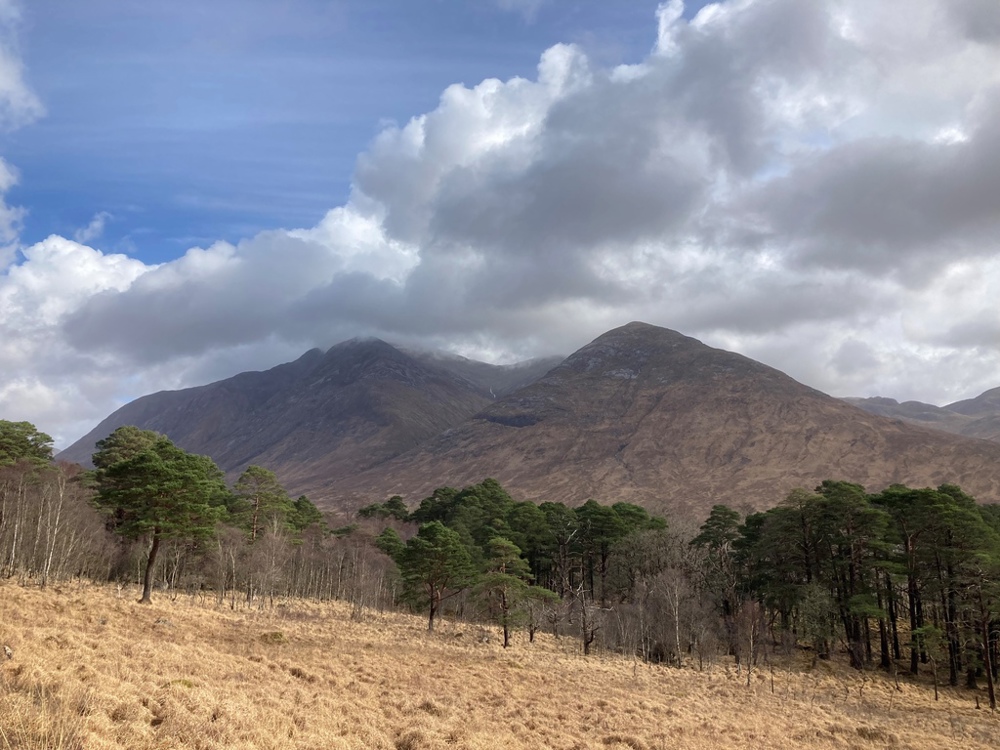
We currently look after twenty-one Caledonian pinewoods across Scotland - this year the challenge was set to visit them all. Hills, glens and even lochs were crossed by Kenny and a highly skilled team of arborists, with seed collected between January and early April. From Glen Einig in the north to Glen Orchy in the south and from the Black Wood of Rannoch in the east to the island of Eilan Ruairaidh Mor in the west.
Kenny Hay, Tree Nursery and Seed Resource Manager, explains some of the challenges:
Unlike commercial Scots pine seed collection where you can collect from felled crowns, every tree has to be climbed to avoid damage of any kind so the progress can be slow. I always say to the climbers an hour spent identifying the best seed trees pays dividends in the long run. A lot of these pinewoods are not served by the best access so clambering across rank vegetation with all your climbing kit can be a lot of effort."
Return to the nursery
Despite the tough conditions, all our pinewoods were visited and all but one pinewood, at Loch Maree, had cones in sufficient numbers to make it worth collecting them. This mammoth effort produced more than 75 sacks of cones. When grown in the controlled conditions of a nursery, this collection has the potential to provide around 3 million seeds: which was a great result for the team.
After the return from collecting, the seeds are sent down to the Alice Holt Research Centre in Surrey for extraction, processing and storage before arriving at our nursery at Newton. This is the first time 20 out of the 21 Caledonian pinewoods have been collected from in a year and the seeds will make a fitting first addition to the purpose-built seed store at Newton Nursery. As part of our redevelopment at Newton, the new seed store is built to the same specification as the Millenium Seed Bank at Kew Gardens.
Dothistroma needle blight
An assessment of the native pinewood areas in the 1990s built on previous surveys to identify and map the 84 surviving Caledonian pinewoods in Scotland. These are documented on the Caledonian Pinewood Inventory (CPI) and we currently look after 25% of these.
One of the potential threats to our precious Caledonian pinewoods comes from the fungal needle blight Dothistroma septosporum. The fungal disease can cause dothistroma needle blight (DNB) which is an economically important disease of conifer trees but is also known to infect native Scot pine. It's now been detected in over a quarter of Scotland’s Caledonian Pinewood Inventory sites.
After two nursery infections in 2010 and 2011 and with the potential risk of hybridisation of the strains in nursery grown seedlings, a temporary suspension on planting was put in place across the CPI, with planting only to be done in exceptional circumstances. In 2017, a DNB Action Plan for Scotland was released and one of the key priorities was to establish a seed bank of Scots pine across its genetic range.
For Scots pine this genetic range is split into seven seed zones, based on research into historic genetic variation patterns in native pinewoods conducted during the 1980s. Naturally occurring chemical compounds, called terpenes, are found in plants and some animals and these were used to show the drier eastern pinewoods differ from the high rainfall oceanic pinewoods in western Scotland.
Planting pine still presents the greatest potential risk of introducing new ‘strains’ of DNB to Caledonian pinewoods and at present can only be undertaken when it is deemed to be essential to the short term survival and longer term integrity of a pinewood’s ecosystem.
However, planting local genetically suitable pine seedlings may be an important part of the future recovery of remnant pinewoods where natural regeneration cannot be relied on to maintain the integrity and functionality of the woodland.
Therefore, the collected seeds will become an essential part of our future efforts to maintain the genetic continuity of these important ecosystems.
The future
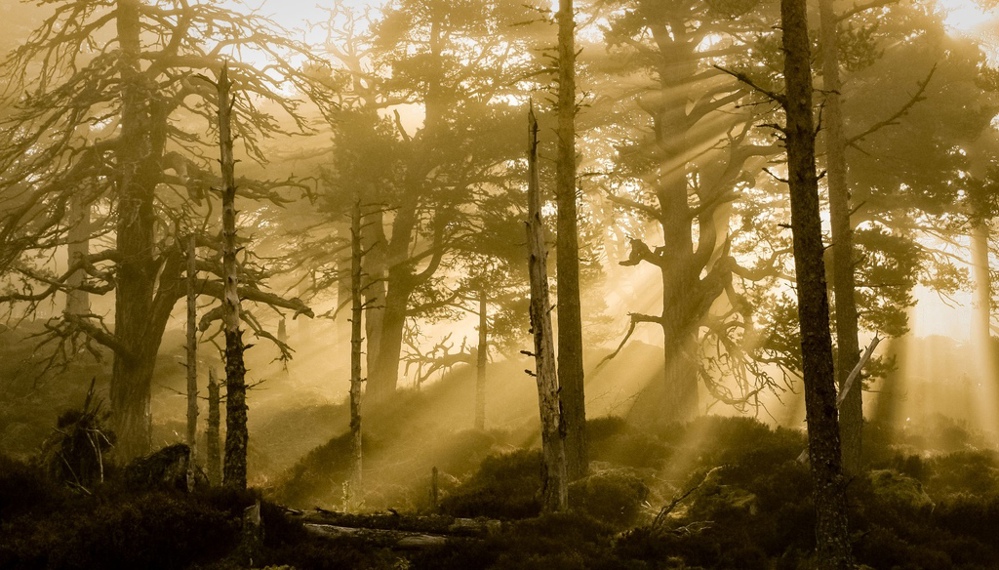
Our pinewoods vary in character and therefore require different management techniques. Factors that impact them include ground vegetation and competition, adjacent seed sources, browsing, altitude, geology, soils, past management, temperature, exposure and rainfall.
As well as the other challenges for the pinewoods, climate change will have an impact on the Caledonian Forest and the seed collected from across our pinewoods can aid with future-proofing our forests. The collecting of seed across the entire range carried out by Kenny and his team is a very significant step in conserving genetic diversity for the future.
Adapting to climate change will be difficult for our native pinewoods as trees cannot adapt to the speed of climatic change which is predicted. A healthy, vigorous forest is the best defence against the unpredictable nature of such problems and as such expanding and encouraging management which helps in this manner can only be a positive in the future."
- Kenny Hay
Read more