Forestry and Land Scotland Logo
  1. Visit
      1. Find a forest
      2. Explore forest parks
    1. Accessible forests
    2. Stay the night
      1. Waymarked trails
      2. Cycling
      3. Mountain biking
      4. Photography
      5. Orienteering
      6. Camping
      7. Treetop adventure
      8. Water sports
      9. Horse riding
      1. Things to see
      2. Trees
      3. Wildlife
      4. Heritage
      5. Things to see in Winter
    3. Plan a visit with a group
    4. Visiting safely
    5. Parking
    Forest map

    Search for a forest by map

    Forests & trails information and closures

    An overview of all closures and high risk warnings on trails.

    Stay the night

    Park overnight in selected forest car parks as part of our motorhome scheme.

  2. About us
      1. Who we are
      2. Our mission and vision
      3. Leadership team
      4. Our values
      1. Careers
      2. Current Vacancies
      3. What we offer
      4. Candidate information
      5. A day in the life
      6. Apprenticeships
    1. Key documents
    2. Our impact
    3. Our approach to Gaelic
    Current Vacancies

    Some text

  3. What we do
      1. Taking Climate Action
      2. The climate emergency
      3. Forest resilience
      4. Peatland restoration
      5. Carbon offsetting
      6. Biodiversity
      7. Renewable energy
      1. Managing the land
      2. Planning our land management
      3. Our sustainable forestry
      4. Our tree nursery
      1. Conservation
      2. Habitat conservation
      3. Wildlife conservation
      4. Historic environment conservation
    1. Supporting outdoor exploration
    2. Working with communities
    3. Our projects
  4. Living and Working
      1. For businesses
      2. Timber sales
      3. Procurements and tenders
      4. Business opportunities
      5. Farming opportunities
      6. Venison sales
      7. Firewood sales
      1. For communities
      2. Transfer land and buildings to your community
      3. Land management plan consultations
      1. Permissions and Permits
      1. Learning and Education
      2. Outdoor learning
      3. Activity sheets
    1. Buy Land or Buildings
    Land management plan consultations

    Text here

    Current job opportunities

    Text here

  5. Get involved
    1. Have your say on consultations
    2. Hold an event
    3. Apply for a community asset transfer (CAT)
    4. Arrange a visit
    5. Work with us
  6. News
  7. Contact
Suggested links
    1. Home
    2. News
    14 June 2019 4 minutes

    Bike maintenance: Our top tips
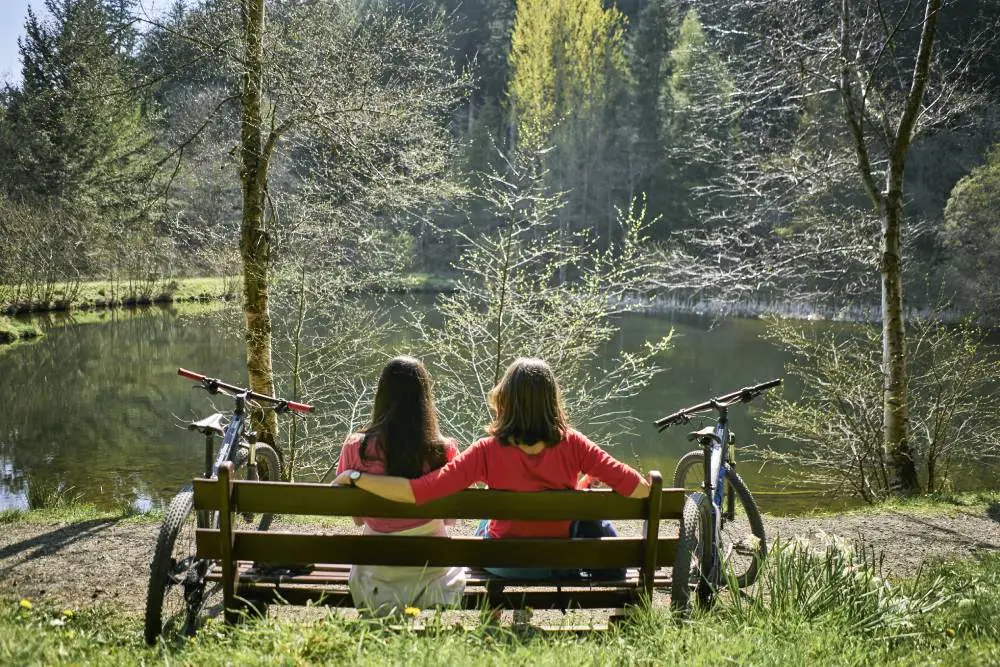
    View to the rear of a bench with two people sat facing away from camera, bikes on either side of them, towards a body of water with tall trees beyond

    As the final weekend of Bike Week approaches, we’ve put together this handy guide to basic bike maintenance. Whether you’ve just bought a bike, if you’re looking for one, or just rescuing one from its winter hiding place, we’ll show you how to check it’s in shape for the summer season.

    These tips should ensure your bike is operating at its best, ready to get outdoors this summer.

    Bathtime for bikes!

    A clean bike is much less effort to take care of than a dirty one. No specialist equipment needed for this, just a bucket of hot, soapy water, and a firm cloth or sponge. Cleaning is extra important after winter or wet weather rides - salts from the road can corrode bike parts, so if you didn’t clean it before you put it away last time, you might find parts have rusted up. Build a quick post-trail clean into your regular biking routine.

    Inspect your wheels

    Tyres are one of the fastest components to wear out on a bike. Even the most expensive tyre can get a puncture, or pick up detritus from the road. Before you ride, check your tyres for obvious damage. This will help you avoid punctures (although you should always carry a puncture repair kit, just in case). Good tyre pressure is also vital - check the preferred pressure for your tyre, which should be printed on the side.It’s fairly easy to knock your front or your back wheel out of alignment, especially if you’ve been riding challenging trails.

    Before you set off, give the wheels a spin. They should turn without any catches, and with no sign of a wobble. It’s worth checking your spokes too, giving them a gentle squeeze to make sure none are loose. If you do find problems, making the correct adjustments can be tricky, so consider visiting a bike shop for repairs if needed.

    Check all moving parts of the bike
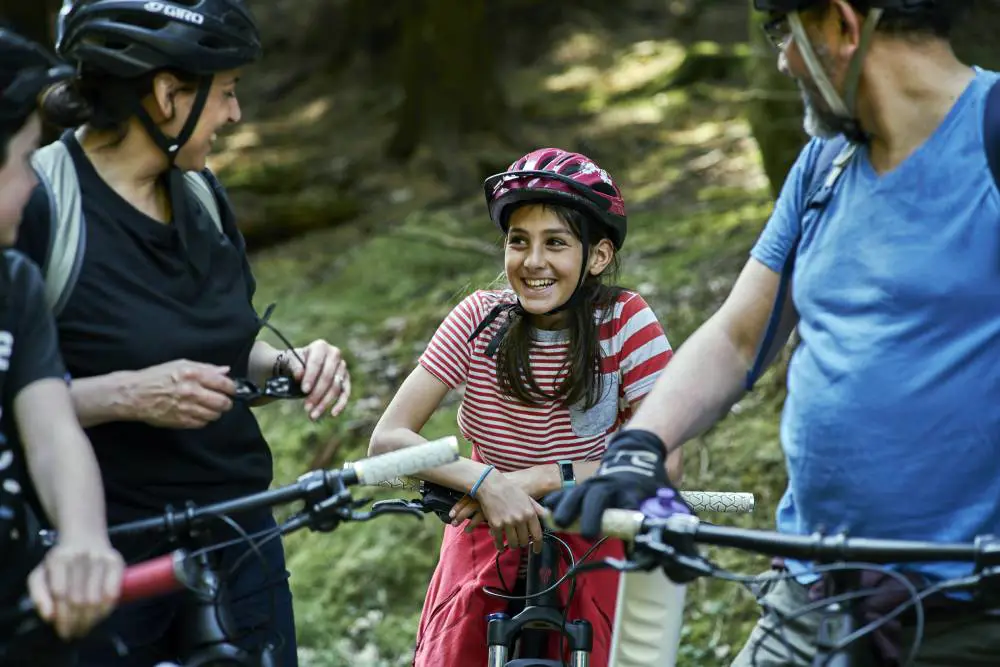
    Two adult cyclists looking at a smiling child on a bike

    Brake blocks can get worn down quickly, especially after a lot of off-road riding. Take a close look to see how worn they are. Worn brakes have a ‘gritty’ feel, or can make squeaking noises. Both of these are signs your pads are making contact with metal or carbon, and not the brake pad. Hydraulic brakes are common, and very simple to adjust if you know what you are doing. Otherwise, you might need an expert to take a look.

    If you want to be extra efficient, get some lube and degreaser for your chain, to keep it moving smoothly. Your cables, and other moving parts of the bike, can also benefit from some lube occasionally, but make sure you use the right one. Again, making any major adjustments to your chain or cables can be messy and complicated, so if you get stuck, or have any worries, engage the services of your local bike shop. 

    Gears, gears, gears

    Gears come in all different sizes, designs and variations, so it’s difficult to give universal advice on maintenance, but you can check that they are in working order by riding a short distance, and switching through gears. If the transition is smooth, you can assume they are fine. This is a complex part of your bike that can easily pick up compacted dirt or oily residues, and may require expert attention if they are jumping too easily from one gear to the next.

    That’s the basics! If you want to learn how to do a more comprehensive check of your bike’s various parts, Sustrans have an excellent, 11-part check called the ‘M check.’ This is a bit more in-depth than our guide, so will be useful if you’re a more experienced bike rider.

    Happy trails, everyone!


    Find out more

    Latest from FLS

    1. 12 Jan 2026

      Lesley's article

    2. 03 Oct 2025

      Scotland's Climate Week 2025: Working together in the Angus Glens

    3. 29 Sep 2025

      Scotland's Climate Week 2025: Working with partners to support beaver populations

    4. 19 Sep 2025

      Martens on the Move at Kirroughtree

    5. 20 Aug 2025

      Protecting endangered apple trees through teamwork

    Share this article

    • Share on Facebook
    • Share on X
    • Share on LinkedIn

    Feedback

    There is a problem

    Feedback

    Thank you for your feedback

    User feedback form


    Your feedback helps us to improve this website. Do not give any personal information because we cannot reply to you directly.


    Your feedback helps us improve this website. Do not provide any personal information here. If you need to get in touch with a query, please contact us.


    Your feedback helps us improve this website. Do not provide any personal information here. If you need to get in touch with a query, please contact us.

    Forestry and Land Scotland Logo

    Follow us on

    • Forestry and Land Scotland on Facebook
    • Forestry and Land Scotland on Twitter
    • Forestry and Land Scotland on Instagram
    • Forestry and Land Scotland on LinkedIn

    Utilities

    1. Accessibility
    2. Cookies
    3. Privacy Notice
    4. Terms and Conditions
    5. Freedom of Information
    6. Modern Slavery Statement

    Quick links

    1. Media Centre
    Forest Stewardship Council, the mark of responsible forestry Programme for the Endorsement of Forest Certification, PEFC
    © Crown Copyright
    Forests and land that Scotland can be proud of Link to gov.scot gov.scot