Forestry and Land Scotland Logo
  1. Visit
      1. Find a forest
      2. Explore forest parks
    1. Accessible forests
    2. Stay the night
      1. Waymarked trails
      2. Cycling
      3. Mountain biking
      4. Photography
      5. Orienteering
      6. Camping
      7. Treetop adventure
      8. Water sports
      9. Horse riding
      1. Things to see
      2. Trees
      3. Wildlife
      4. Heritage
      5. Things to see in Winter
    3. Plan a visit with a group
    4. Visiting safely
    5. Parking
    Forest map

    Search for a forest by map

    Forests & trails information and closures

    An overview of all closures and high risk warnings on trails.

    Stay the night

    Park overnight in selected forest car parks as part of our motorhome scheme.

  2. About us
      1. Who we are
      2. Our mission and vision
      3. Leadership team
      4. Our values
      1. Careers
      2. Current Vacancies
      3. What we offer
      4. Candidate information
      5. A day in the life
      6. Apprenticeships
    1. Key documents
    2. Our impact
    3. Our approach to Gaelic
    Current Vacancies

    Some text

  3. What we do
      1. Taking Climate Action
      2. The climate emergency
      3. Forest resilience
      4. Peatland restoration
      5. Carbon offsetting
      6. Biodiversity
      7. Renewable energy
      1. Managing the land
      2. Planning our land management
      3. Our sustainable forestry
      4. Our tree nursery
      1. Conservation
      2. Habitat conservation
      3. Wildlife conservation
      4. Historic environment conservation
    1. Supporting outdoor exploration
    2. Working with communities
    3. Our projects
  4. Living and Working
      1. For businesses
      2. Timber sales
      3. Procurements and tenders
      4. Business opportunities
      5. Farming opportunities
      6. Venison sales
      7. Firewood sales
      1. For communities
      2. Transfer land and buildings to your community
      3. Land management plan consultations
      1. Permissions and Permits
      1. Learning and Education
      2. Outdoor learning
      3. Activity sheets
    1. Buy Land or Buildings
    Land management plan consultations

    Text here

    Current job opportunities

    Text here

  5. Get involved
    1. Have your say on consultations
    2. Hold an event
    3. Apply for a community asset transfer (CAT)
    4. Arrange a visit
    5. Work with us
  6. News
  7. Contact
Suggested links
    1. Home
    2. News
    19 September 2023 2 minutes

    Aspen at Glenmore

    As one of the partners in Cairngorms Connect, we've been carrying out enrichment planting of native broadleaves across Glenmore Forest Park. Over the summer, alongside Cairngorms National Park Volunteer Rangers and local volunteers, we removed the protective tree tubes from aspen trees that had successfully established and outgrown them.

    Aspen is one of the most palatable species to deer, so to help it become established we used plastic tree tubes to protect it. Now collected, these protective tubes will be recycled. We have since introduced biodegradable tubes to our forests and land in an effort to work more sustainably.

    Enrichment planting is carried out where species would struggle to recolonise without our help. This planting of aspen, alongside natural regeneration and ongoing deer management similar to that at Ryvoan Pass, helps to restore and expand our native woodlands. 

    Currently, aspen is mainly found in small and fragmented stands. A rare part of the Caledonian Forest, aspen (Populus tremula), with its leaves on long, flattened stalks (petioles) that flutter even in a gentle breeze, is known as the ‘tremlin tree’ in Scots.
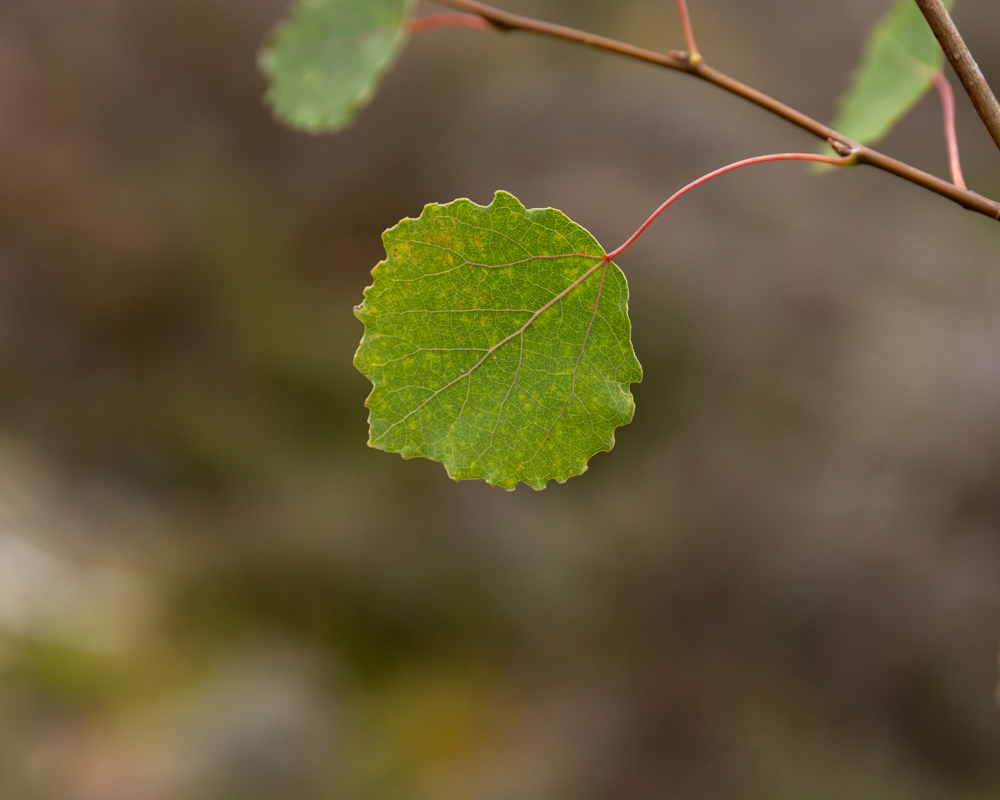
    Aspen leaf.

    In Scotland, aspen flowering is rare with the last major flowering event in 2019 being the first for 23 years. As a result, it is difficult for aspen to spread and recolonise through wind pollination and subsequent seed dispersal.

    However, aspen has another very interesting way of regenerating: the extensive root system of mature trees sends out shoots known as suckers. These suckers remain connected to the parent tree, receiving nutrients from it and effectively forming clones. Our young aspen have already begun to do this.

    Sets of clones can be distinguished from one another by a variety of traits — everything from exhibiting a different colour variation to the time the leaves change in autumn.
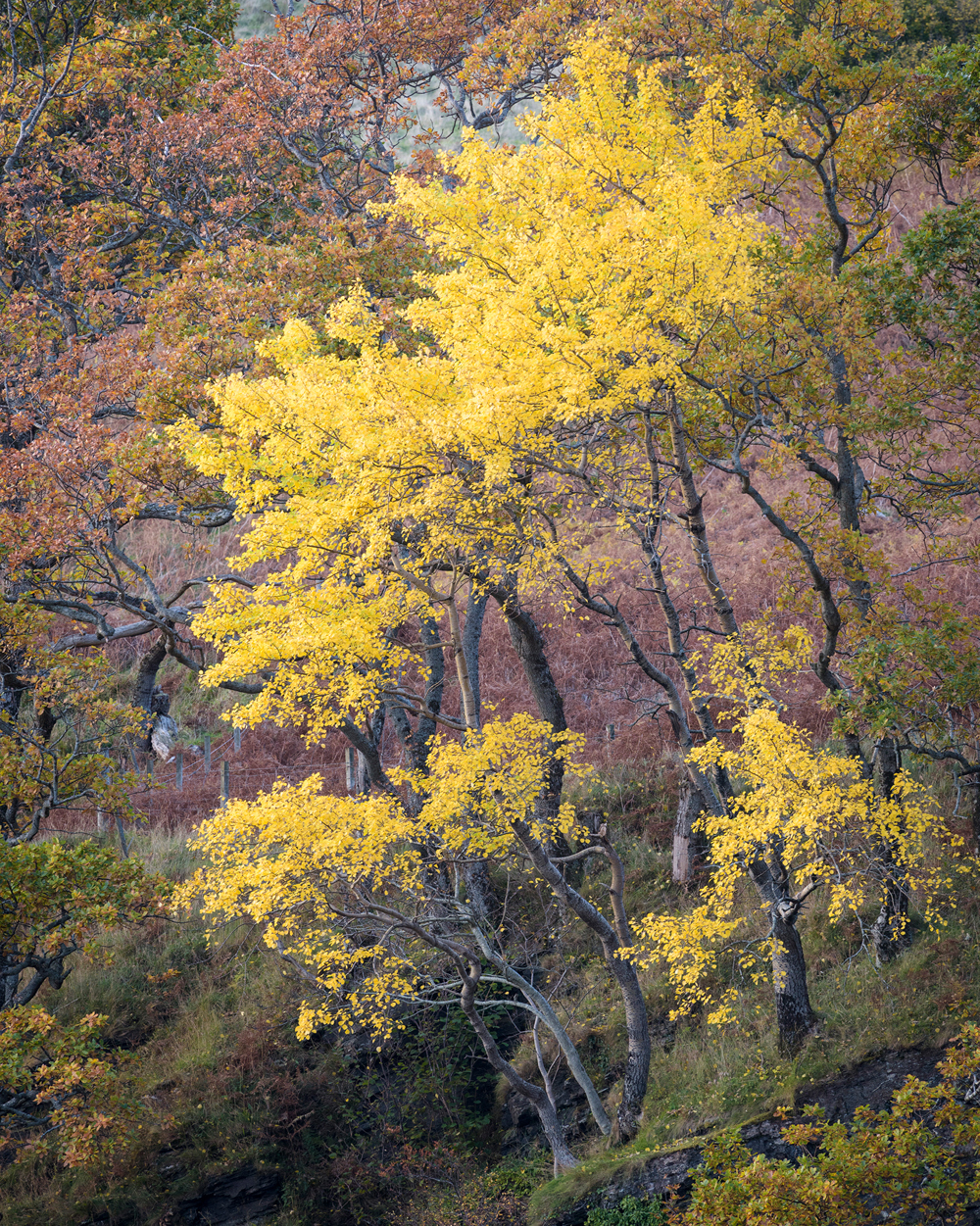
    Aspen tree in autumn.

    The coming weeks are a great time to see some of the vibrant shades of yellow that aspen can display. In addition to providing stunning colours to the autumn landscape, aspen supports a range of insects, lichens and mosses as well as birds and mammals. These include UK Biodiversity Action Plan (UK BAP) priority species, specifically the dark-bordered beauty moth, aspen hoverfly, aspen bristle-moss and blunt-leaved bristle-moss.

    UK BAP priority species are those that have been identified as being the most threatened and requiring conservation action.


    Latest from FLS

    1. 12 Jan 2026

      Lesley's article

    2. 03 Oct 2025

      Scotland's Climate Week 2025: Working together in the Angus Glens

    3. 29 Sep 2025

      Scotland's Climate Week 2025: Working with partners to support beaver populations

    4. 19 Sep 2025

      Martens on the Move at Kirroughtree

    5. 20 Aug 2025

      Protecting endangered apple trees through teamwork

    Share this article

    • Share on Facebook
    • Share on X
    • Share on LinkedIn

    Feedback

    There is a problem

    Feedback

    Thank you for your feedback

    User feedback form


    Your feedback helps us to improve this website. Do not give any personal information because we cannot reply to you directly.


    Your feedback helps us improve this website. Do not provide any personal information here. If you need to get in touch with a query, please contact us.


    Your feedback helps us improve this website. Do not provide any personal information here. If you need to get in touch with a query, please contact us.

    Forestry and Land Scotland Logo

    Follow us on

    • Forestry and Land Scotland on Facebook
    • Forestry and Land Scotland on Twitter
    • Forestry and Land Scotland on Instagram
    • Forestry and Land Scotland on LinkedIn

    Utilities

    1. Accessibility
    2. Cookies
    3. Privacy Notice
    4. Terms and Conditions
    5. Freedom of Information
    6. Modern Slavery Statement

    Quick links

    1. Media Centre
    Forest Stewardship Council, the mark of responsible forestry Programme for the Endorsement of Forest Certification, PEFC
    © Crown Copyright
    Forests and land that Scotland can be proud of Link to gov.scot gov.scot