Forestry and Land Scotland Logo
  1. Visit
      1. Find a forest
      2. Explore forest parks
    1. Accessible forests
    2. Stay the night
      1. Waymarked trails
      2. Cycling
      3. Mountain biking
      4. Photography
      5. Orienteering
      6. Camping
      7. Treetop adventure
      8. Water sports
      9. Horse riding
      1. Things to see
      2. Trees
      3. Wildlife
      4. Heritage
      5. Things to see in Winter
    3. Plan a visit with a group
    4. Visiting safely
    5. Parking
    Forest map

    Search for a forest by map

    Forests & trails information and closures

    An overview of all closures and high risk warnings on trails.

    Stay the night

    Park overnight in selected forest car parks as part of our motorhome scheme.

  2. About us
      1. Who we are
      2. Our mission and vision
      3. Leadership team
      4. Our values
      1. Careers
      2. Current Vacancies
      3. What we offer
      4. Candidate information
      5. A day in the life
      6. Apprenticeships
    1. Key documents
    2. Our impact
    3. Our approach to Gaelic
    Current Vacancies

    Some text

  3. What we do
      1. Taking Climate Action
      2. The climate emergency
      3. Forest resilience
      4. Peatland restoration
      5. Carbon offsetting
      6. Biodiversity
      7. Renewable energy
      1. Managing the land
      2. Planning our land management
      3. Our sustainable forestry
      4. Our tree nursery
      1. Conservation
      2. Habitat conservation
      3. Wildlife conservation
      4. Historic environment conservation
    1. Supporting outdoor exploration
    2. Working with communities
    3. Our projects
  4. Living and Working
      1. For businesses
      2. Timber sales
      3. Procurements and tenders
      4. Business opportunities
      5. Farming opportunities
      6. Venison sales
      7. Firewood sales
      1. For communities
      2. Transfer land and buildings to your community
      3. Land management plan consultations
      1. Permissions and Permits
      1. Learning and Education
      2. Outdoor learning
      3. Activity sheets
    1. Buy Land or Buildings
    Land management plan consultations

    Text here

    Current job opportunities

    Text here

  5. Get involved
    1. Have your say on consultations
    2. Hold an event
    3. Apply for a community asset transfer (CAT)
    4. Arrange a visit
    5. Work with us
  6. News
  7. Contact
Suggested links
    1. Home
    2. News
    20 January 2020 4 minutes

    A tail of two squirrels...
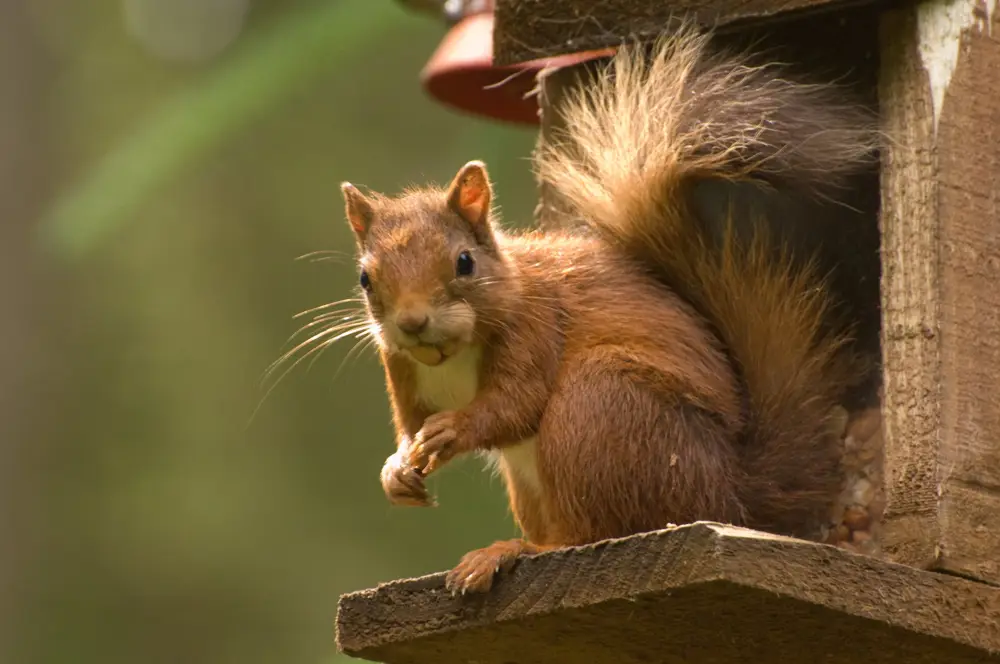
    Red squirrel with nut in mouth standing on man made platform

    For most people, spotting a red squirrel is a very rare treat. It hasn’t always been this way. These little red acrobats used to roam across all of Britain and were a much more common sight. Now, when we see a squirrel in central or southern Scotland it’s usually a grey, the red’s larger American cousin.

    The arrival of an invading new species in the form of the greys is a challenge in itself, but what else caused red squirrels to go from widespread numbers to the elusive creatures they often are today? We take a look at a few of the main factors causing it.

    Red vs. Grey

    Red squirrels have always had a bit of a tough time. After arriving from mainland Europe at the end of the last ice age, populations have fluctuated wildly over the years. Reported as extinct in many parts of Scotland due to large-scale deforestation in the 18th century, numbers had risen again by the early 1900s thanks to widespread conifer planting and the introduction of squirrels from England.

    More adaptable, grey squirrels are thought to have thrived in the UK due to their ability to store a larger amount of fat than their red cousins, giving them a distinctive advantage during winter months. They also tend to carry more young, and live in greater population density than the native species. Lastly, grey squirrels can be carriers of squirrelpox, a disease against which red squirrels have no immunity.

    Loss of habitat has also played a part in the decrease in numbers. Felling of woods and hedgerows reduces the number of suitable places to live and breed, and increases competition for remaining locations.

    The good news is, Scotland's population of red squirrels is now thought to be stabilising, and despite ever-present threats to their survival in the form of the usual pests and predators faced by any mammal, they are thriving in our forests. The red squirrel is much rarer in England and the south of Scotland, although small populations survive in places like the Isle of Wight. 

    Spotting squirrels: What to look out for
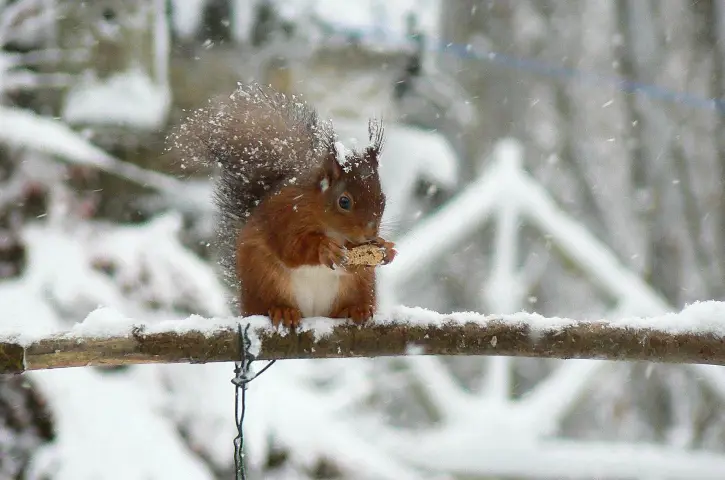
    red squirrel on a branch in snow

    Although they are elusive creatures, it’s hard to miss a red squirrel when you do spot one. Their bright fur and little ear tufts make them stand out in the forest. Red squirrels can be found across most of Scotland, but the pine forests of the Highlands and Dumfries & Galloway are particularly good for spotting them.

    They may end up with their distinctive red coats, but their young (called kittens) are born without hair, or teeth. These defenceless little creatures grow quickly, and are ready to leave the nest at around 10 weeks. Home for a squirrel is called a drey.

    Dreys are usually found in treetops or hollow tree trunks. Red squirrels do not hibernate over winter, but venture outside into the cold far less frequently than normal.

    The fight to save the reds

    The UK Strategy for Red Squirrel Conservation was published in 1996, and provided a framework for conservation work. Further action plans were produced in the following 20 years, which has lead to a coordinated effort to stop the decrease in red squirrel numbers. In Scotland, the Scottish Squirrel Group has produced the Scottish Strategy for Red Squirrel Conservation, which guides action for this species.

    Projects such as Saving Scotland’s Red Squirrels work with local communities to improve habitats and conditions, while combating the spread of grey squirrels. You can help by reporting squirrel sightings, making donations or even adopting a red squirrel!

    Where to spot a red squirrel

    Wildlife hides at The Lodge Visitor Centre and Kirroughtree Visitor Centre are a great place to watch other woodland wildlife as well as squirrels. Further north, you can watch red squirrels bustling amongst the trees at their feeding station at Glen Righ, near Corran Ferry.

    For those visiting the Cairngorms National Park, red squirrels live amongst the pine trees, and are often seen rummaging in the peanut boxes behind the visitor centre at Glenmore Forest Park. The spectacular Glen Affric is also a wonderful place to watch squirrels munching on Scots pine seeds.

    Are you nuts for squirrels?

    There are countless species of animal in Scotland's forests! Explore more of our rich and diverse wildlife with these helpful blogs and sites.


    Latest from FLS

    1. 12 Jan 2026

      Lesley's article

    2. 03 Oct 2025

      Scotland's Climate Week 2025: Working together in the Angus Glens

    3. 29 Sep 2025

      Scotland's Climate Week 2025: Working with partners to support beaver populations

    4. 19 Sep 2025

      Martens on the Move at Kirroughtree

    5. 20 Aug 2025

      Protecting endangered apple trees through teamwork

    Share this article

    • Share on Facebook
    • Share on X
    • Share on LinkedIn

    Feedback

    There is a problem

    Feedback

    Thank you for your feedback

    User feedback form


    Your feedback helps us to improve this website. Do not give any personal information because we cannot reply to you directly.


    Your feedback helps us improve this website. Do not provide any personal information here. If you need to get in touch with a query, please contact us.


    Your feedback helps us improve this website. Do not provide any personal information here. If you need to get in touch with a query, please contact us.

    Forestry and Land Scotland Logo

    Follow us on

    • Forestry and Land Scotland on Facebook
    • Forestry and Land Scotland on Twitter
    • Forestry and Land Scotland on Instagram
    • Forestry and Land Scotland on LinkedIn

    Utilities

    1. Accessibility
    2. Cookies
    3. Privacy Notice
    4. Terms and Conditions
    5. Freedom of Information
    6. Modern Slavery Statement

    Quick links

    1. Media Centre
    Forest Stewardship Council, the mark of responsible forestry Programme for the Endorsement of Forest Certification, PEFC
    © Crown Copyright
    Forests and land that Scotland can be proud of Link to gov.scot gov.scot