Forestry and Land Scotland Logo
  1. Visit
      1. Find a forest
      2. Explore forest parks
    1. Accessible forests
    2. Stay the night
      1. Waymarked trails
      2. Cycling
      3. Mountain biking
      4. Photography
      5. Orienteering
      6. Camping
      7. Treetop adventure
      8. Water sports
      9. Horse riding
      1. Things to see
      2. Trees
      3. Wildlife
      4. Heritage
      5. Things to see in Winter
    3. Plan a visit with a group
    4. Visiting safely
    5. Parking
    Forest map

    Search for a forest by map

    Forests & trails information and closures

    An overview of all closures and high risk warnings on trails.

    Stay the night

    Park overnight in selected forest car parks as part of our motorhome scheme.

  2. About us
      1. Who we are
      2. Our mission and vision
      3. Leadership team
      4. Our values
      1. Careers
      2. Current Vacancies
      3. What we offer
      4. Candidate information
      5. A day in the life
      6. Apprenticeships
    1. Key documents
    2. Our impact
    3. Our approach to Gaelic
    Current Vacancies

    Some text

  3. What we do
      1. Taking Climate Action
      2. The climate emergency
      3. Forest resilience
      4. Peatland restoration
      5. Carbon offsetting
      6. Biodiversity
      7. Renewable energy
      1. Managing the land
      2. Planning our land management
      3. Our sustainable forestry
      4. Our tree nursery
      1. Conservation
      2. Habitat conservation
      3. Wildlife conservation
      4. Historic environment conservation
    1. Supporting outdoor exploration
    2. Working with communities
    3. Our projects
  4. Living and Working
      1. For businesses
      2. Timber sales
      3. Procurements and tenders
      4. Business opportunities
      5. Farming opportunities
      6. Venison sales
      7. Firewood sales
      1. For communities
      2. Transfer land and buildings to your community
      3. Land management plan consultations
      1. Permissions and Permits
      1. Learning and Education
      2. Outdoor learning
      3. Activity sheets
    1. Buy Land or Buildings
    Land management plan consultations

    Text here

    Current job opportunities

    Text here

  5. Get involved
    1. Have your say on consultations
    2. Hold an event
    3. Apply for a community asset transfer (CAT)
    4. Arrange a visit
    5. Work with us
  6. News
  7. Contact
Suggested links
    1. Home
    2. News
    08 October 2019 3 minutes

    Awesome autumn leaves: colour chemistry explained

    Autumn: we can stop complaining about the heat, but still enjoy the outdoors without a hundred layers! Conkers litter the paths, pumpkin-spiced everything returns, and you can step back into your favourite pair of boots. But we all know the best bit is when the leaves give the colourful spring flowers a run for their money.

    We all love the season's spectacular hues. But why do green leaves turn to red or orange, and how do the trees know when summer is over? We break down the science for you below.

    Science made simple
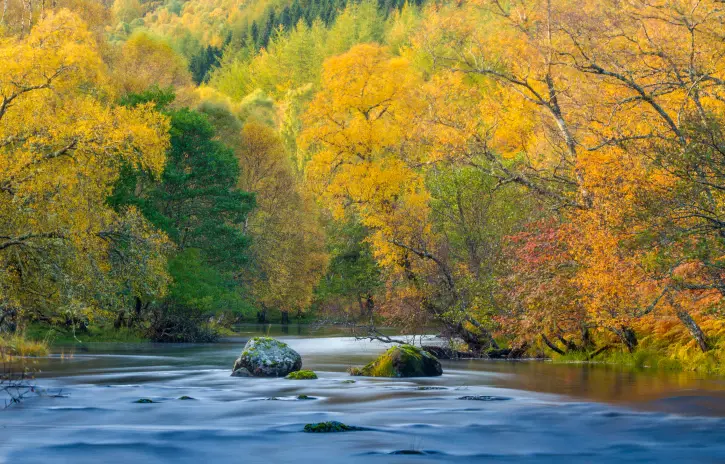
    Autumn colours on the trees surrounding a river

    Despite the technical terminology, leaf science is pretty simple. Basically, it's about the balance of pigments. Different quantities determine the colours we see.

    When there’s more of one pigment, leaves appear certain colours. When it's reduced, a different colour becomes most visible.

    Kaleidoscope of colours 

    During spring and summer, chlorophyll helps plants with the process of photosynthesis. This turns carbon dioxide, water and the light from the sun into sugars that feed a tree. The green from chlorophyll masks other colours throughout the sunnier months.

    Then, as nights start to grow longer and less sunlight is available, this signals to trees that autumn is on the way. The production of chlorophyll slows and then stops completely. This is when the golden hues we love start to appear. 

    A group of chemicals called carotenoids are always found in leaves. These help protect plants from sun damage. Once chlorophyll's dominant green is reduced, fiery oranges become much bolder.

    Xanthophyll, a type of carotenoid, is responsible for the yellow colours we see in plants. This sticks around long after the chlorophyll has disappeared.

    Golden orange hues also come from carotenoids. These pigments start disappearing at the same time as chlorophyll does, but at a much slower rate, so their colours last well into autumn.

    Beta carotene is a type of carotenoid, and is responsible for giving plants and many edible goodies their orange colouring. You can find it in foods such as sweet potato, carrots and apricots.
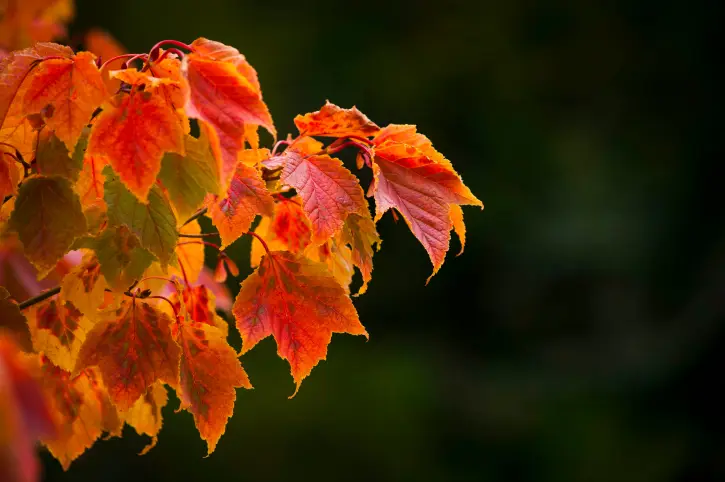
    Autumn leaves, red coloured

    While all trees have chlorophyll and carotenoids, not all produce anthocyanin, the pigment that causes leaves to turn red. Anthocyanin is only found during part of a tree’s growing season and is produced from sugars trapped in leaves as the tree prepares to shed them.

    You’re more likely to see brighter reds in a year where spring and summer have been warmer, drier and sunny.

    Awesome autumn destinations

    So, now you know why autumn produces such a spectacular show, it’s time to get out and see the season's colours for yourself. There are more places to experience autumn’s golden hues in Scotland than we can count, but we've put together some inspiration in our top 10 favourite places to see autumn colours, with help from staff around the country.

    Leaf your troubles behind
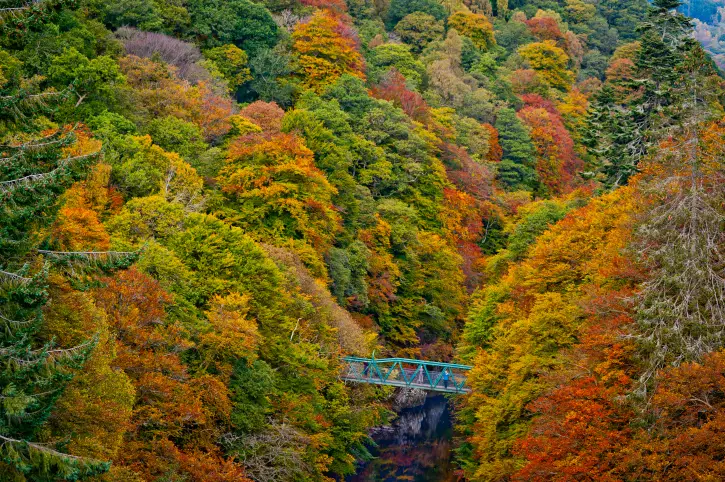
    Autumn leaves in Perthshire forest

    Leaves aren’t just pretty to look at – you can have lots of fun with them as well. Have a look at our autumn activities to see some of our favourite things to do with your seasonal finds.

    More autumn adventures:

    Latest from FLS

    1. 12 Jan 2026

      Lesley's article

    2. 03 Oct 2025

      Scotland's Climate Week 2025: Working together in the Angus Glens

    3. 29 Sep 2025

      Scotland's Climate Week 2025: Working with partners to support beaver populations

    4. 19 Sep 2025

      Martens on the Move at Kirroughtree

    5. 20 Aug 2025

      Protecting endangered apple trees through teamwork

    Share this article

    • Share on Facebook
    • Share on X
    • Share on LinkedIn

    Feedback

    There is a problem

    Feedback

    Thank you for your feedback

    User feedback form


    Your feedback helps us to improve this website. Do not give any personal information because we cannot reply to you directly.


    Your feedback helps us improve this website. Do not provide any personal information here. If you need to get in touch with a query, please contact us.


    Your feedback helps us improve this website. Do not provide any personal information here. If you need to get in touch with a query, please contact us.

    Forestry and Land Scotland Logo

    Follow us on

    • Forestry and Land Scotland on Facebook
    • Forestry and Land Scotland on Twitter
    • Forestry and Land Scotland on Instagram
    • Forestry and Land Scotland on LinkedIn

    Utilities

    1. Accessibility
    2. Cookies
    3. Privacy Notice
    4. Terms and Conditions
    5. Freedom of Information
    6. Modern Slavery Statement

    Quick links

    1. Media Centre
    Forest Stewardship Council, the mark of responsible forestry Programme for the Endorsement of Forest Certification, PEFC
    © Crown Copyright
    Forests and land that Scotland can be proud of Link to gov.scot gov.scot